
Lisbon Portugal – 3 days
- 1st day … Arrive in Lisbon Portugal in the morning; Fado show in the evening.
- 2nd day … Tour of Lisbon – in the morning and afternoon.
- 3rd day … Visit Sintra, Cascais, Estoril, and Cabo da Roca.
Lisbon Portugal – Hotel
We arrived at Hotel H10 Duque de Loule just as the clock struck noon. It was close to noon, but it sounds lively and dramatic to say “as the clock struck noon”.
The hotel is small and modern, tucked inside a historic building. Located nearby are upscale shops and restaurants, creating a lively atmosphere. Across the road are two convenience stores. The hotel reception had a beautiful black-and-white checked marble floor. I knew instantly that I was going to like this place.
The front desk staff couldn’t be more pleasant and helpful, with sweets, cakes and complementary wine and/or water as soon as one checks in.
The rooms weren’t ready – no surprise, but still a letdown. I yearned for a shower, but the wait wasn’t long. With time to chill, we recharged our batteries for a few hours. Evening promised adventure: a Fado show in the Alfama district, right next to Baixa’s lively heart.
To get to know Lisbon, a visit to Alfama and Baixa is a must. Alfama whispers tales of the past through winding streets and music. Baixa, in contrast, boasts broad avenues and a lively, modern feel. The two districts offer fascinating contrasts and a diverse urban character.
Alfama district
- Alfama is Lisbon’s magical maze, where winding cobbled lanes twist past colorful houses and climb steep hills. Each street whispers stories from Moorish days, echoing with the footsteps of fishermen and sailors. Alfama now bursts with artisanal flair, yet its true spirit still shines through every corner.
- Historic landmarks – São Jorge Castle, Lisbon Cathedral (Sé), the National Pantheon, and the Church of Santo António.
- Alfama is the birthplace of Fado, Portugal’s traditional music.
- Scenic viewpoints (miradouros) offer panoramic vistas over Lisbon and the Targus river.
- The district is best explored on foot or by the iconic Tram 28, with every turn revealing cozy plazas, trendy cafés, and shops.
Baixa district
- Baixa, or Baixa Pombalina, stands as Lisbon’s grand centerpiece, rebuilt after the 1755 earthquake. Its wide, orderly streets and stately buildings create a sense of elegance and calm. Stretching from the Tejo Estuary to Praça Marquês de Pombal, Baixa nestles perfectly between Alfama’s hills and Bairro Alto’s buzz.
- Main squares – Praça do Comércio (Commerce Square), Rossio (Praça Dom Pedro IV), Praça dos Restauradores, Praça da Figueira, and Praça do Martim Moniz.
- Bustling avenues like Rua Augusta, Rua da Prata, and Rua dos Sapateiros are lined with shops, cafés, and restaurants.
- Baixa is one of the world’s first examples of earthquake resistant urban planning, with its grid layout and Pombaline architectural features.
- The area is flat and easily walkable, with excellent public transport connections via Rossio and Baixa/Chiado metro stations.
Lisbon Portugal sightseeing
We got to the Alfama district at around 4:00pm in the afternoon, an hour before the start of the Fado show. The Lisbon Cathedral is located just up the tree lined street with trams going up and down. Right across from the cathedral, tuk-tuks bustle with eager tourists. Next to them, a narrow cobblestone street meanders under leafy trees. A lively rows of restaurants and bars line on one side.
The fado show was good. It reminded me of bluegrass music, though bluegrass is more up tempo. Fado music is more soulful with a sense of longing. Now this comparison is just my off the wall thoughts. I have no clue whether the two music genres compare well or not, but to me it did.
The following day was spent touring sights in Lisbon – Hieronymites Monastery, Maritime Museum, and the Discovery Monument.
The Maritime Museum is located in the west wing of the Monastery itself and dedicated to Portugal’s rich seafaring heritage. It showcases a vast array of model ships, navigational instruments, maps, and artifacts related to the Age of Discovery. And one cannot forget Portugal’s maritime explorers like Vasco da Gama and Prince Henry the Navigator. It was fascinating, that such a small country led the world in exploration.
With the Belem Tower being renovated, and no visitors being allowed, we did the next best thing. We visited the nearby Pastéis de Belém pastry shop. It offered a great variety of snacks, both sweet and savory. The pasteis was delicious, fluffy, and not too sweet.
Sintra
Sintra, a small historic town, lies amid the Sintra Mountains and lush greenery. It is located in the Greater Lisbon region. The area is renowned for its unique blend of natural beauty and rich cultural heritage. In 1995, UNESCO recognized Sintra’s unique charm.
With every step, one is greeted by fairytale streets and secret nooks. As one wanders, narrow cobblestone streets twist and turn revealing boutiques, cafes, and hidden gardens.
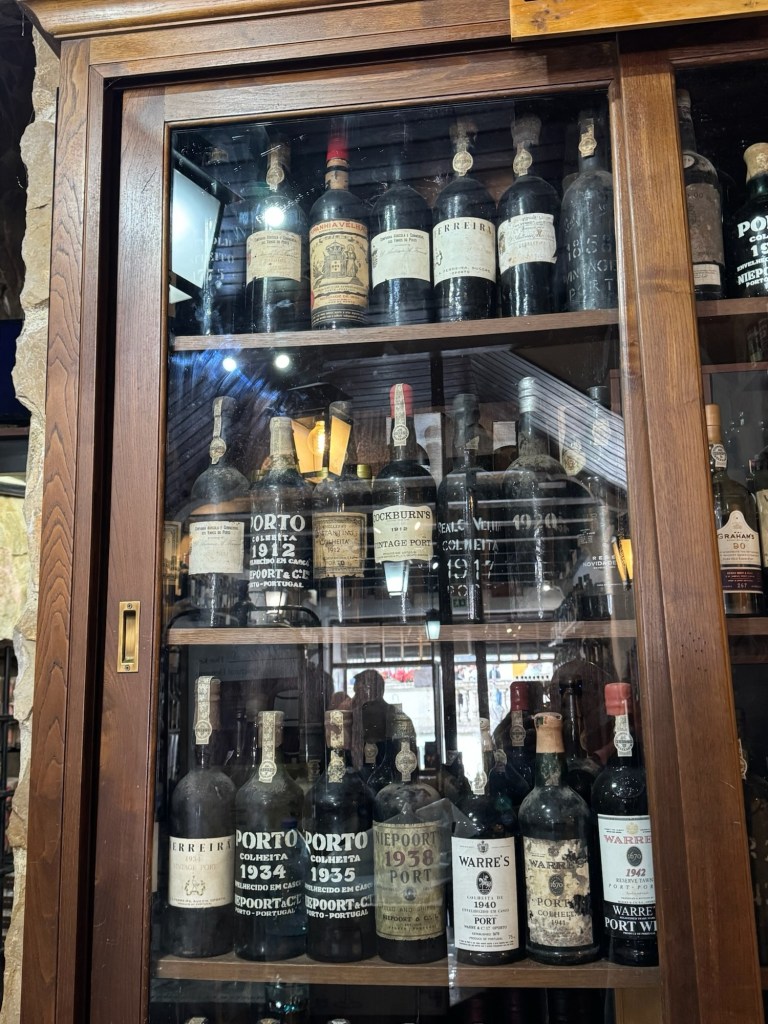
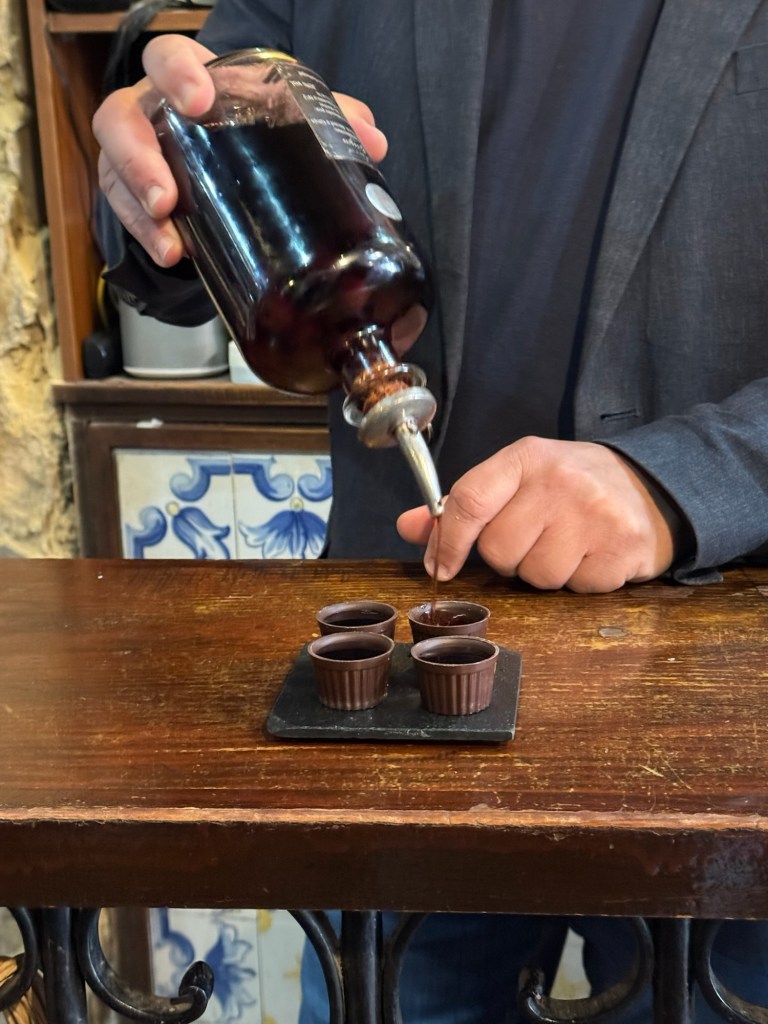
Towards the end we stumbled upon a small shop selling ports, sherries, wines, and local liquer. The owner was charming and an expert in his tradecraft. He offered us a taste of ginja (ginjinha) a sweet, cherry-based liquer served in dark chocolate shot glass. Although sweet drinks rarely tempt me, I found it delightful.




Pena Palace
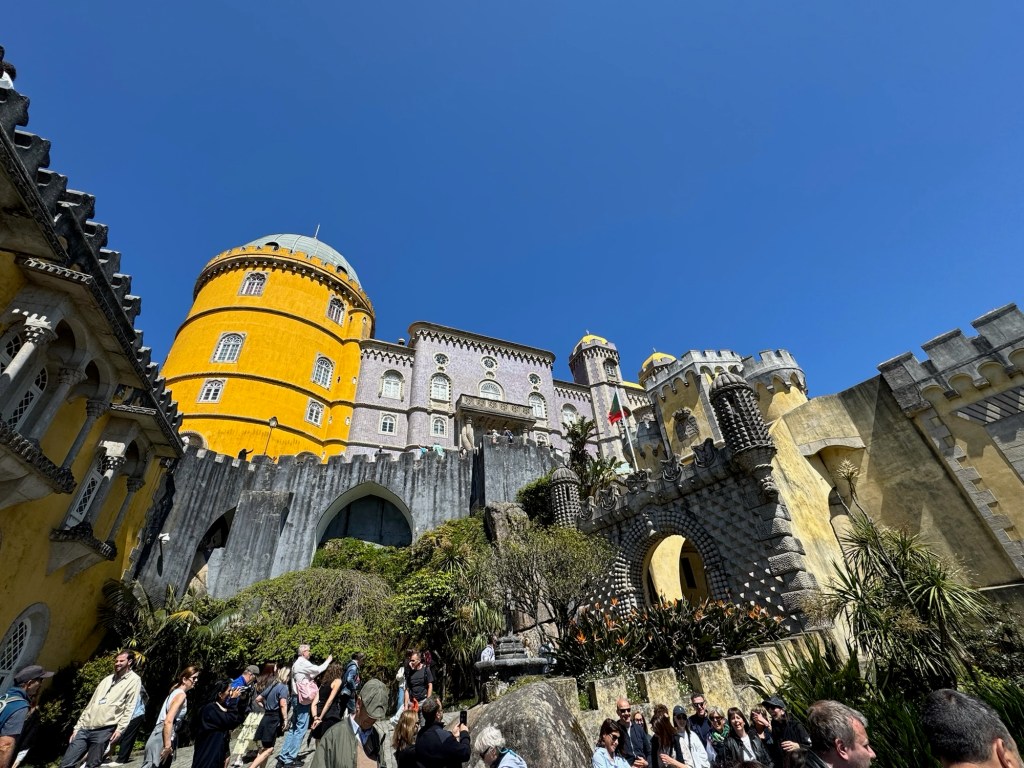
Pena Palace sits atop a hill, looking like a castle straight from a fairy tale. Wrapped in a lush green cloak, it sparkles with bright colors, drawing the eye from every angle.
The walk up is a real adventure—steep, but bursting with surprises at every turn. With each step, you spot new gardens, viewpoints, and wild bursts of nature. Reach the top, and wow!
On clear days, the palace offers sweeping views over Sintra and even the distant Atlantic Ocean.




Cascais
On our way to Sintra, we took the scenic coastal route to drive through Cascais, a vibrant coastal town. It features a charming historic center filled with shops, restaurants, bars, and elegant 19th-century villas.
The town’s coastline boasts sandy beaches like Praia da Rainha and Praia da Duquesa, ideal for sunbathing and swimming.
Notable attractions include the Boca do Inferno cliff formation, the Condes de Castro museum, and the scenic Cascais-Estoril beach promenade.
According to our guide, summer time attracts a diverse crowd, and offers a lively nightlife. The town is also a great base for exploring the nearby Serra de Sintra and other regional highlights such as Cabo da Roca.


Estoril
From Cascais we continued our coastal drive to the town of Estoril, famous for its beautiful seafront promenade. The town’s iconic Casino Estoril, was the inspiration for Ian Fleming’s “Casino Royale”.
Cabo da Roca
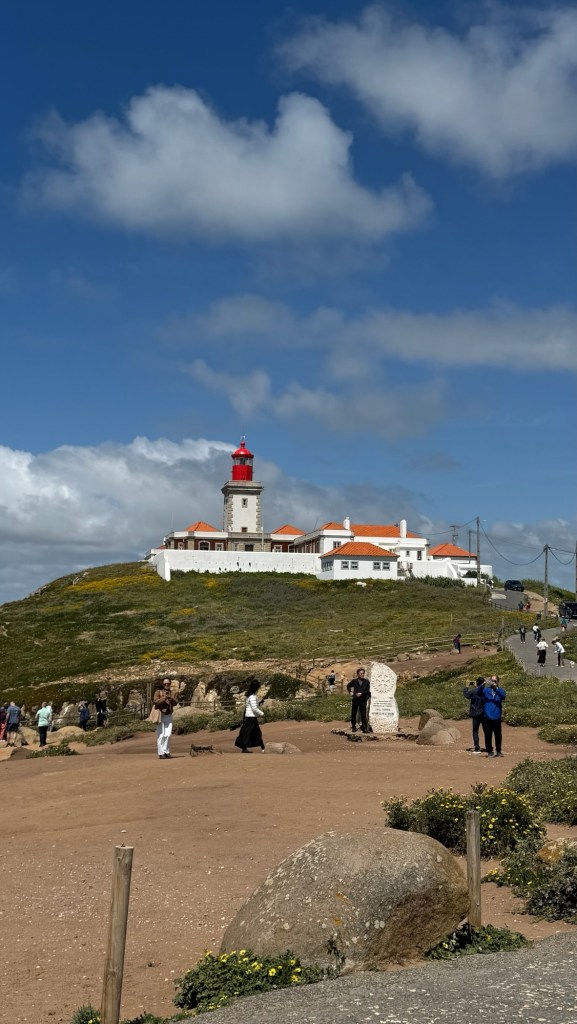
Before getting to Sintra, we drove through the town of Cabo da Roca. We wanted to see the westernmost point of mainland Europe. It features towering cliffs rising 140 meters above the Atlantic Ocean.
The site is known for its raw, windswept beauty and panoramic views over the coast and the Serra de Sintra. A lighthouse, operational since 1772, stands as a beacon on the cape.

Leave a Reply