
The Country that refused to break
Cambodia runs on tuk-tuks, optimism, and a tourism economy. After all, it contains Angkor Wat. This single structure is the largest religious complex ever built. It is also one of the most beautiful things humanity has ever created.
In the 12th century, Cambodians built this complex at the height of their civilization. They were, by any measure, on a roll. However history never one for letting things be, had other plans. Internal decline weakened the empire first. Then foreign invasion accelerated the fall – colonial subjugation. Then the Civil war tore it apart further still. And then came genocide via the Khmer Rouge.
- Between 1975 and 1979, the Khmer Rouge killed roughly one in four Cambodians – that is 1.5 to 2 million of its people. A staggering amount! They called it Year Zero. They meant it. Cities were emptied, currency abolished, schools shuttered, and anyone deemed inconvenient to the new order was systematically eliminated.
- It remains one of the worst genocides of the 20th century, and the 20th century was not short on competition.
- The world was aware – we, in the West, were acutely aware! We looked the other way!
As a result, Cambodia arrived at the 21st century as one of Southeast Asia’s poorest nations. The gap between 12th-century greatness and modern poverty is a sad tale. Moreover, it never quite leaves you. It sits over the country like weather. It is present even in the beautiful places. Perhaps it is most present precisely there.
And yet you will meet nobody angrier than you. In fact there is a warmth here that history has no business allowing. The tuk-tuk driver with a permanent smile quotes you a fair price. The woman waves you into her restaurant like a long-lost relative. These are people who inherited a catastrophe and somehow decline to be defined by it. They carry their past not as a wound, but as weight they have simply learned to walk with – gracefully, and without complaint. One leaves Cambodia quietly embarrassed by one’s own petty grievances.
Travel, the old fashion way!
Really like this minibus!
Siem Reap: Ancient Glory, Modern Soul
The City itself
We arrived from Hoi An, Vietnam. The Cambodia Angkor Air flight was painless – the plane was new. Ours was a 4 night stay in Siem Reap. A gateway to one of the greatest archaeological sites on earth. Most visitors arrive thinking of it purely as a base for Angkor. They leave surprised by the city itself. The town abounds with tuk-tuks, cocktail bars, and an impressive number of restaurants of various flavors. We felt at home – South Indian, North Indian, Italian, Asian, etc, and lots and lots of coconuts. If that was not enough then there were mangoes, and passion fruit – we were delirious with joy every day!
The city is compact, navigable, and relentlessly charming. The streets hum without overwhelming you. The old French colonial architecture leans gently into the tropical heat. And everywhere someone is trying to sell you a tuk-tuk ride to Angkor.
- Pub Street is exactly what it sounds like and unapologetically so. It is loud, cheerful, and serves cocktails in buckets if that is where your evening is heading. It is not for everyone. But it is honest about what it is, which is more than can be said for some places.
- The Old Market — Psar Chas — is where you go for everything else. Silk scarves, spices, freshly squeezed juice, and enough street food to constitute a full itinerary in itself. Arrive hungry. Leave with more bags than you intended.
- The Alley West and surrounding streets are where Siem Reap’s quieter, more considered side lives. Independent restaurants, art galleries, and small boutiques run by locals who have invested in the city’s longer story. Eat here. Spend money here. It goes somewhere useful.
The People
Here is the thing about Siem Reap that the photographs don’t capture. The city is genuinely, disarmingly warm. Not the performed warmth of a place that needs your tourist dollar, which it does need. Something older and more instinctive than that.
Your tuk-tuk driver will ask about your family. The hotel staff will suggest the restaurant her cousin runs, because it is actually better than the one on the main street. They have endured much, yet carry it without complaint. And with quiet grace, go out of their way to make you feel less like a visitor and more like a welcome guest.
It is humbling!
Travel Guide Notes
Getting there: Siem Reap International Airport connects to most major Southeast Asian hubs. Bangkok, Singapore, Kuala Lumpur, and Ho Chi Minh City all have direct flights.
Getting around: Tuk-tuks are the correct answer for almost everything. Agree on a price before you leave. The drivers know the temples, know the light, and know when you need five minutes of silence and when you need someone to explain what you’re looking at.
When to go: November to March is the dry season and the most comfortable time to visit. April and May are brutally hot. The wet season from June to October brings lush green landscapes and significantly fewer tourists – a trade-off worth considering.
How long: Three days is the minimum for the temples alone. Five days lets you breathe. A week lets you stop rushing and start actually seeing.
The temple pass: Purchase an Angkor Archaeological Park pass on arrival. A three-day pass is the most popular. A seven-day pass is available and, if you are the kind of person who reads this far into a travel blog, probably worth it.
A Final Note
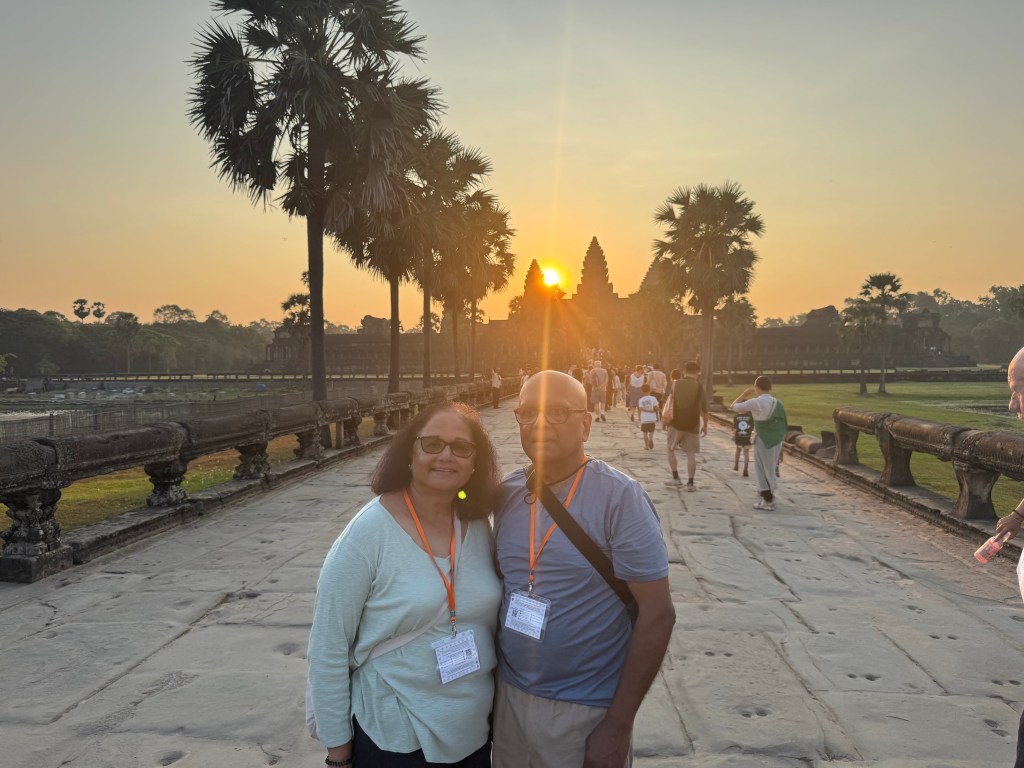
Siem Reap offers up Angkor Wat. That alone justifies the journey. Pay particular attention to the food, the streets, the people, and the early morning sun-rise at Angkor Wat! It shines bright in your memory!
Talking of temples
It is worth clarifying that Angkor Wat, Angkor Thom, Ta Prohm, and Banteay Srei all fall under the umbrella of the Angkor Archaeological Park. If you are planning see all of these temples, just be aware that it requires deliberate planning across multiple days, especially when it is hot and humid.
A brief on each of the temples:
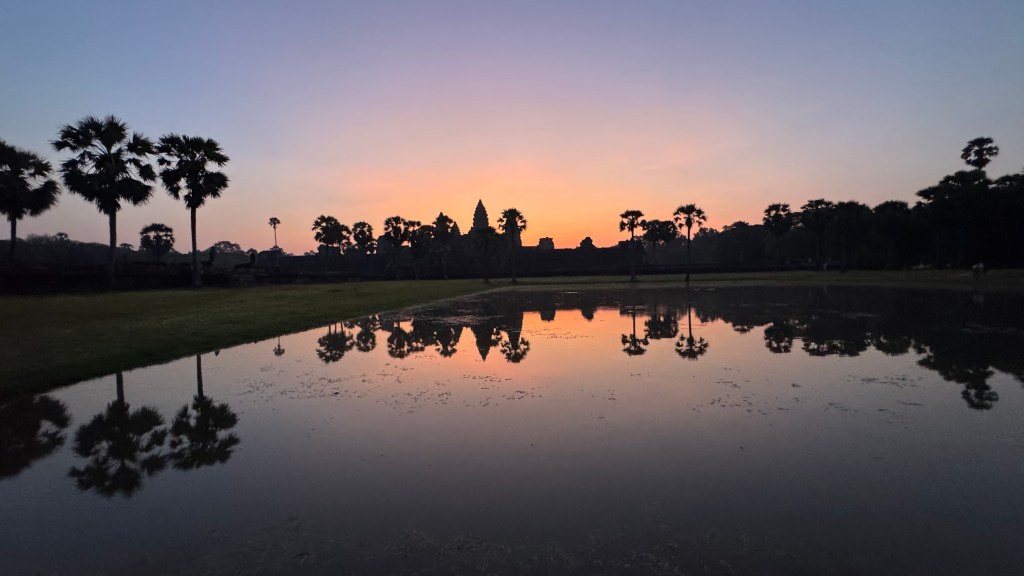
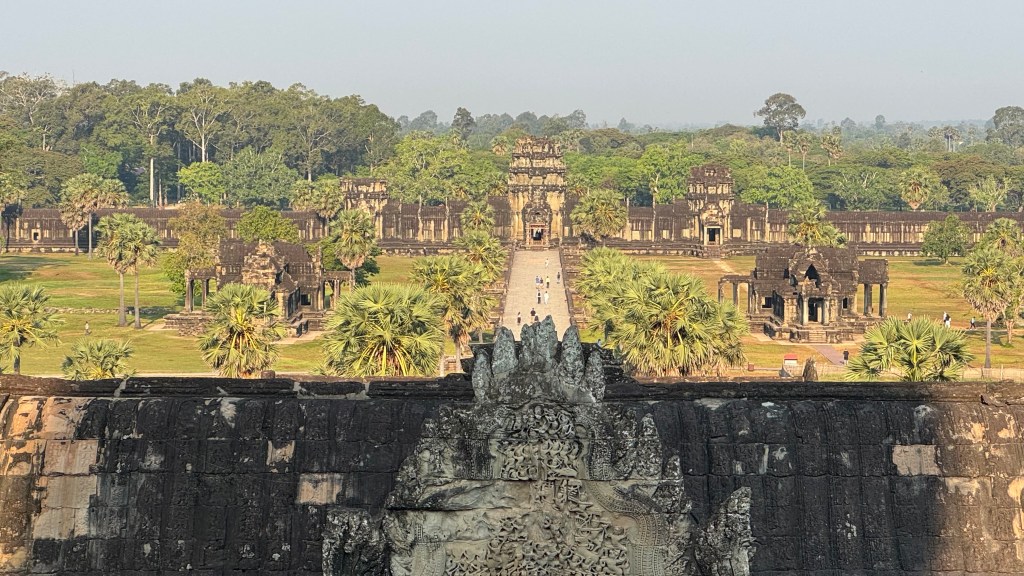
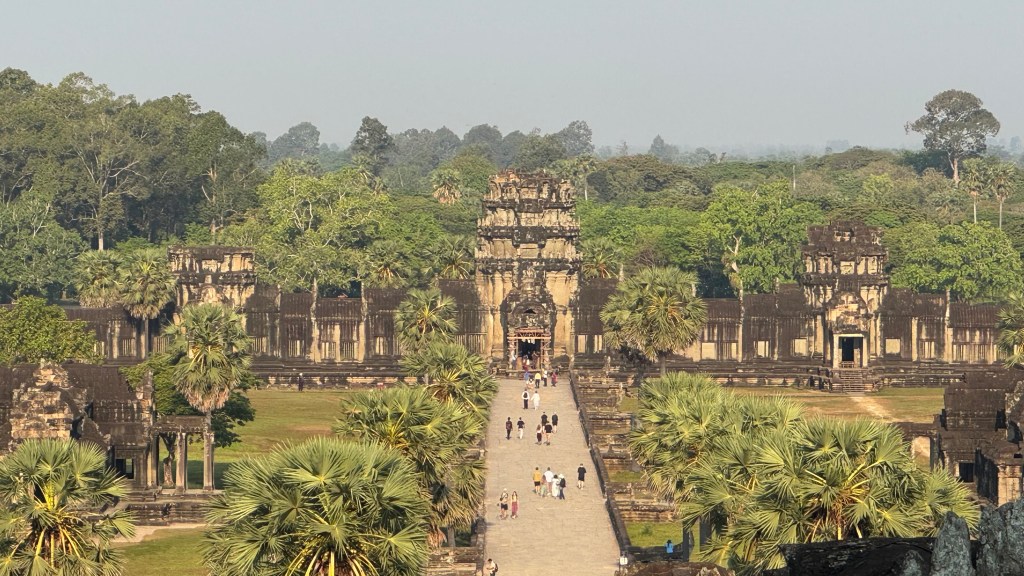
- Angkor Wat – standalone temple, early 12th century, King Suryavarman II. It sits outside the walled city and is dedicated to Vishnu. It is the one with the five towers that reflects in the moat at sunrise. It is the one on the Cambodian flag.
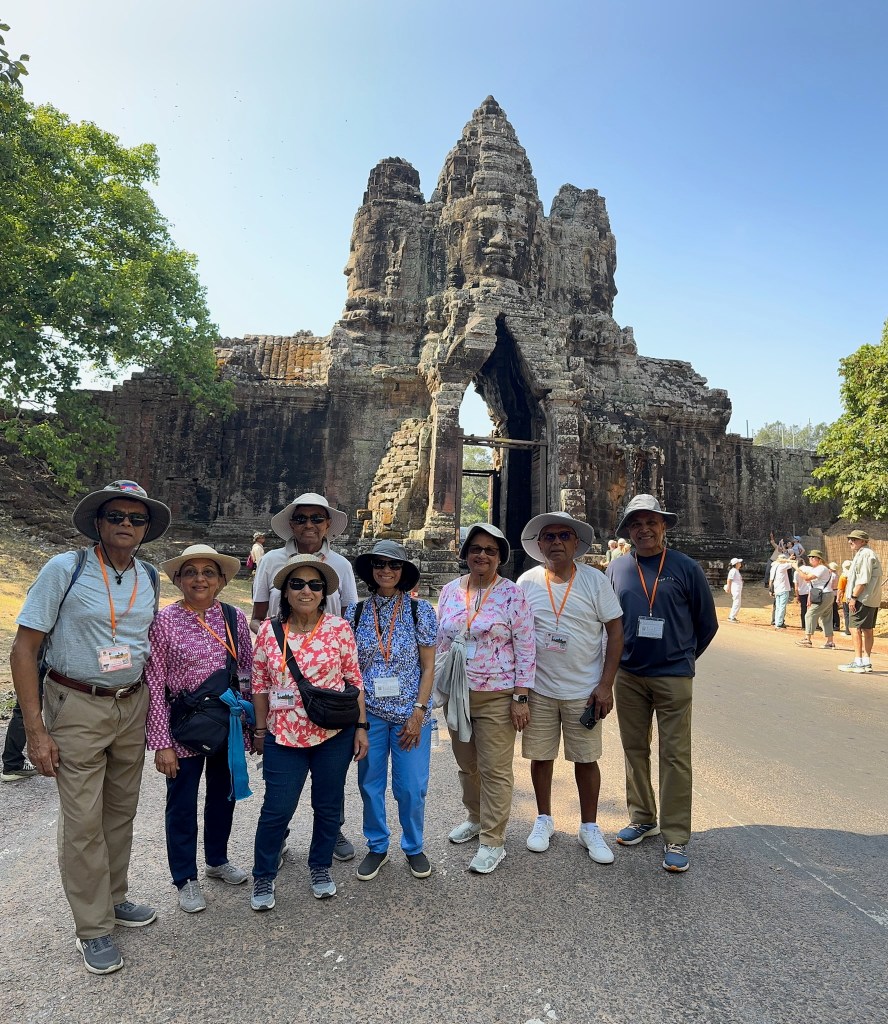
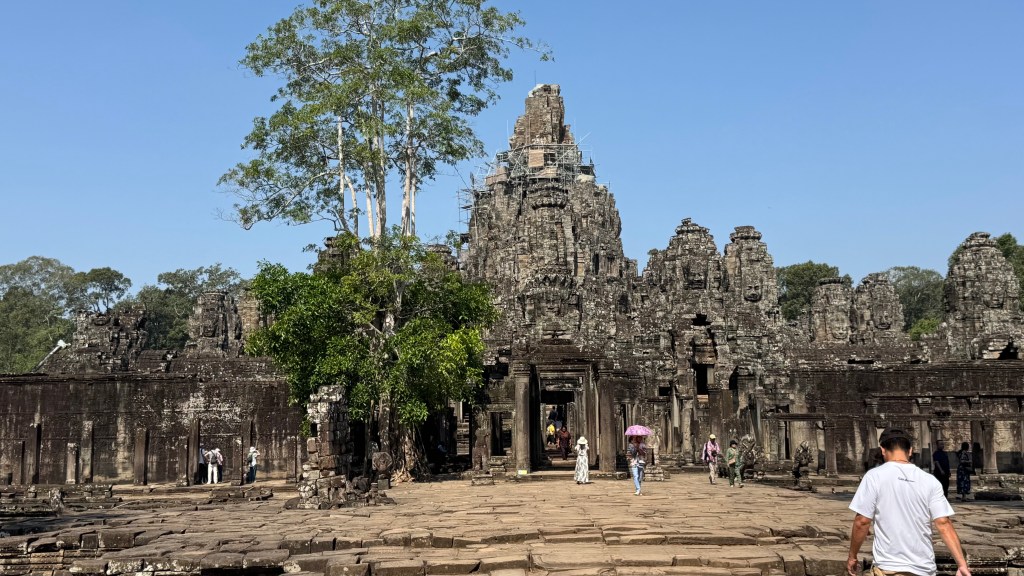
- Angkor Thom – walled royal city, late 12th century, King Jayavarman VII. It is a separate, enormous complex less than a mile north of Angkor Wat. Bayon sits at the very center of Angkor Thom.
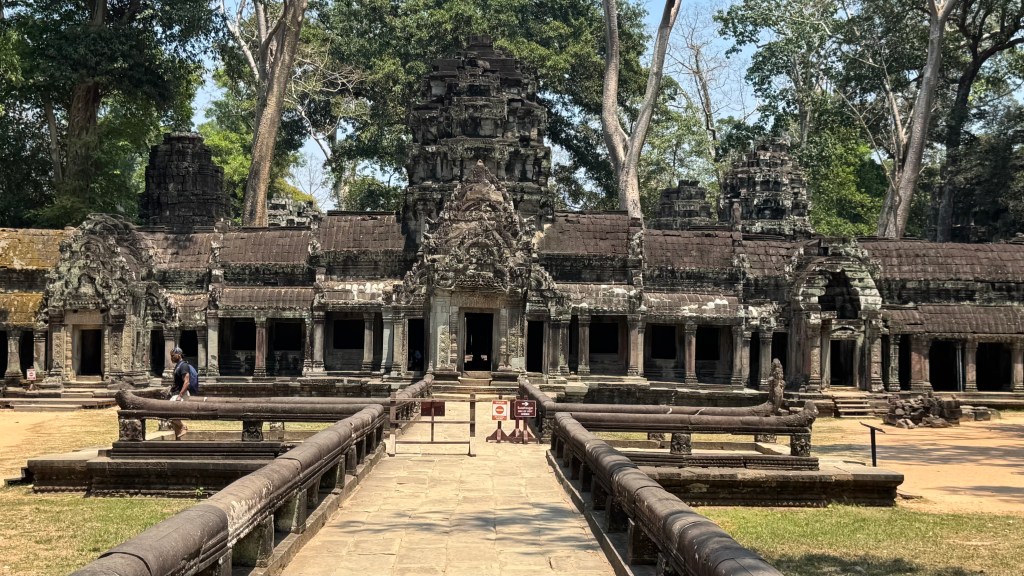
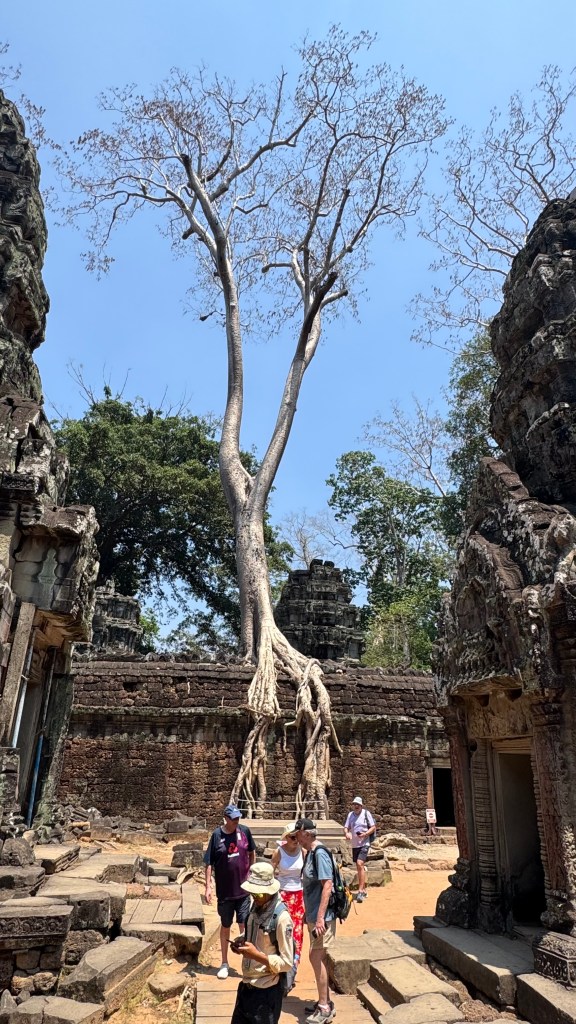
- Ta Prohm – standalone temple, late 12th to early 13th century, King Jayavarman VII. Separate from Angkor Thom despite sharing the same royal patron. Geographically it sits between Angkor Wat and Angkor Thom, less than a mile east of Angkor Wat.
- Banteay Srei – Grand circuit – standalone temple, 10th century, built by a Brahmin counselor to the royal court. It is older than Angkor Wat by about 150 years. Located about 15 miles away from the main cluster.
Angkor Wat
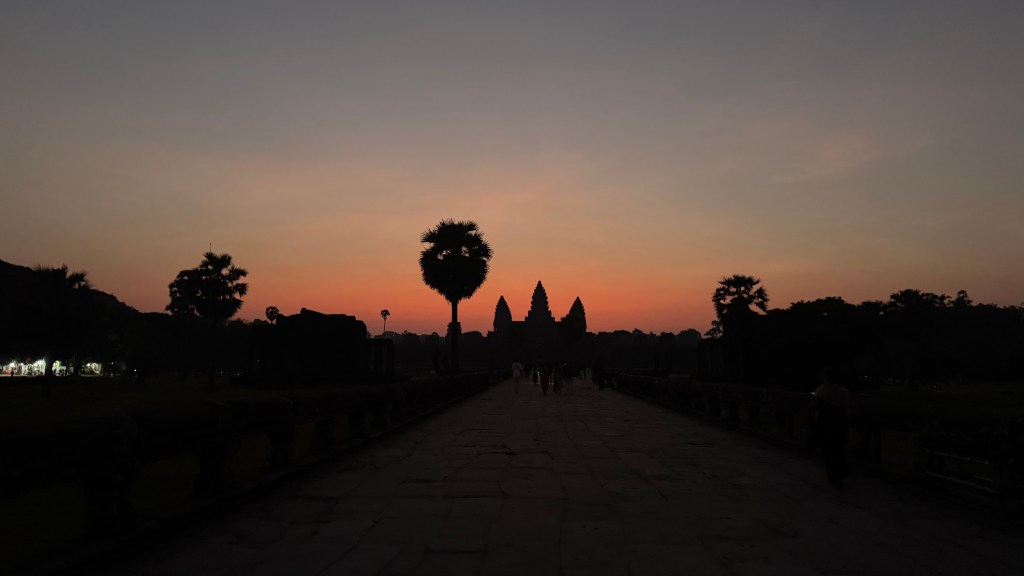
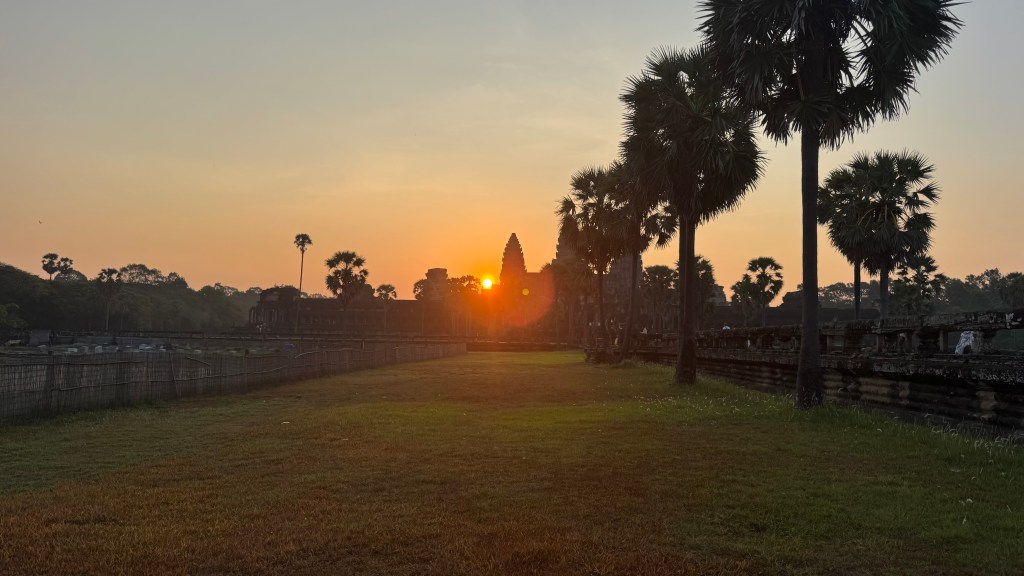
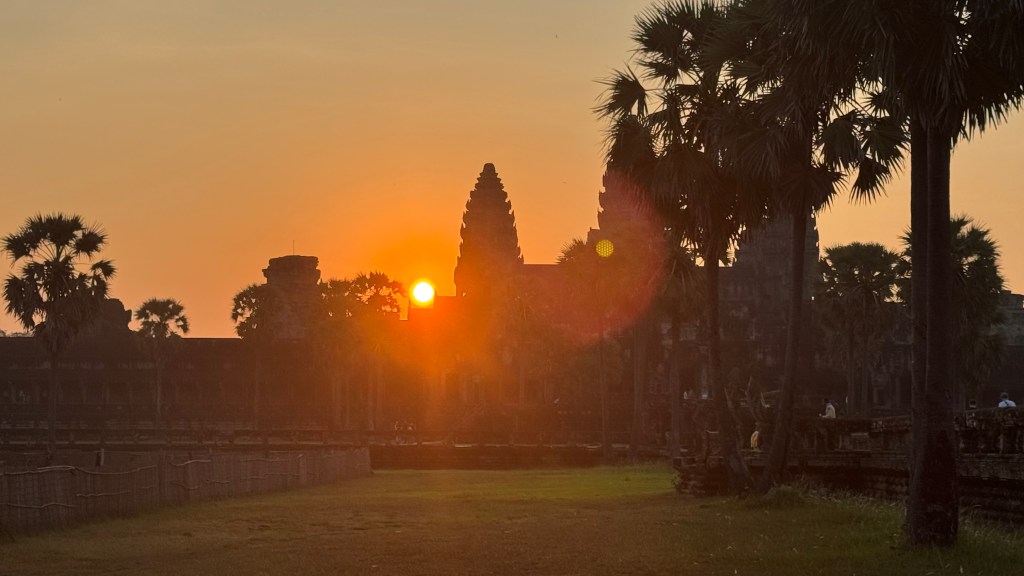
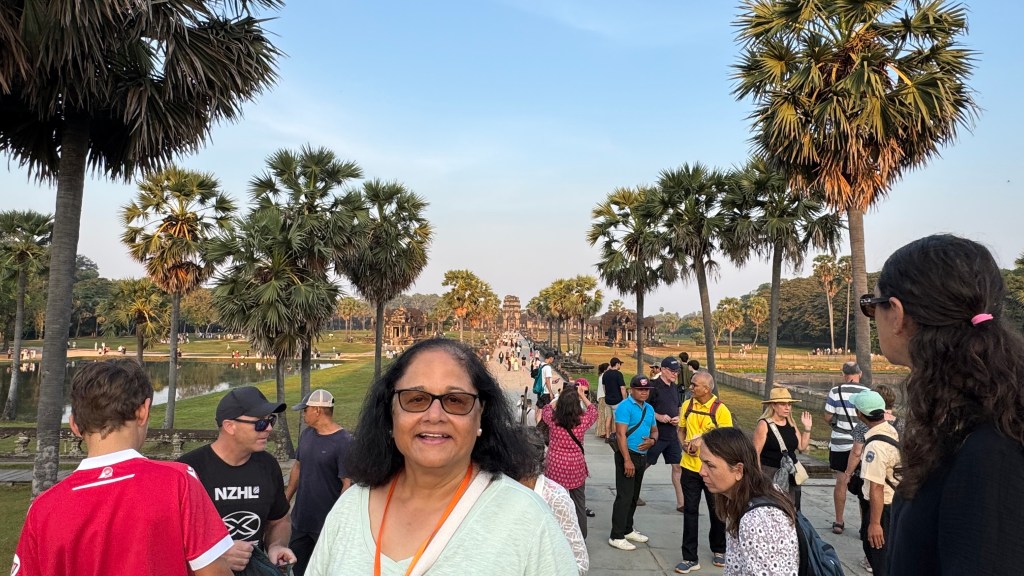
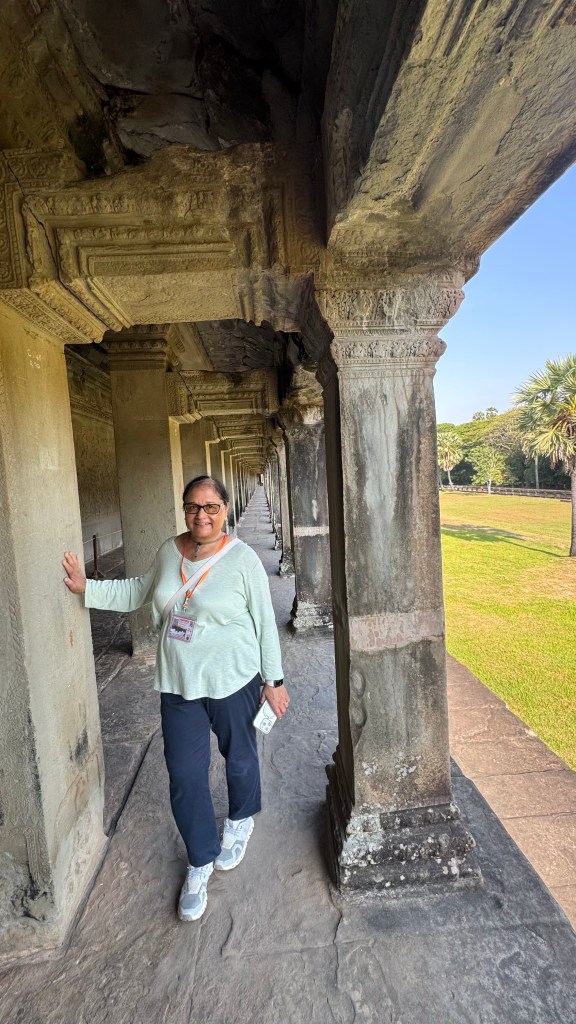
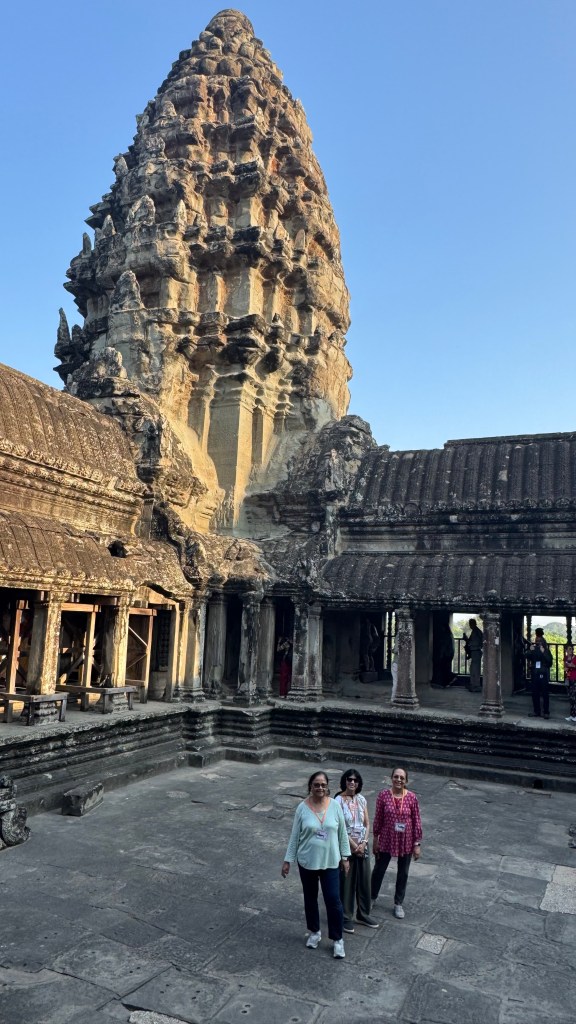
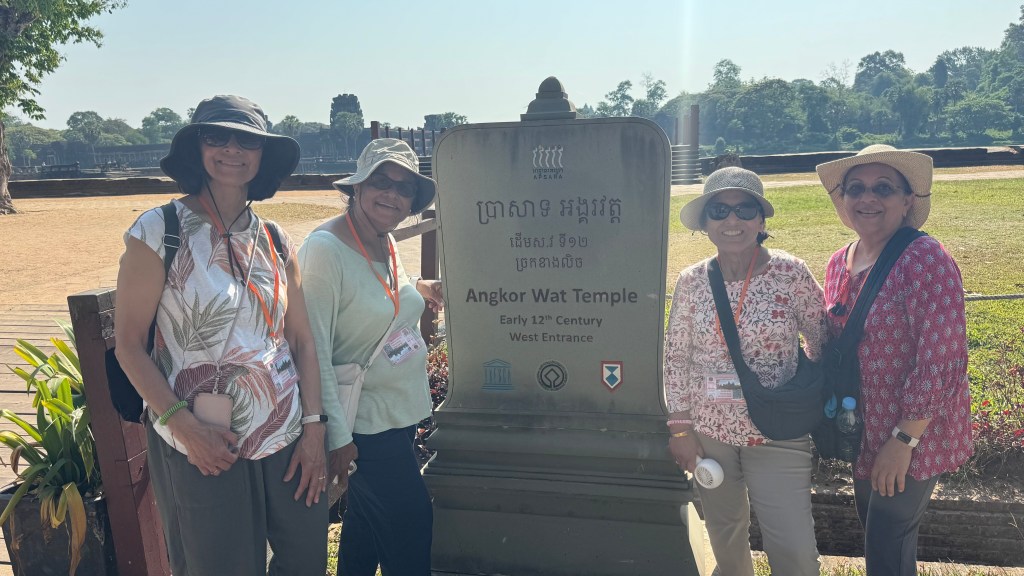
To see Angkor Wat at sunrise (6:17am), we were up early and left the hotel at 5:00am. The temple was approximately 30 mins drive from the hotel. Our goal was to get there early to beat the crowds. Even at 5:30am there were plenty of tourists and guides around – walking, talking, and picture taking. It was nice and cool at this time of the morning on April 1st.
We were standing at the edge of the moat, with the temple at the far end of the moat. The crowds grew large as we got closer to 6:17am.
Sunrise varies by season between 5:30 and 6:15am. The 20-minute window around actual sunrise is magical – before and after that it is either dark or ordinary daylight. Buy your temple pass the day before so nothing slows you down at the gate.
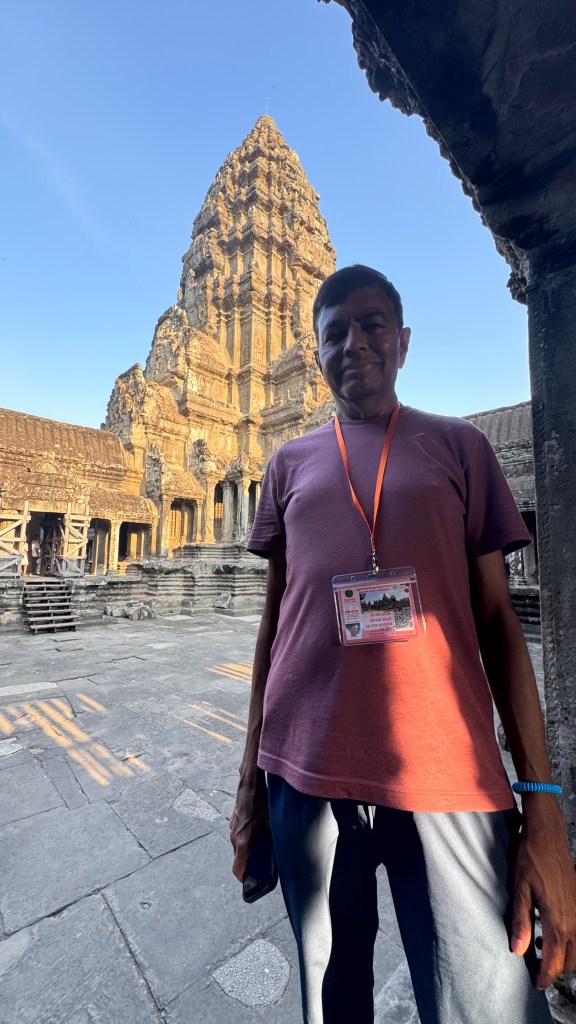
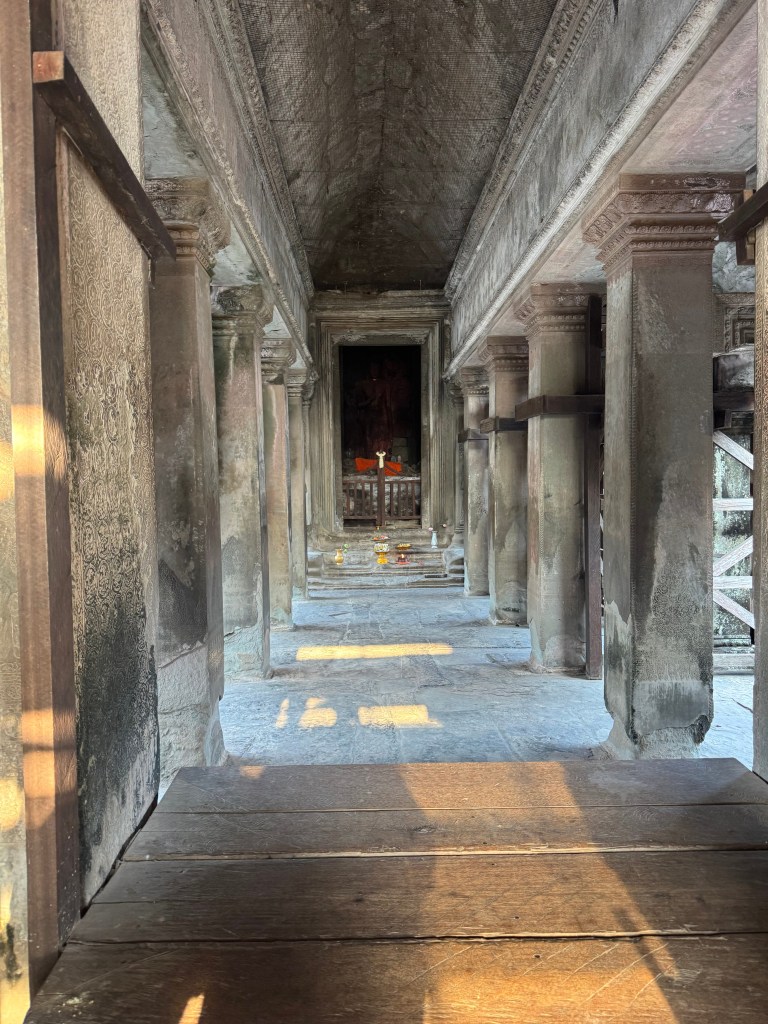
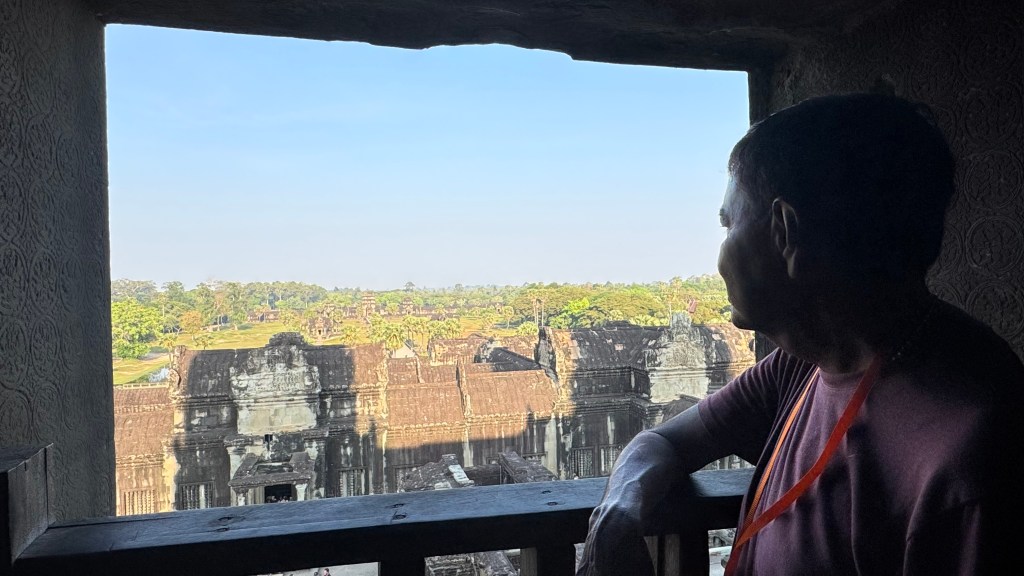
After sunrise: walk the outer gallery bas-reliefs, then climb to the upper sanctuary – steep stairs, dress code enforced, knees and shoulders covered. Angkor Wat at 4pm – we did not do this – is equally beautiful and differently lit, and has a fraction of the morning crowds.
As the day wore on, the mercury climbed steadily and showed no signs of turning back. Took three showers. Yes, three! By the third shower, the water was less a relief than a ritual – a brief, cool negotiation with the heat. Afternoons in Cambodia don’t end so much as dissolve, hour by hour, into a golden, sodden stillness. The afternoon just dragged on and on. I was, in the most literal sense, a damp tourist.


















Video …
Angkor Thom
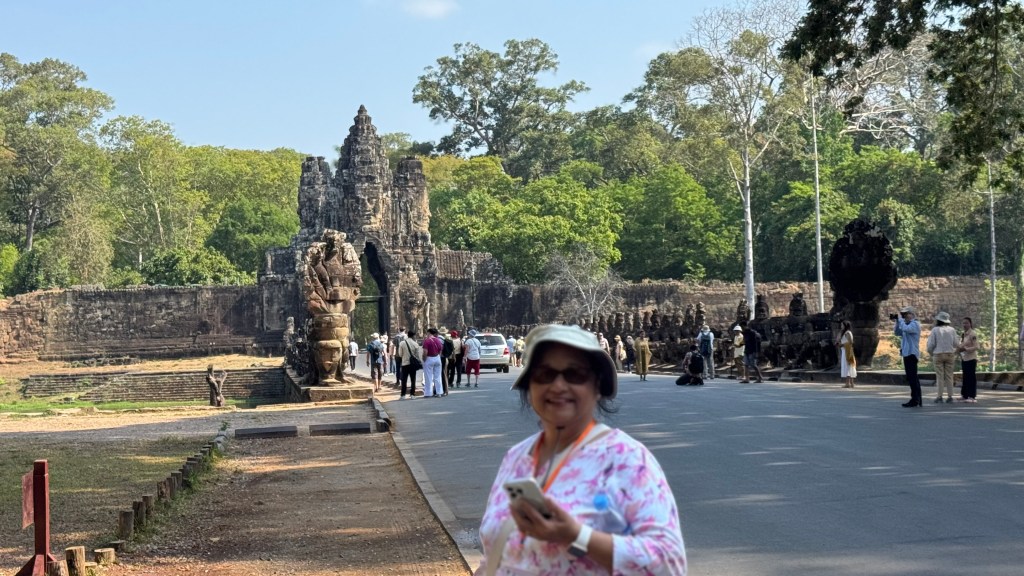
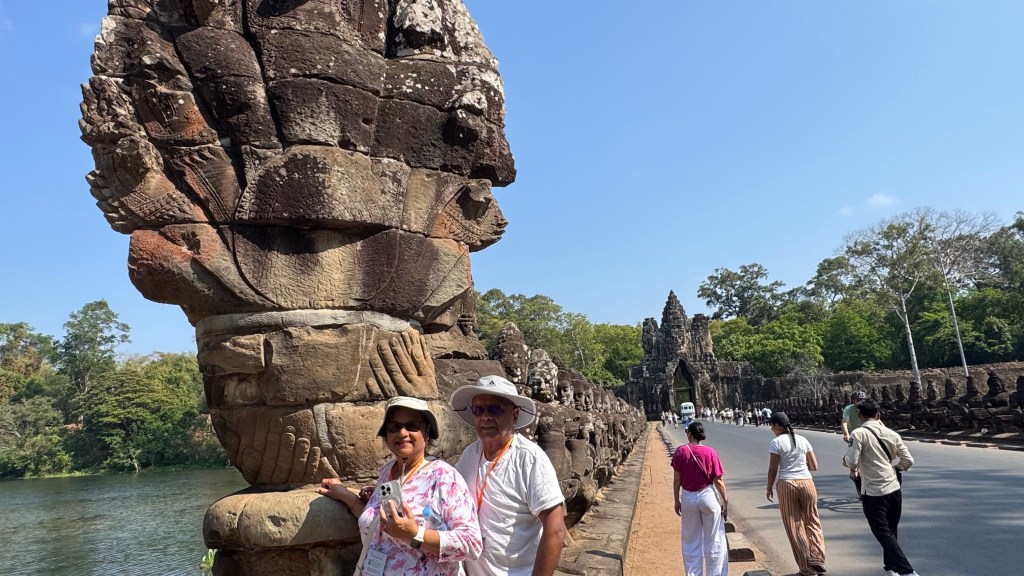
At the South Gate of Angkor Thom there are fifty-four Gods on the left, fifty-four demons on the right. Each row grips an enormous stone naga, a mythical serpent, in a tug of war. The scene depicts the Churning of the Ocean of Milk, a Hindu creation myth in which Gods and demons churn the cosmic ocean to produce the elixir of immortality.
The story of the Churning of the Ocean of Milk
In the beginning, the Gods and demons struck an uneasy truce. They agreed to work together toward a common goal – churning the cosmic ocean to produce Amrita, the elixir of immortality. Whoever drank it would live forever.
They used Mount Mandara as the churning rod. They wrapped the cosmic serpent Vasuki around it like a rope. The demons grabbed the head end. The Gods grabbed the tail. They pulled back and forth for a thousand years, churning the primordial ocean.
Several things emerged from the churning before the elixir appeared. The goddess Lakshmi rose from the waters. A divine physician emerged. A white elephant. A white horse. And then, terrifyingly, a poison so potent it threatened to destroy everything. The god Shiva stepped forward and swallowed it to save the universe. His throat turned blue permanently, which is why Shiva is often depicted with a blue neck.
Eventually the elixir appeared. The Gods grabbed it. The demons, predictably, tried to steal it. A cosmic struggle followed. The Gods won.








Bayon Temple
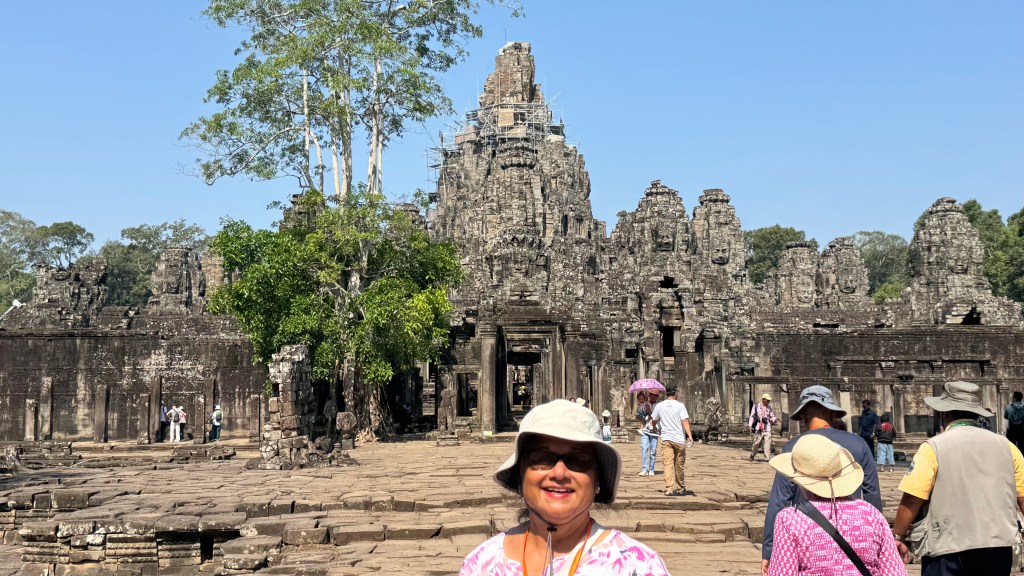
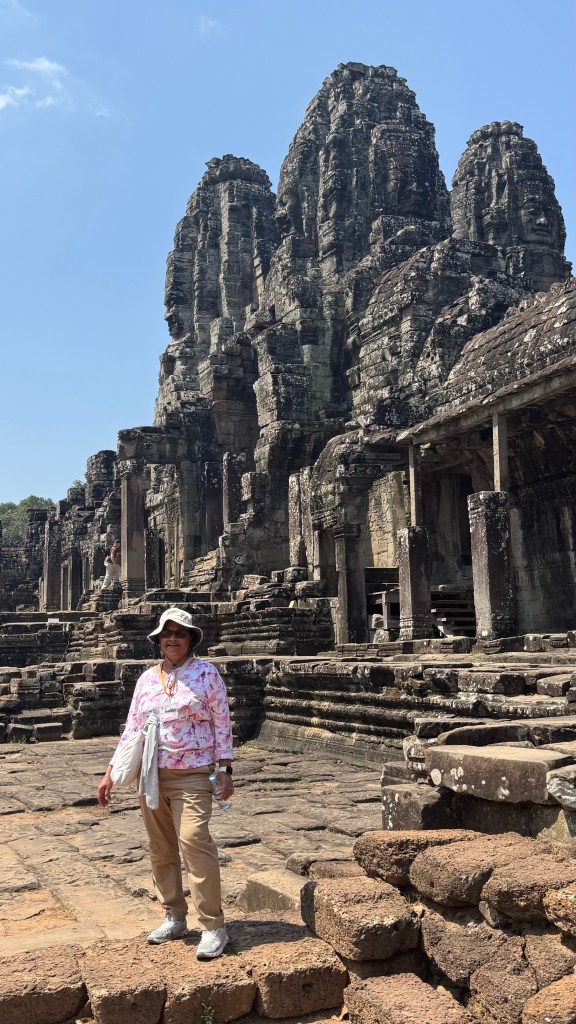
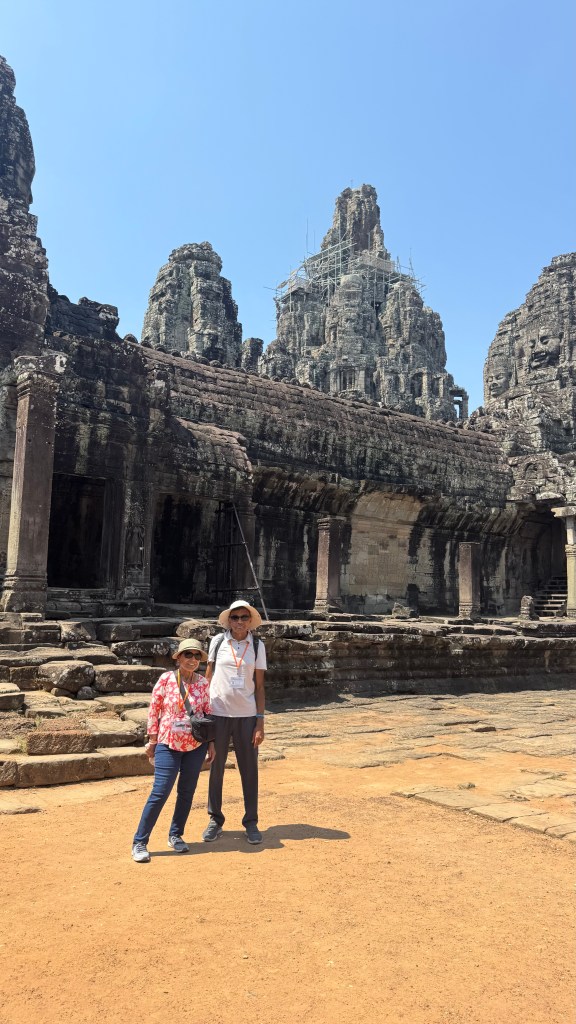
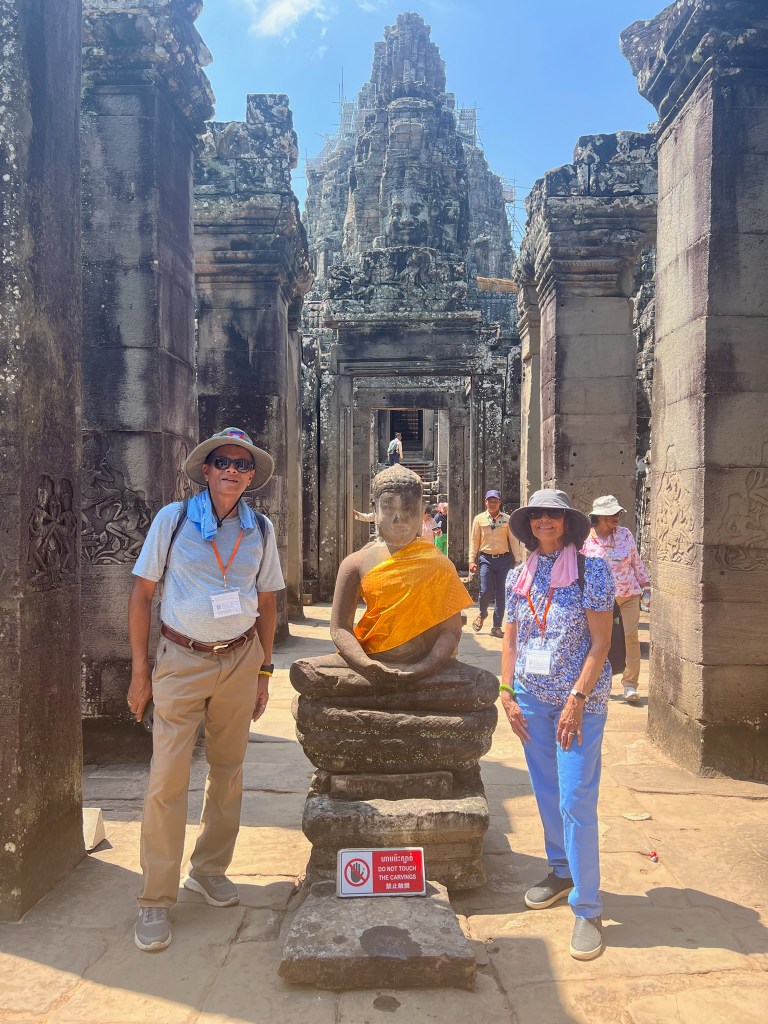
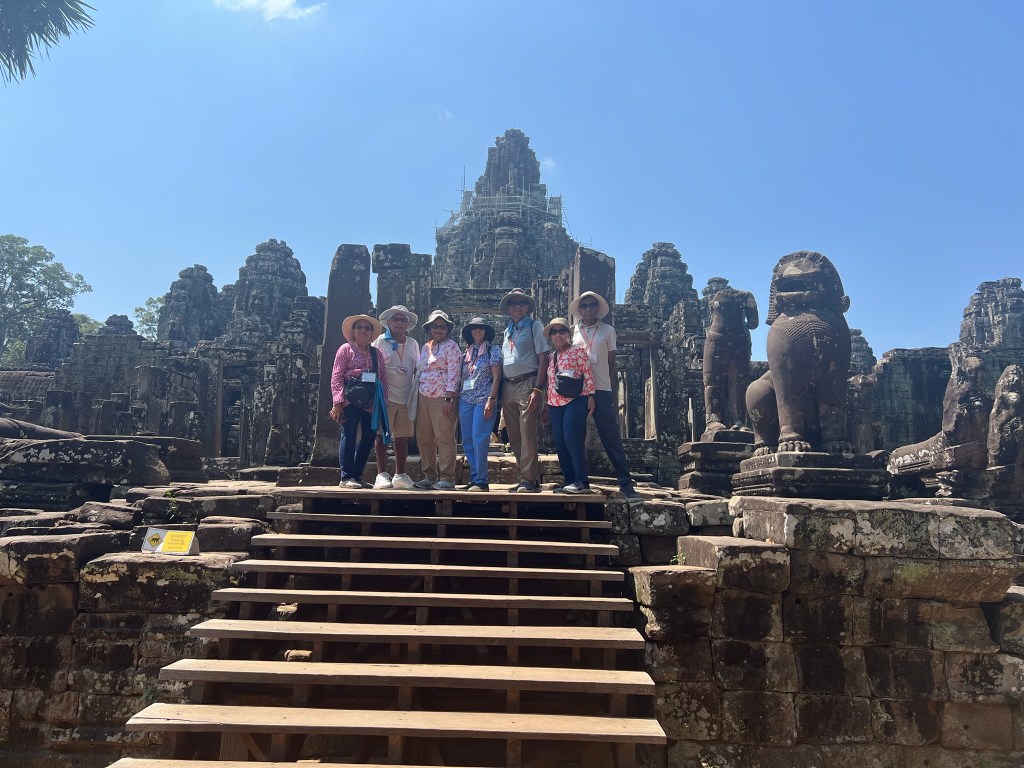
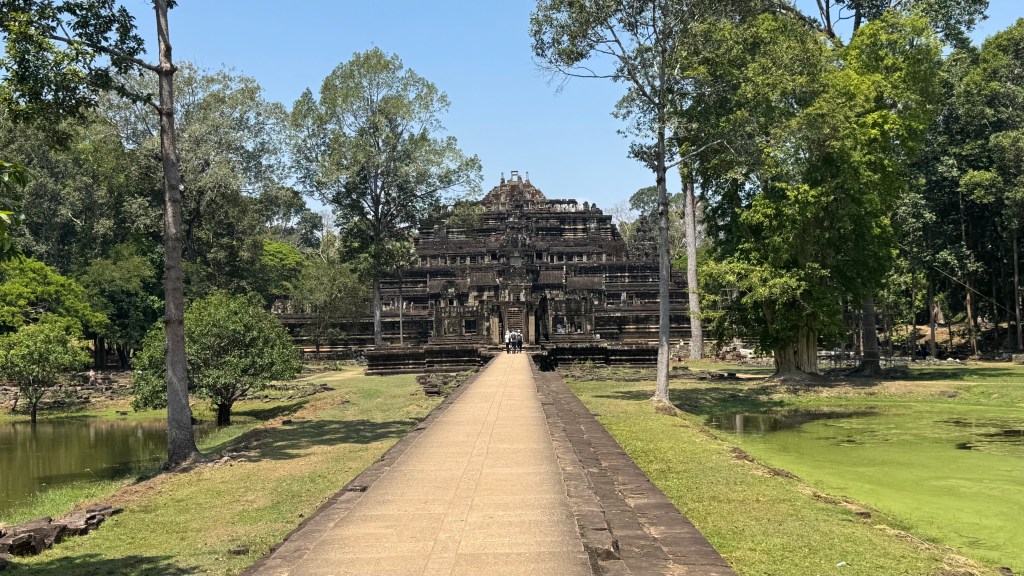
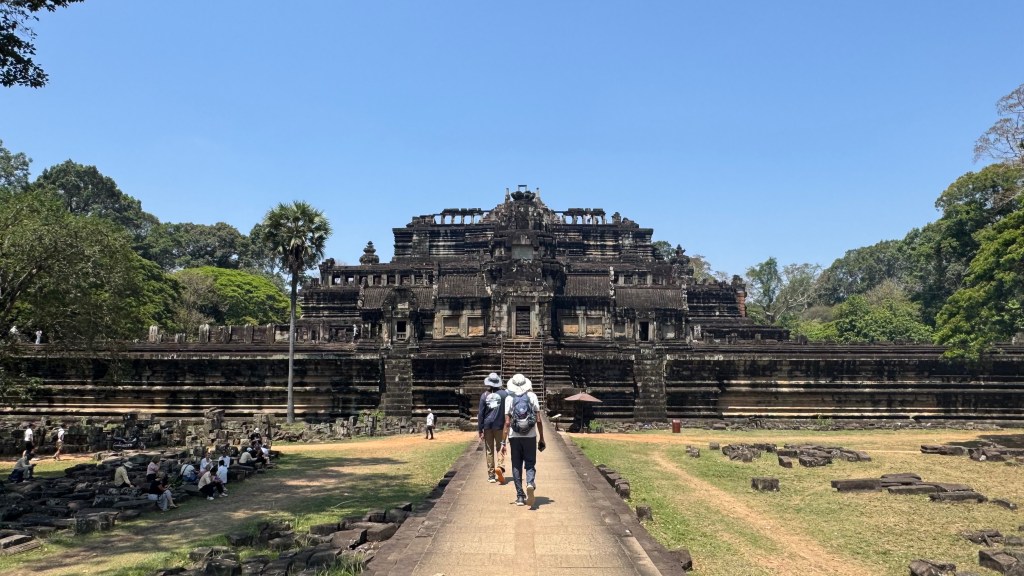
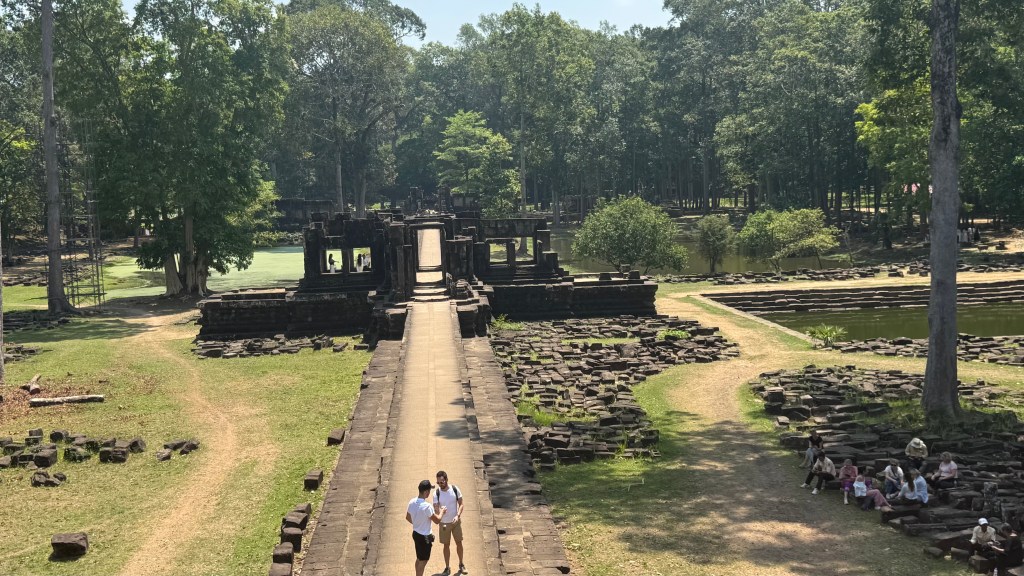
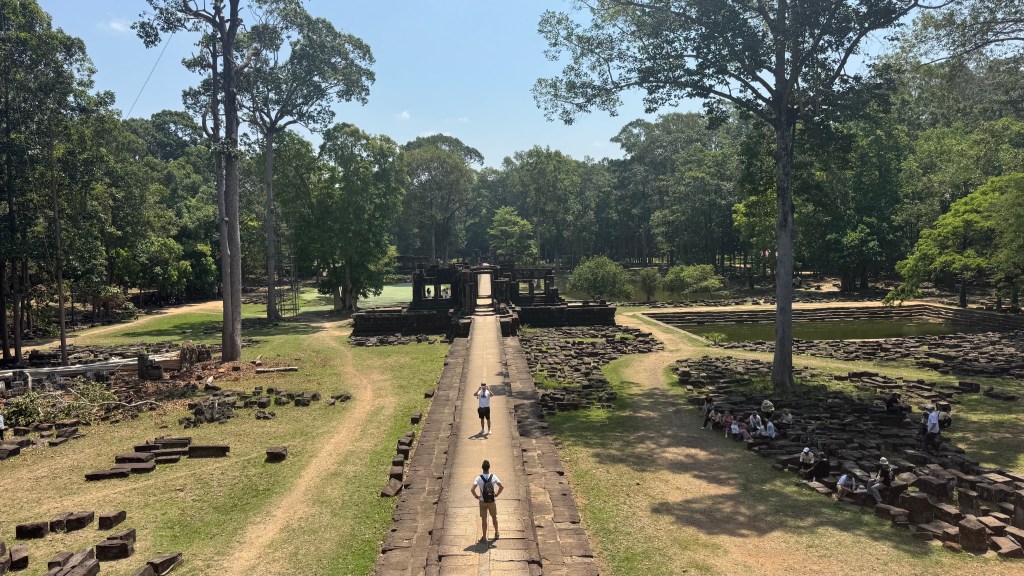
Walking toward the Bayon from the outer terrace, one sees enormous serene faces. Each face is about six and half feet tall, carved on all four sides of each tower. There are one hundred and seventy-two faces in total watching the four directions.
Each one wears the same serene expression.
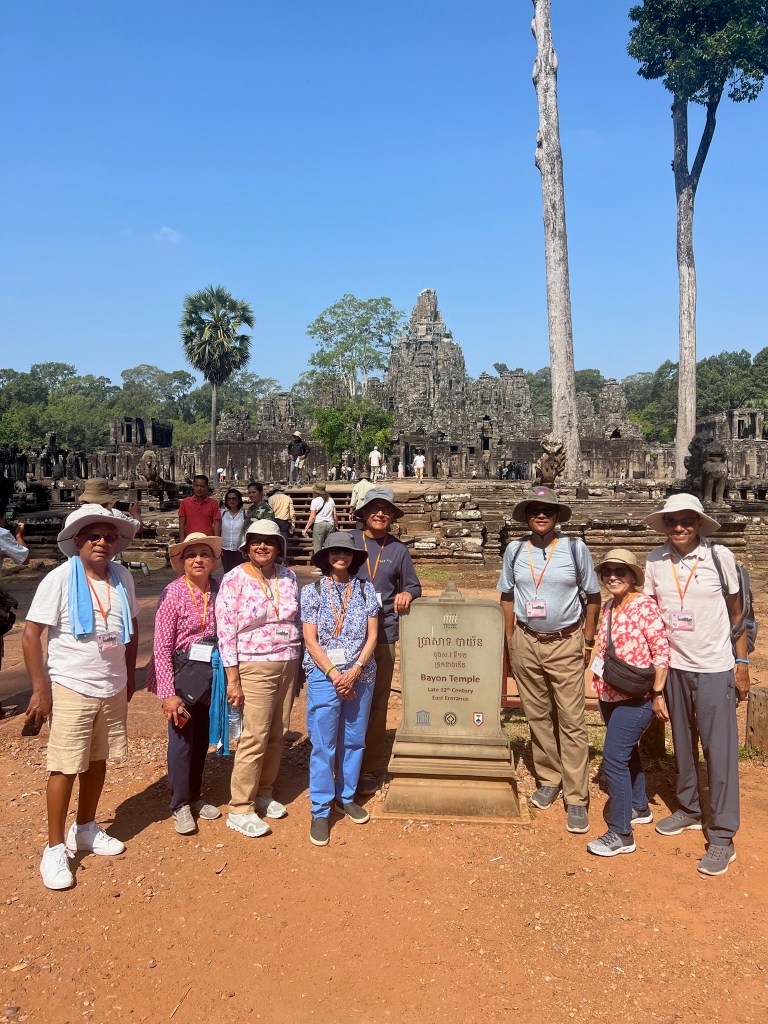
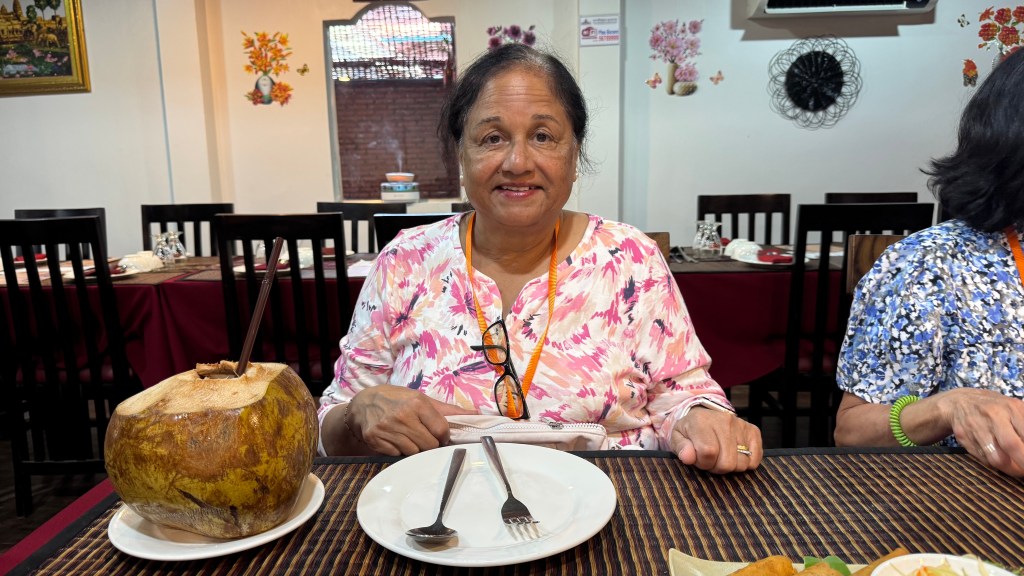
Lunch break … Could not come sooner! Was dreamy eyed about a nice cold fresh coconut water!


Ta Prohm
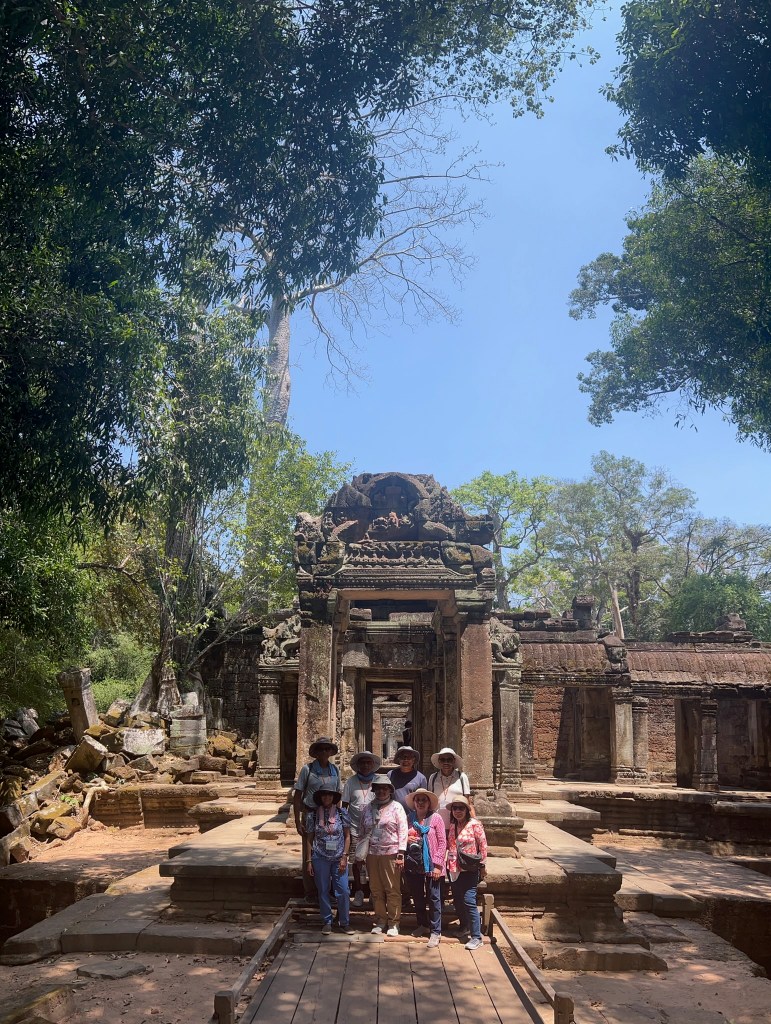
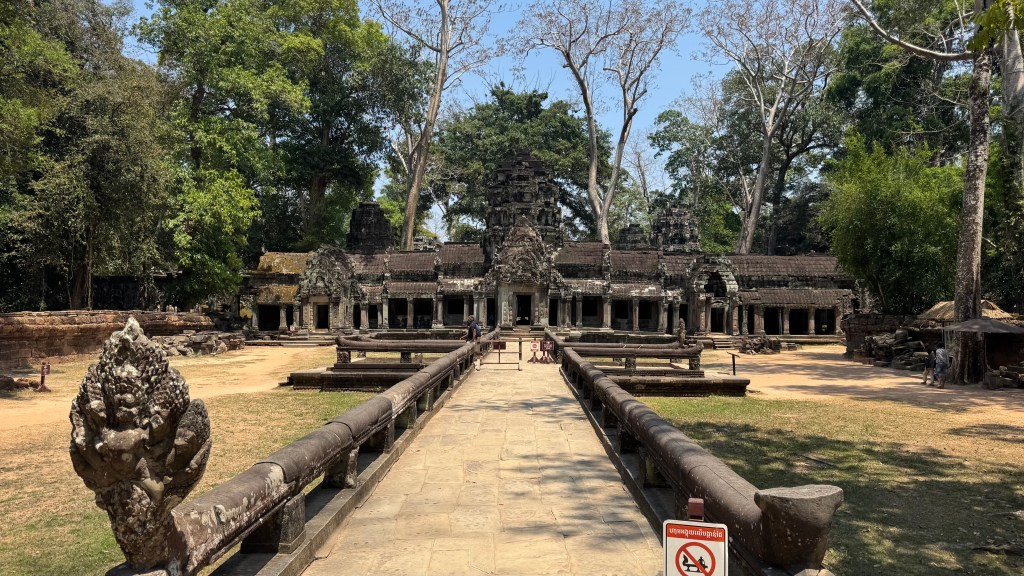
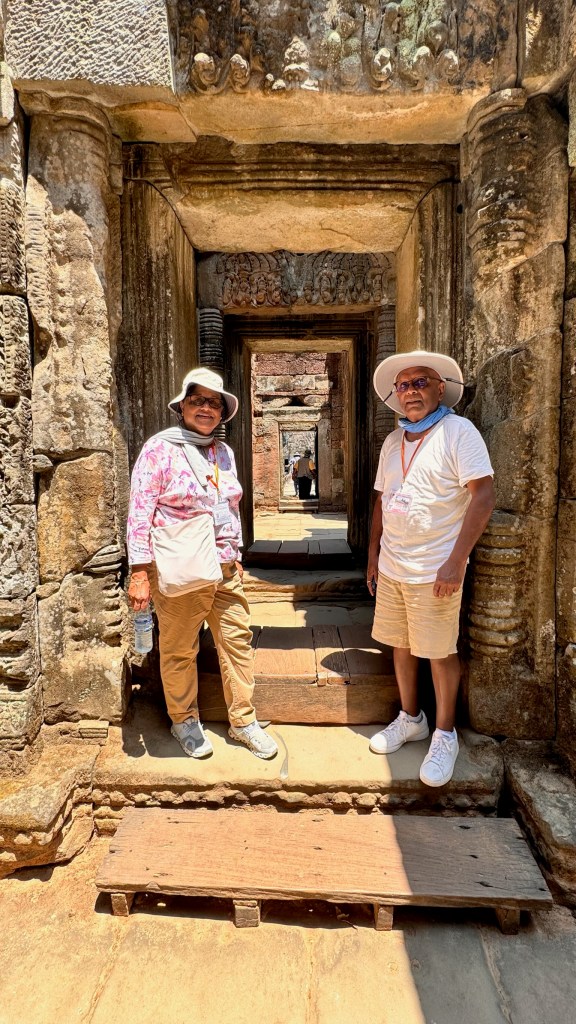
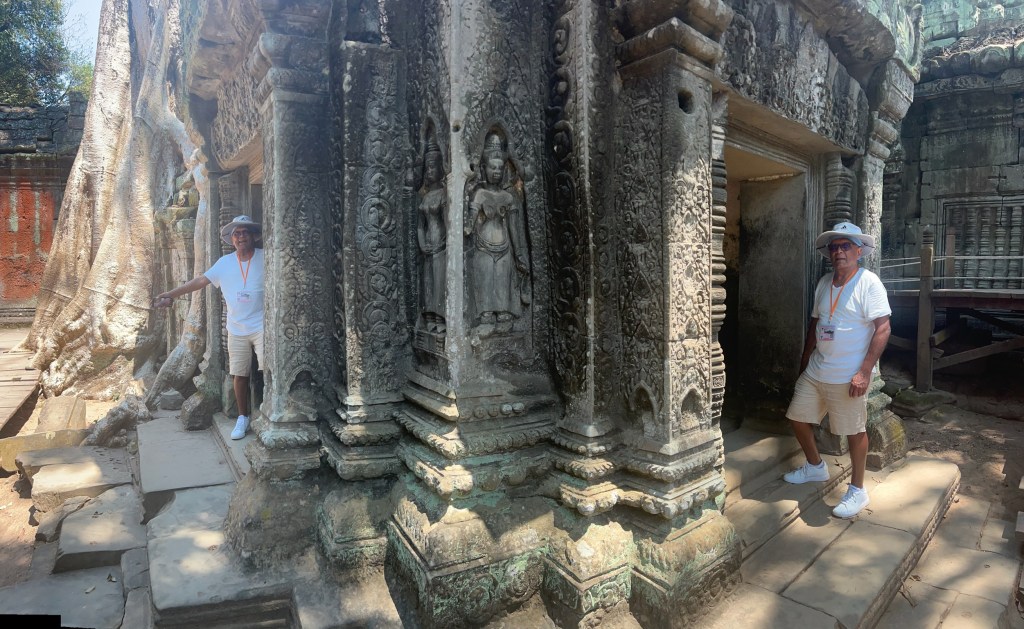
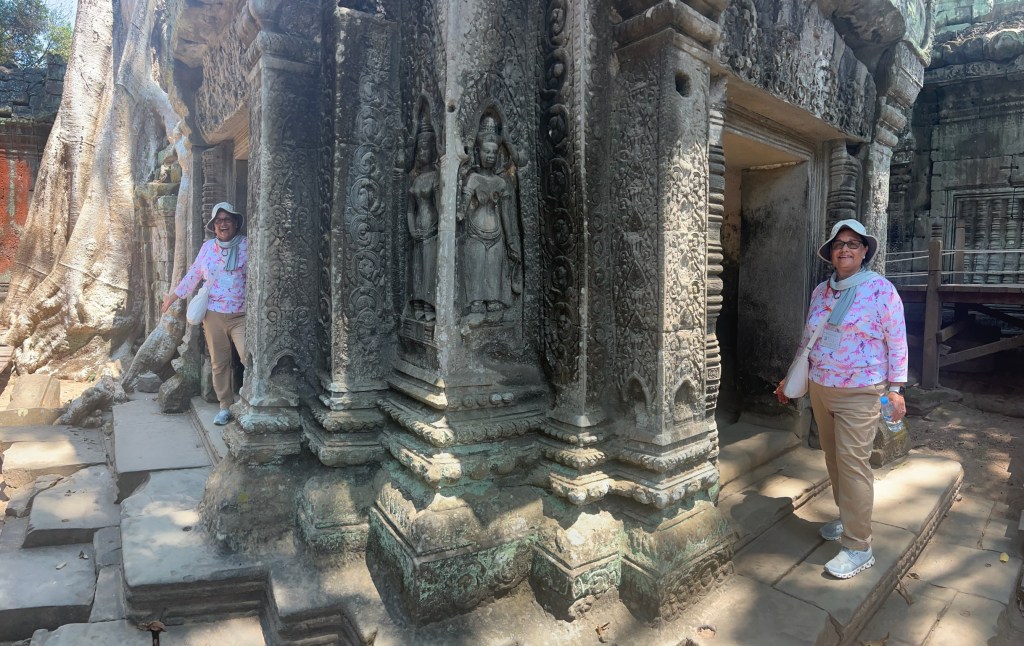
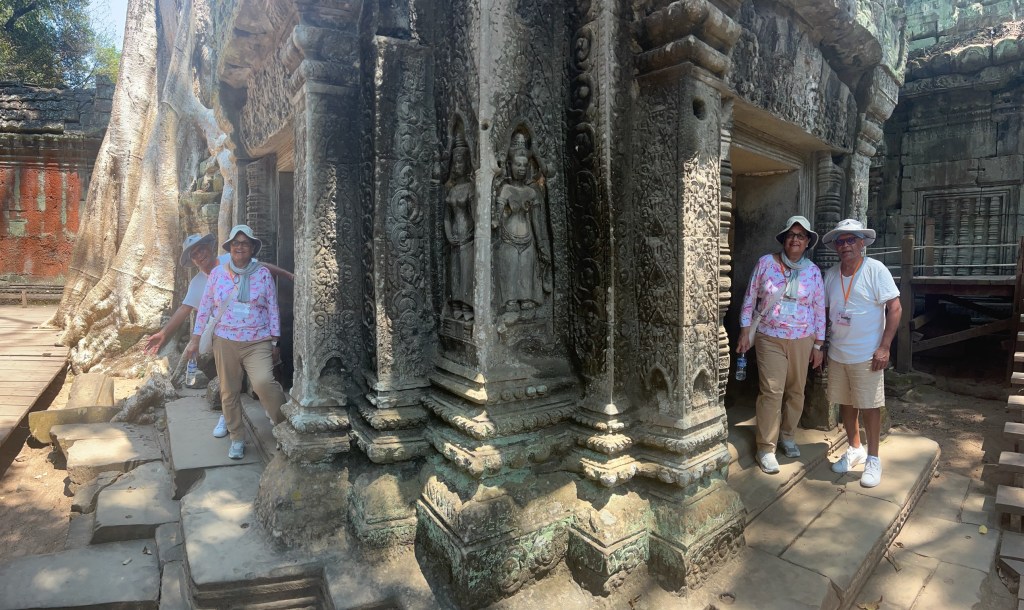
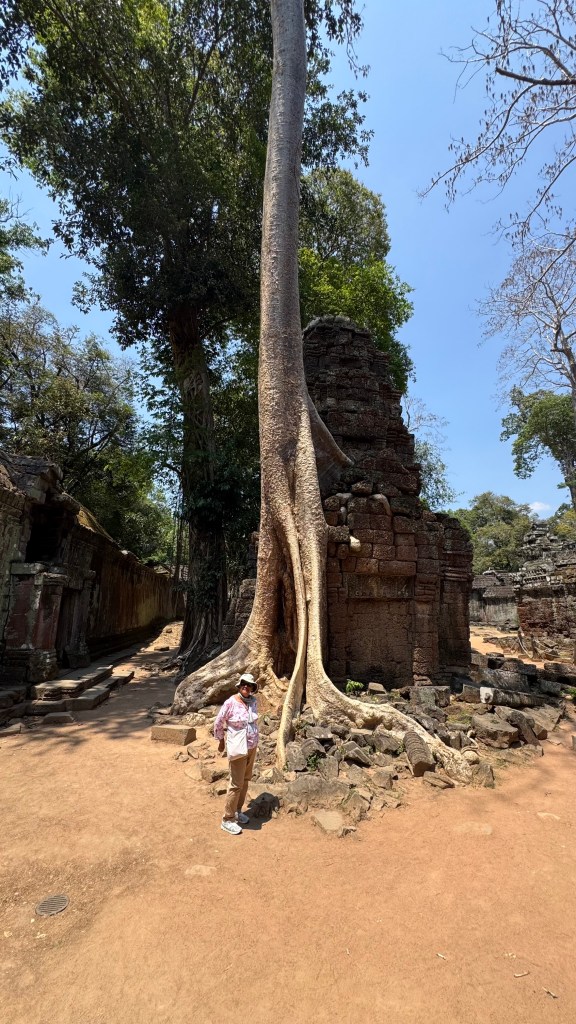
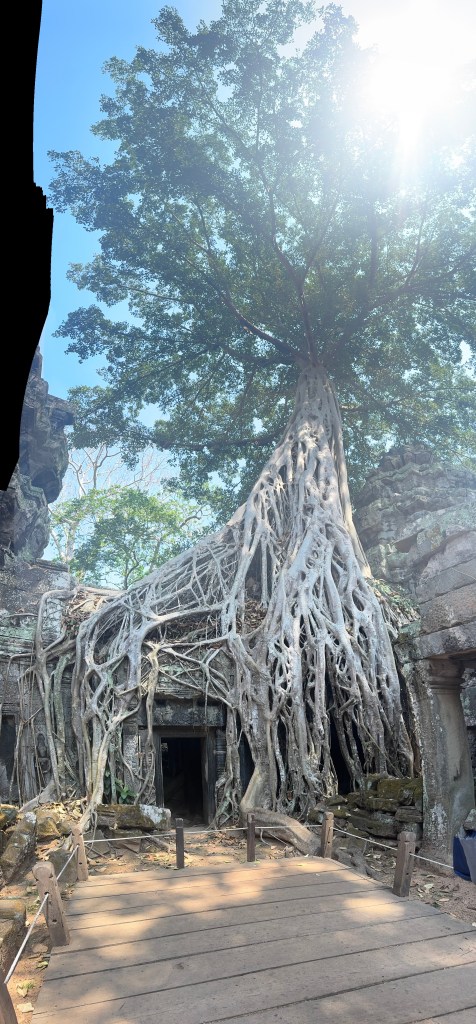
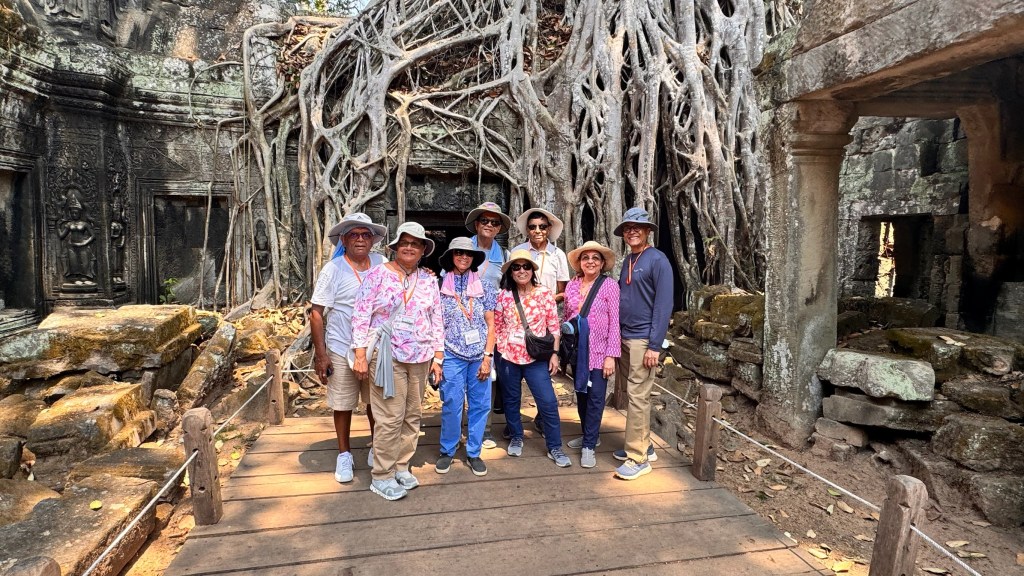
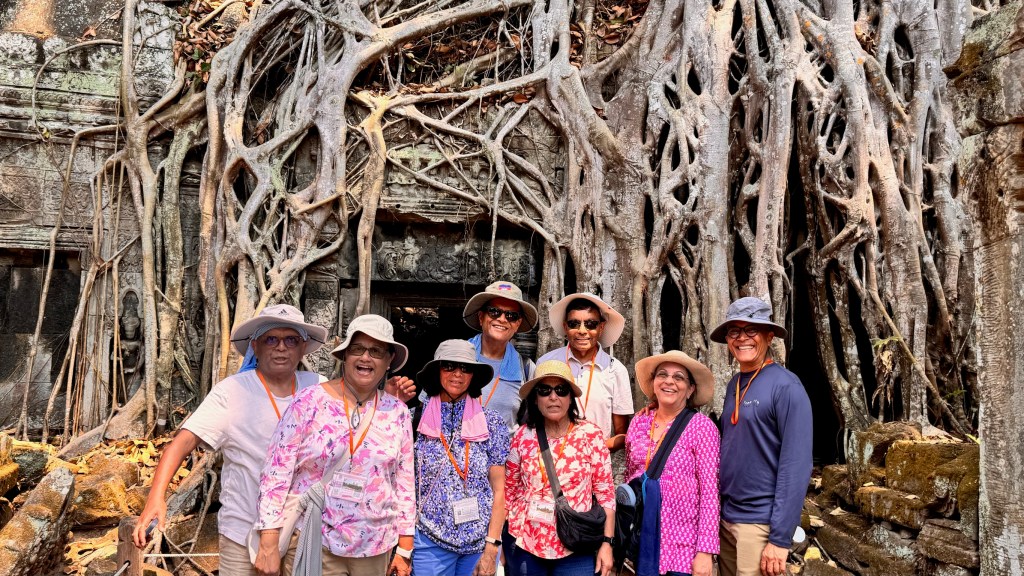
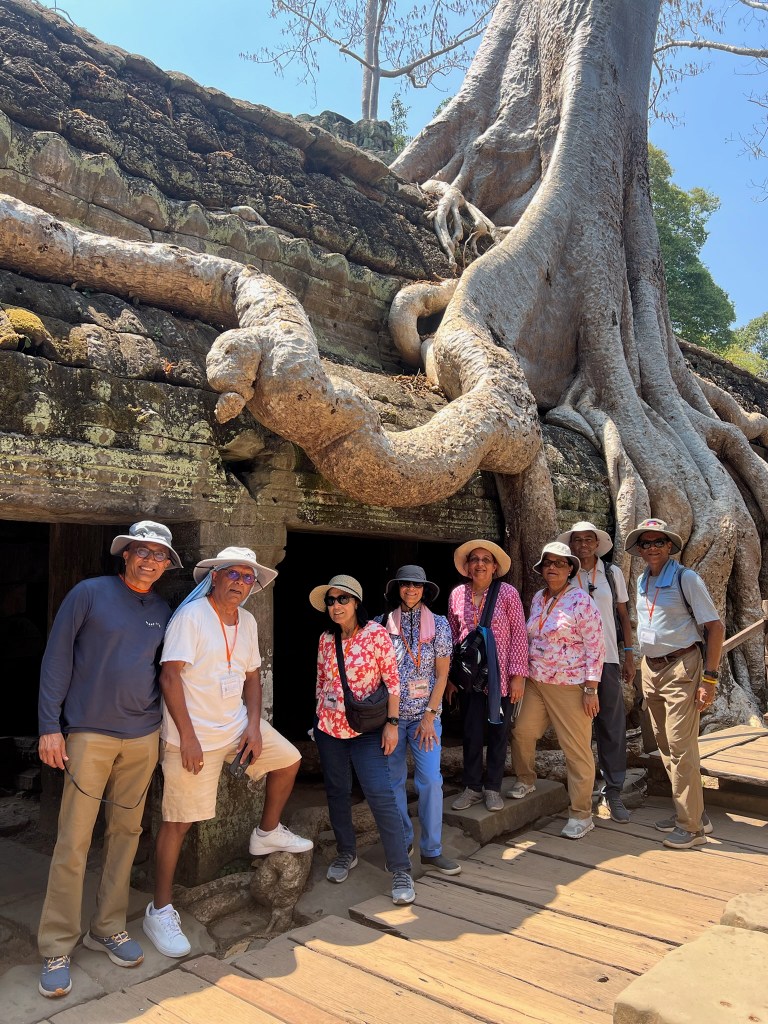
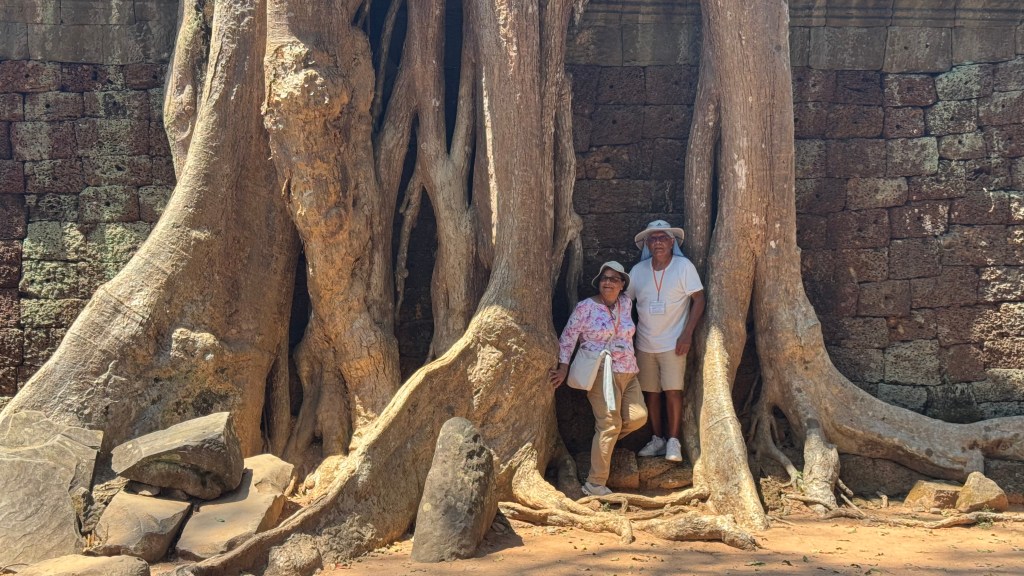
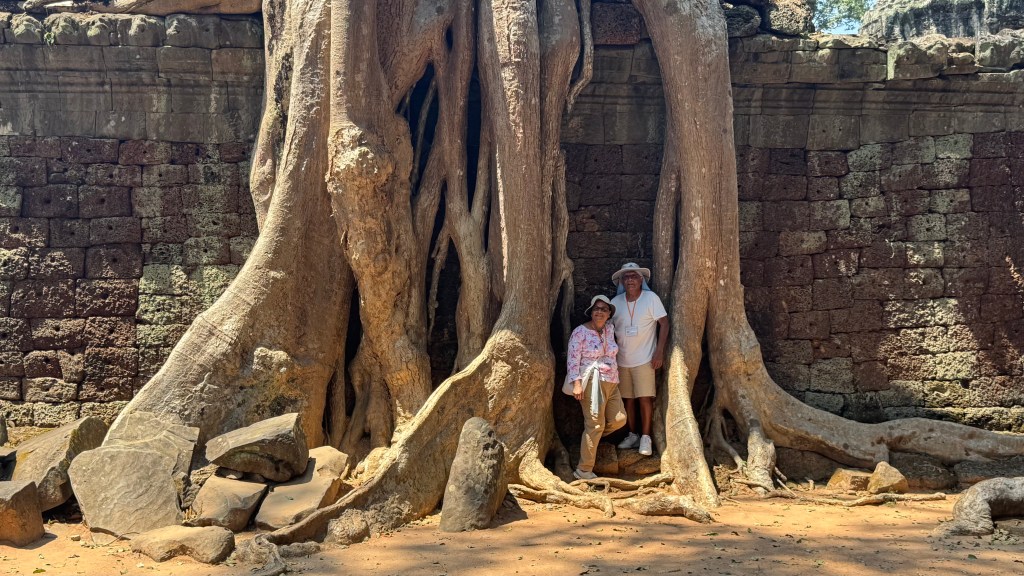
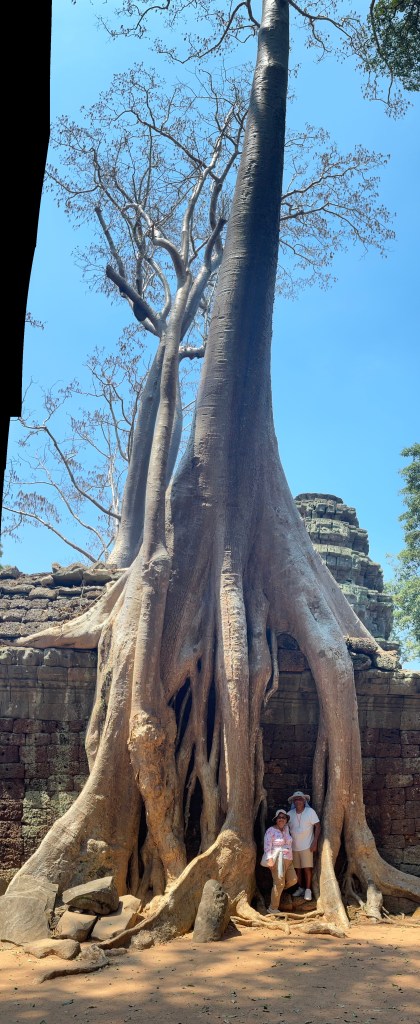
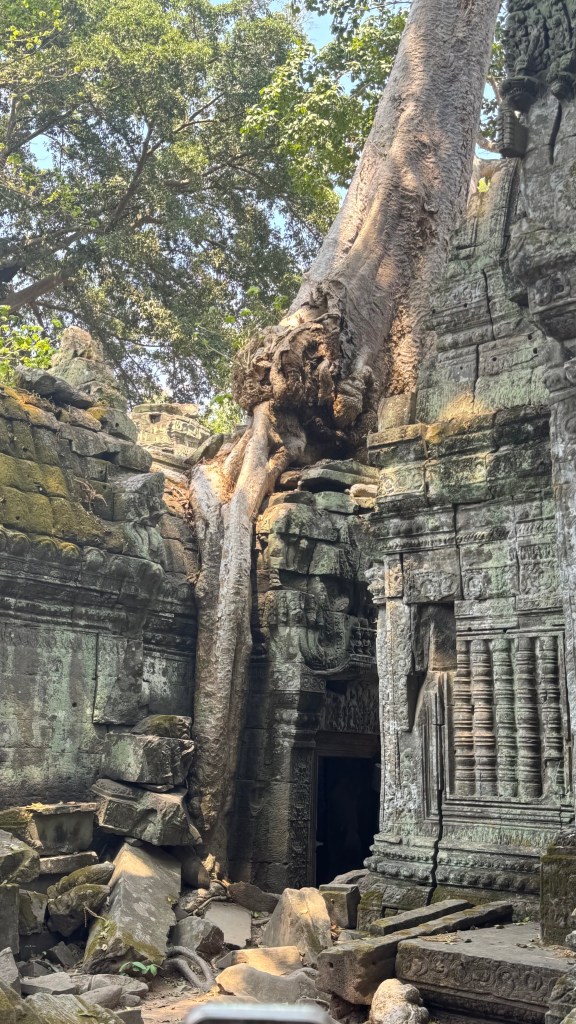
Ta Prohm is not a ruined temple with trees on it. It is a single organism that is both tree and stone. The trees are the point, obviously. But the specific thing about the trees is not that they are large it is that they are in a relationship with the stone. The tree has gone through the wall. The wall has not come down. The roots and the stone have been in a slow dance of negotiation for five hundred years. And it continues!








Banteay Srei – Grand Circuit
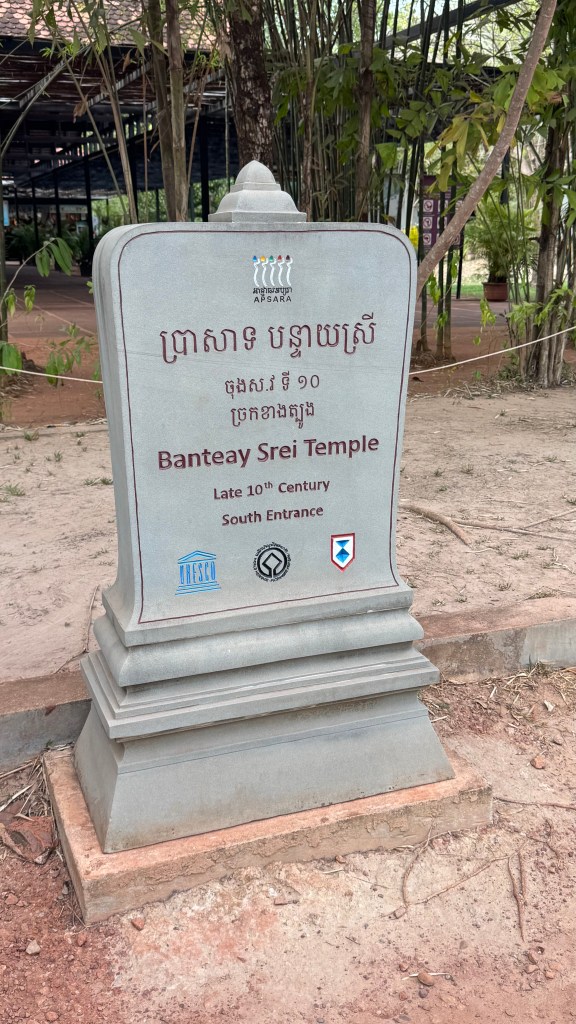
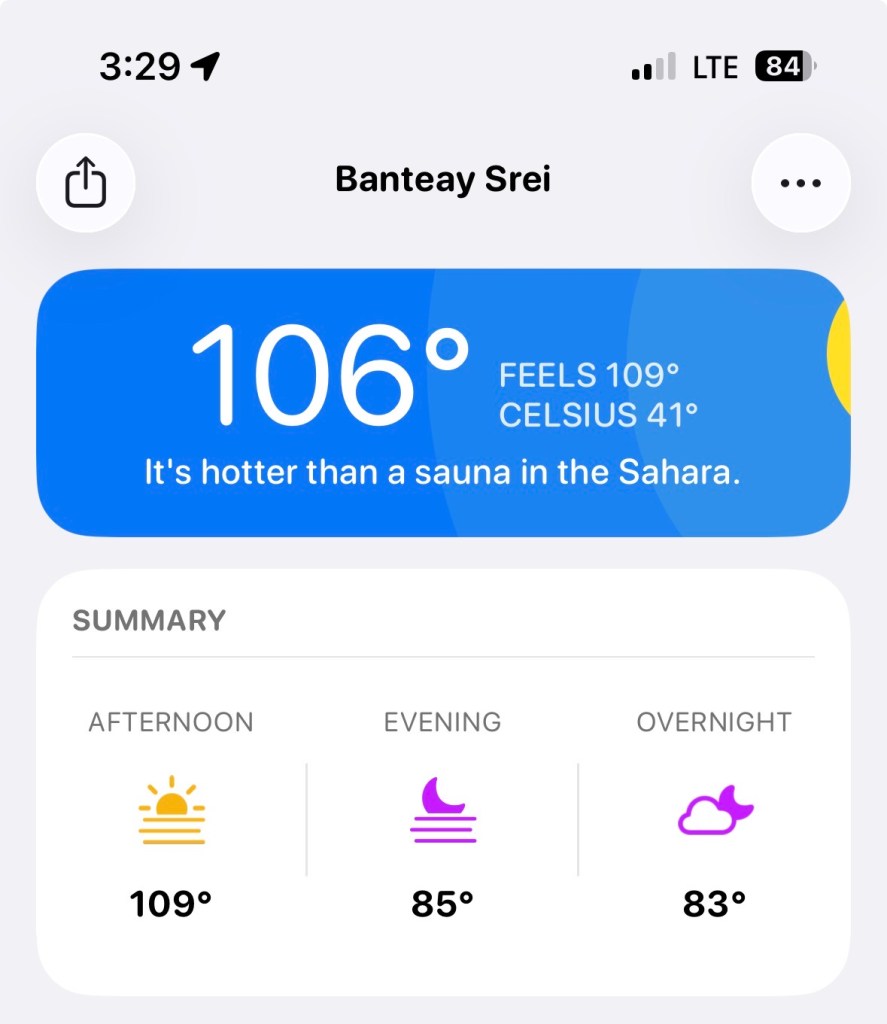
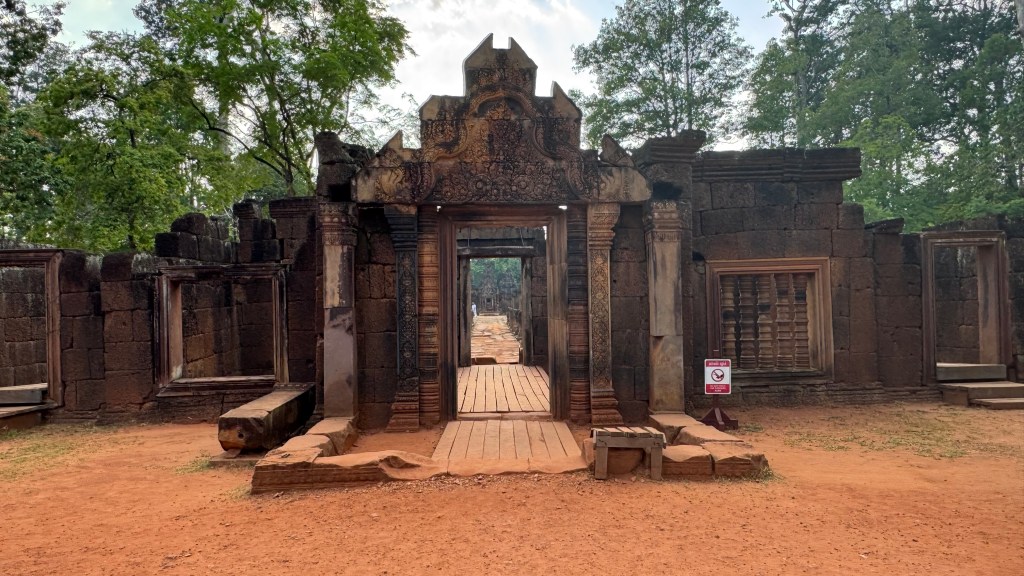
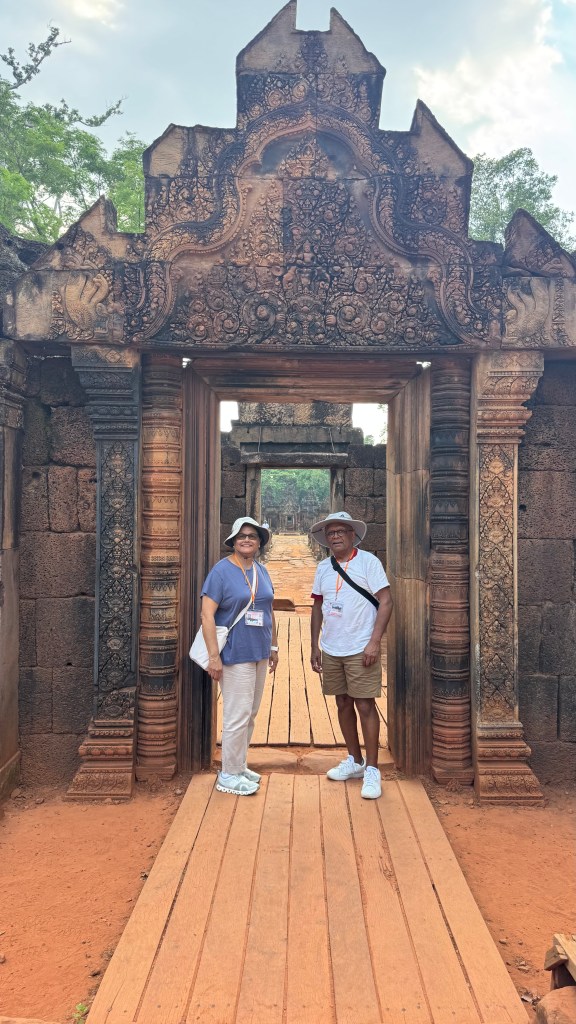
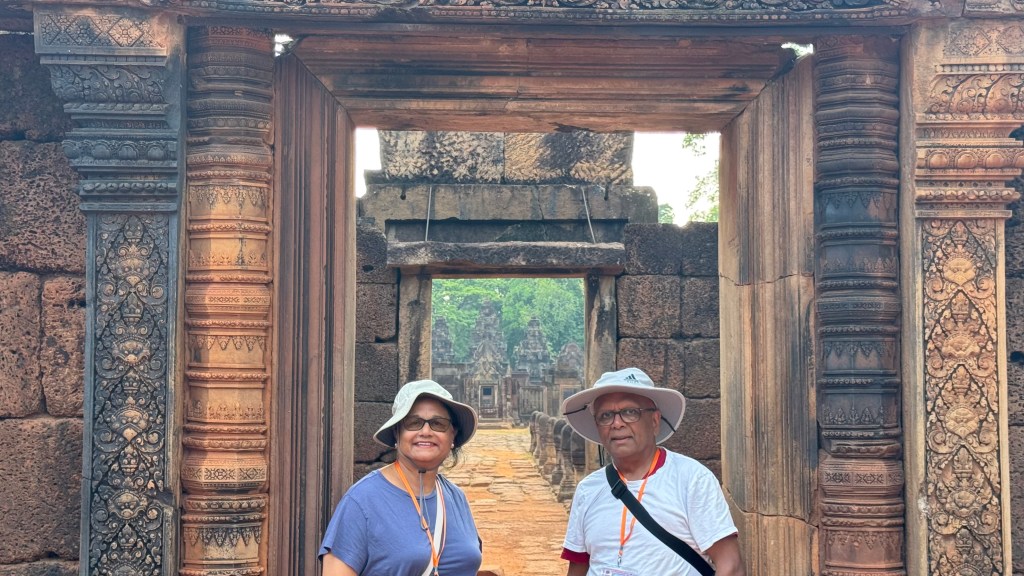
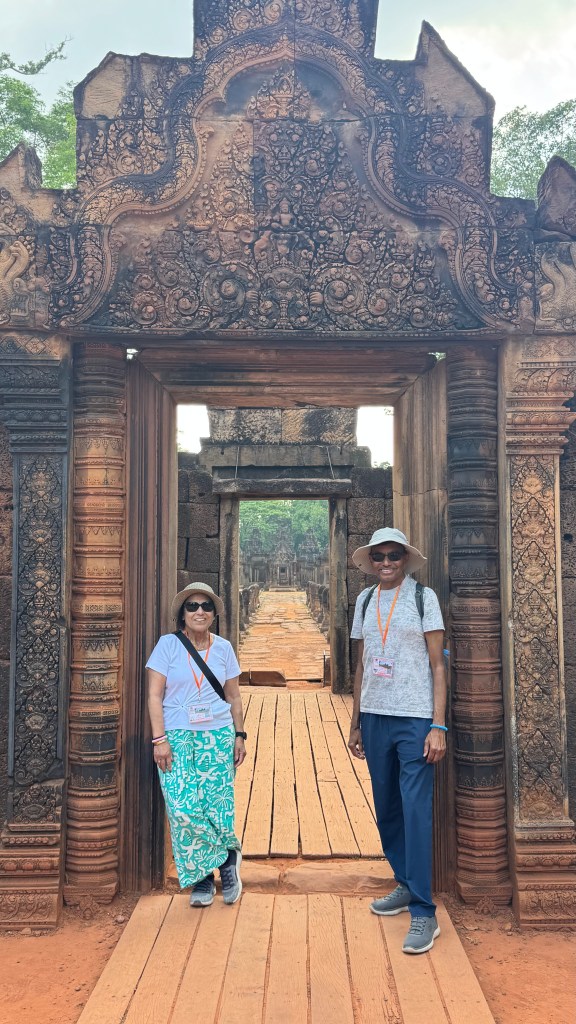
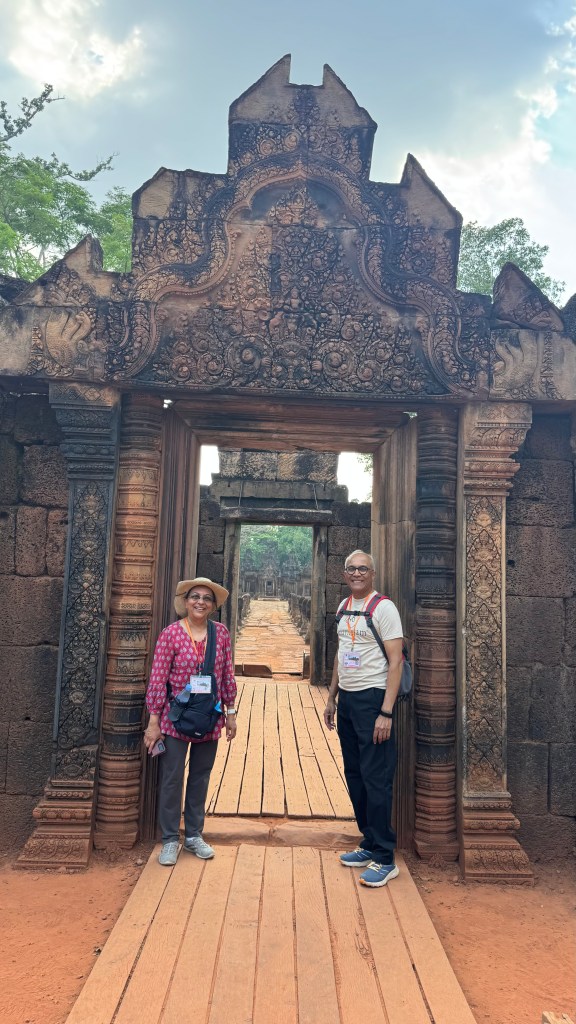
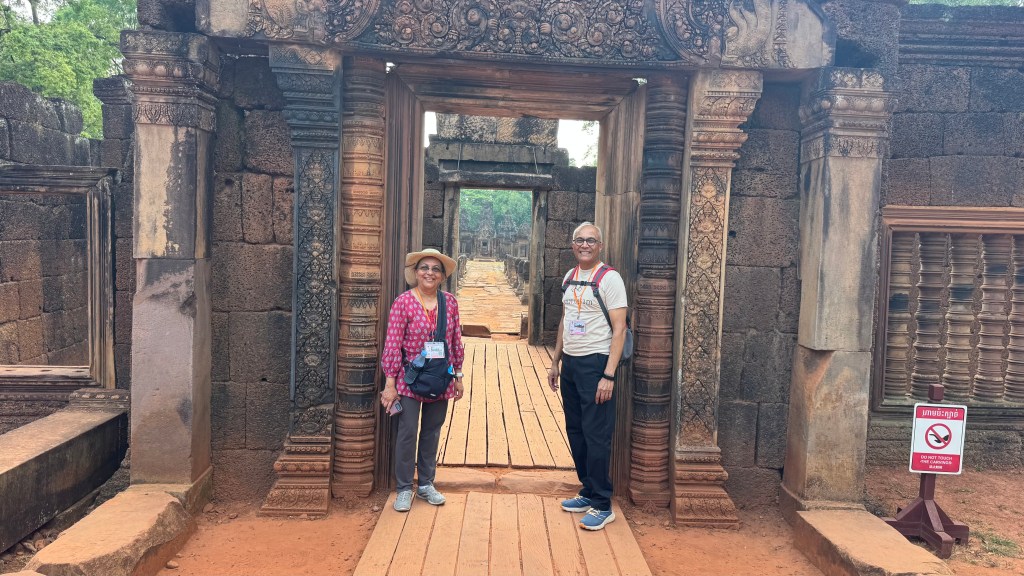
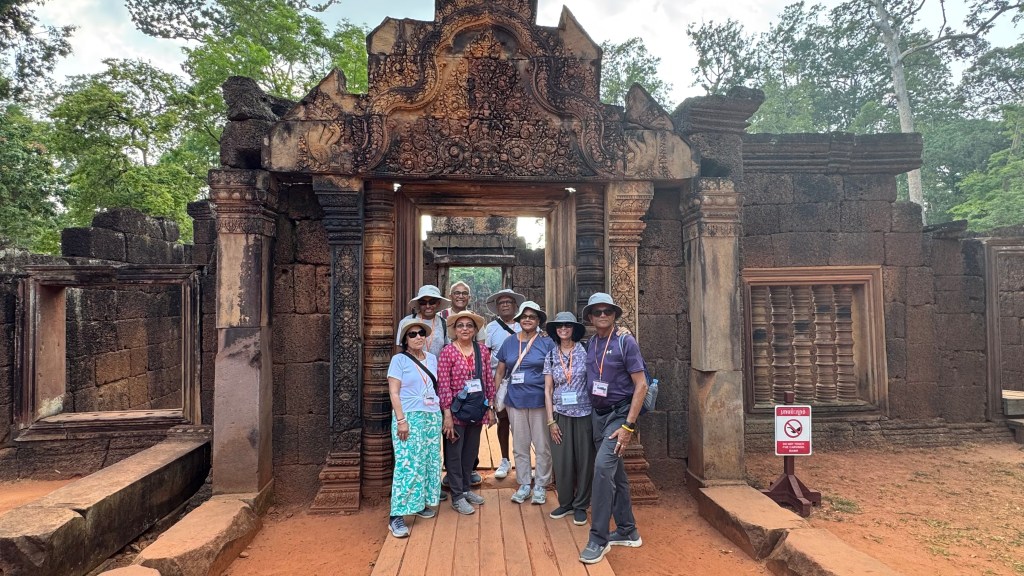
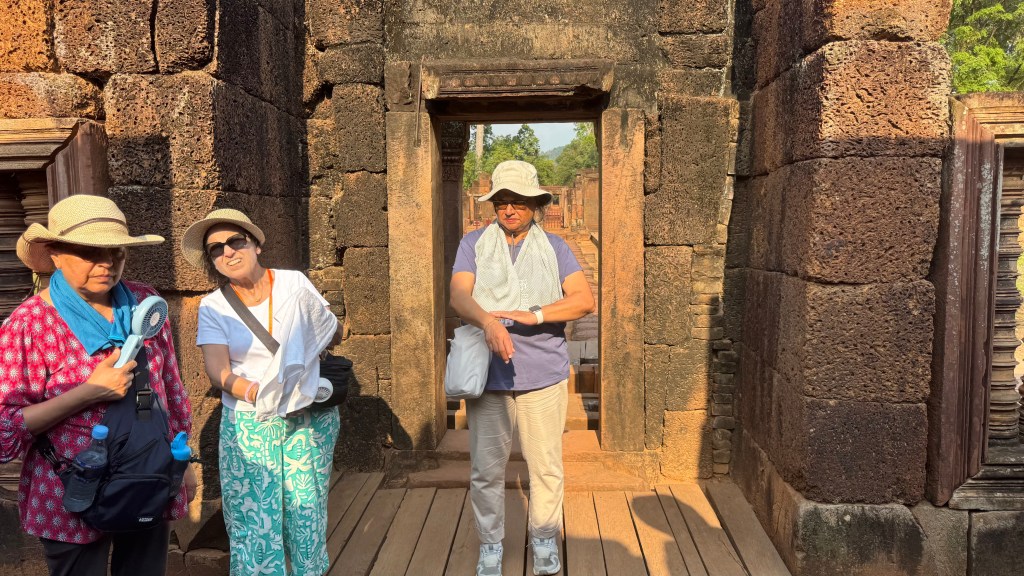
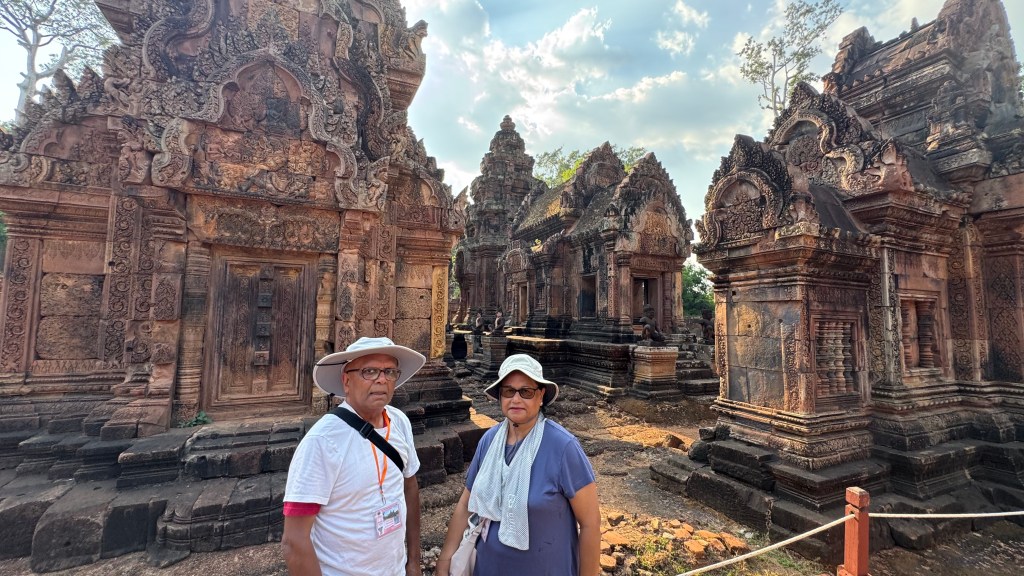
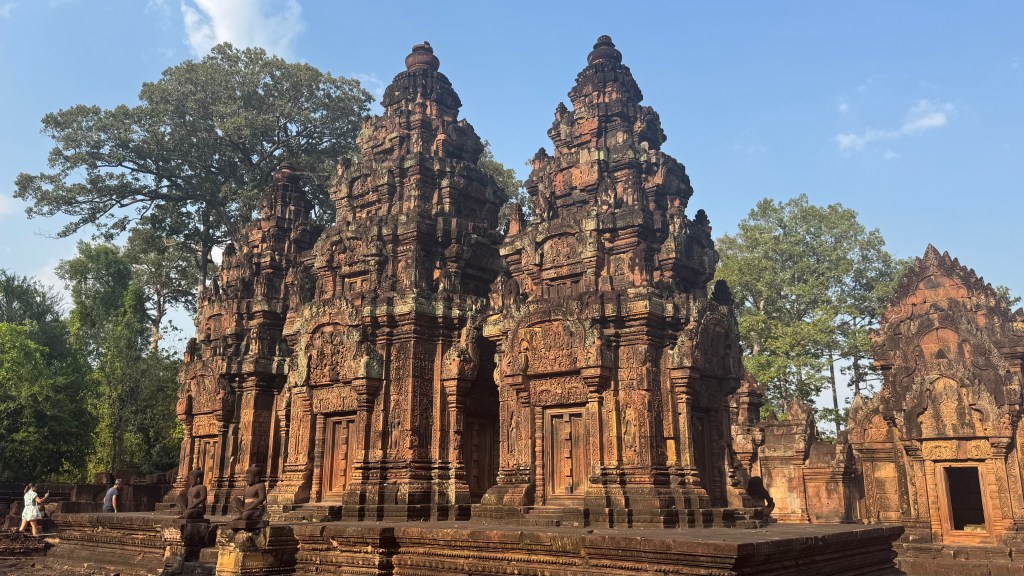
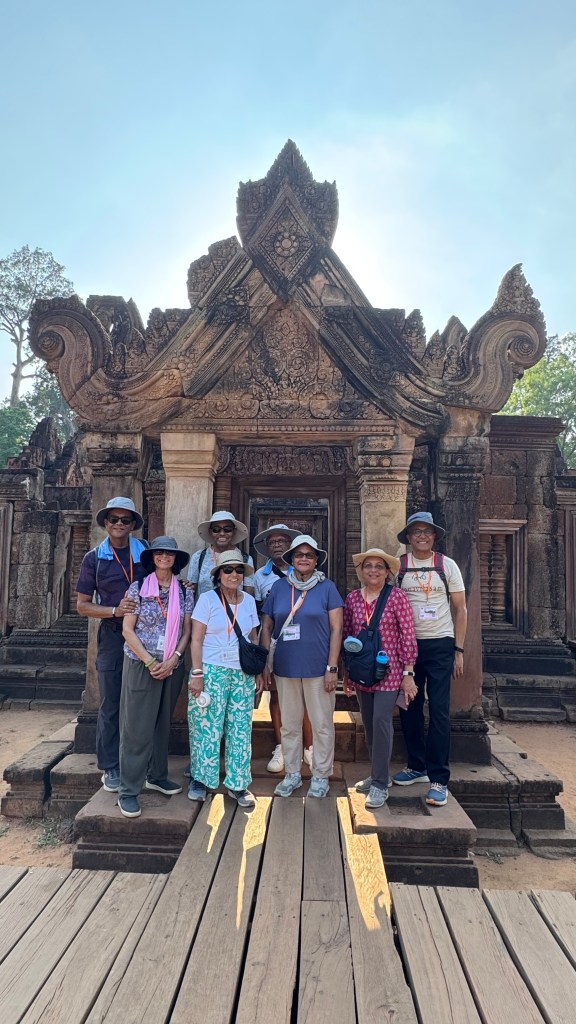
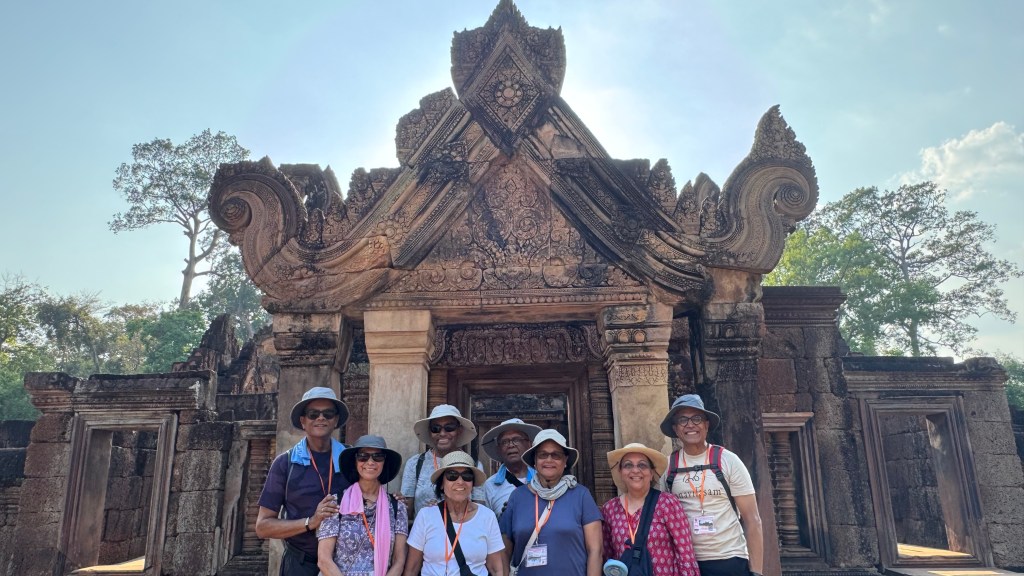
The temple was built using the pink sandstone that was locally available near its site.The temple is tiny by Khmer standards. One can walk its perimeter in about ten minutes. The pink sandstone allowed a fineness of carving that would not be possible with the grey sandstone of the larger temples. Again, hot, hot, hot! Even three showers don’t seem enough!









Leave a Reply