South Island Itinerary

Christchurch
South Island’s largest city is a place where history and aromas dance together – known affectionately as the “Garden City”. It boasts wide, leafy avenues, beautifully manicured parks, and a distinctly English feel – a legacy of its Canterbury Pilgrim founders.
Imagine a city where English roses bloom beside street art, and their scent mingles with the aroma of fresh-baked pastries from a riverside café.
Despite the challenges of devastating earthquakes, Christchurch’s spirit is unbroken. Its vibrant murals, lively street markets, and cozy wine bars whisper of resilience and renewal.
Historical Overview:
- Originally inhabited by the Māori iwi Waitaha in the 13th century, later succeeded by Kāti Māmoe and Kāi Tahu.
- In 1850, the Canterbury Pilgrims arrived, and in 1856 making Christchurch New Zealand’s oldest city by royal decree.
- The city blossomed as a vibrant center, echoing with English stonework and lush gardens, earning its “Garden City” name.
- The 2011 earthquake and the heartbreak of 2019 tested Christchurch’s spirit, forever shaping its soul..
Touristic Highlights:
- Known for its parks and gardens, especially Hagley Park and the Botanical Gardens.
- The Avon River, flanked by willow trees and ornate bridges, bisects the city.
- The city is a gateway to the Canterbury Plains and the Southern Alps, offering easy access to outdoor activities.
- Creative urban renewal projects, street art, and pop-up markets have revitalized the city post-earthquake.
Franz Joseph
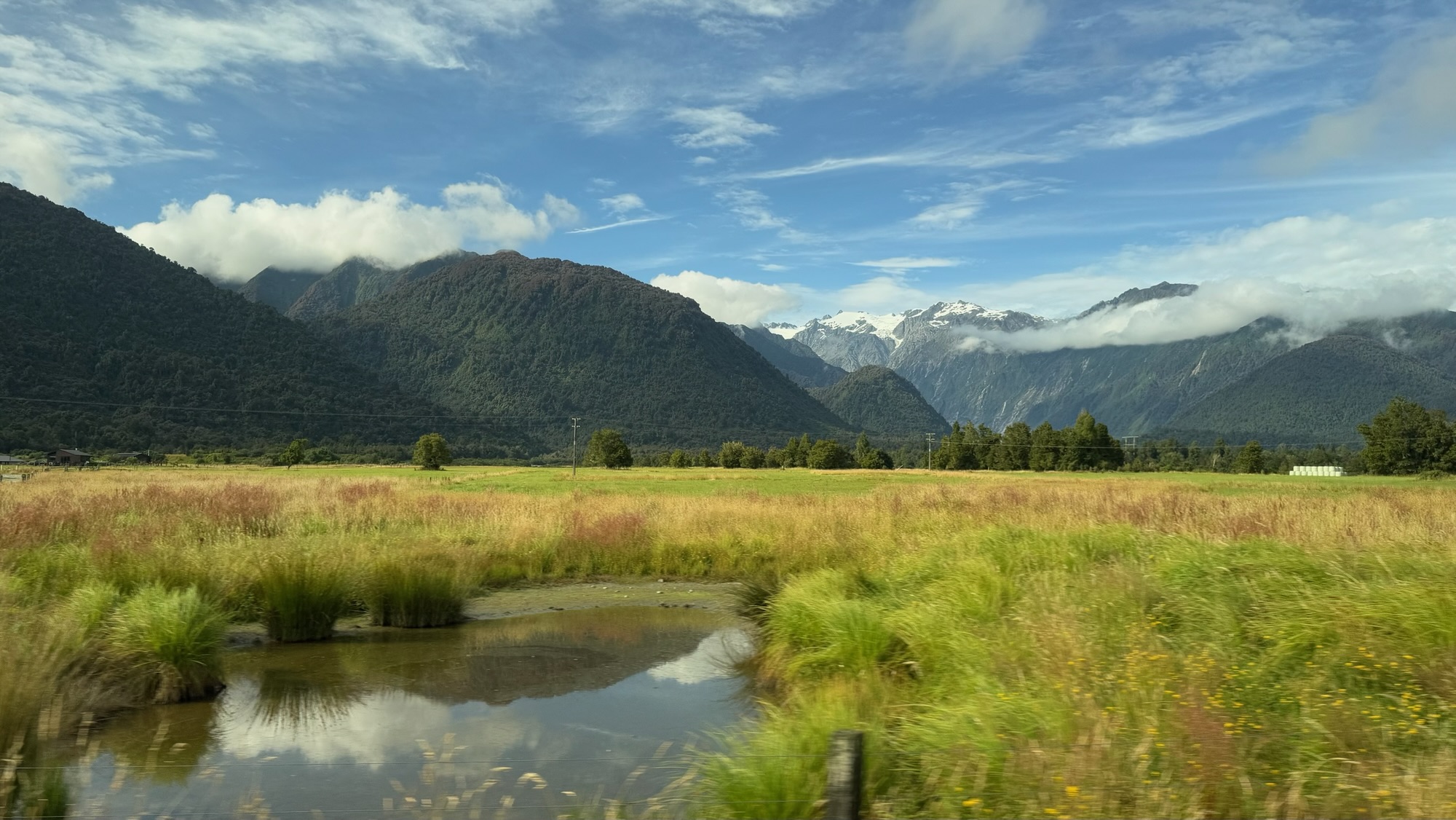
Franz Josef, a small town, sits between a lush rainforest and the mighty Franz Josef Glacier. It lies at the edge of Westland Tai Poutini National Park.
The air here tastes of adventure and mossy earth. After a glacier trek, sink into a steaming pool, savoring the contrast of icy vistas and enveloping warmth. Local eateries serve hearty fare – perfect after a day of trekking.
Even the kea parrots seem to gossip about the town’s golden past.
Historical Overview:
- The area saw a gold rush in the late 19th century, attracting miners from Europe, China, and Māori communities.
- The gold rush lasted only a short time but left a lasting impact that shaped the settlement’s development.
Touristic Highlights:
- Famous for the Franz Josef Glacier, one of the most accessible glaciers in the world.
- Activities include glacier hikes, helicopter tours, and visits to kiwi sanctuaries.
- The town is a base for exploring the Westland Tai Poutini National Park
Queenstown
Queenstown is New Zealand’s adrenaline capital, a place where adventure and beauty collide, and where mountains leap into lakes.
Lake Wakatipu’s cobalt waters shimmer as the Remarkables’ peaks pierce the sky with its golden glow. Crisp mountain air swirls above the lake. Queenstown pulses with energy, its beauty mirrored in every breath. While each sunset beckons a sip of a velvety Central Otago pinot.
Queenstown’s energy is infectious, its cuisine inviting, and every meal feels like a celebration of place and possibility.
Whether you’re seeking adventure or relaxation, Queenstown is sure to captivate your imagination.
Historical Overview:
- The Wakatipu Basin was shaped by glacial movement 15,000 years ago. It was used by Māoris for hunting and gathering pounamu (greenstone).
- European settlement began in the 1850s, with a gold rush in 1862 transforming the area into a bustling mining town.
- After the gold rush, the area became known for farming and as a summer holiday destination.
Touristic Highlights:
- Renowned as the “adventure capital of the world,” offering activities including bungy jumping, jet boating, and skiing.
- Historic sites such as the restored Chinese gold mining settlement at Arrowtown.
- The TSS Earnslaw steamship offers cruises on the lake.
Milford Sound & Te Anau
Milford Sound
A place of mythic beauty, where towering cliffs plunge into dark waters and waterfalls cascade from dizzying heights. It is a feast for the senses – salt spray on your lips, the tang of rain in the air, and the distant call of seabirds. This is nature’s own opera!
If Tolkien’s elves had a holiday home, it would be Milford Sound.
Known to the Māori as Piopiotahi, this fjord has inspired awe for centuries. Cruising through the sound, you’ll encounter playful dolphins, seals sunning on rocks, and the ever-present mist that shrouds the peaks.
Milford Sound is a must-see – a place where nature’s power and beauty are on full display.
Historical Overview:
- Māori first visited over 1,000 years ago, primarily for hunting, fishing, and gathering pounamu.
- European exploration began in the late 18th century, with Captain Cook mapping the region in 1773.
Touristic Highlights:
- Known as the “eighth wonder of the world” for its dramatic fjord landscape.
- Popular for boat cruises, kayaking, and scenic flights.
- Part of Fiordland National Park, a UNESCO World Heritage site.
Te Anau
Te Anau is a tranquil lakeside town that serves as the gateway to some of New Zealand’s most spectacular wilderness. The town is nestled beside the vast waters of Lake Te Anau, the largest lake in the South Island.
The town’s history is intertwined with the legendary Milford Track, which begins nearby and draws hikers from around the globe. Te Anau is also home to the mesmerizing glowworm caves, where one can drift through underground rivers illuminated by thousands of tiny lights.
With its relaxed pace, stunning scenery, and warm hospitality, Te Anau is a haven for nature lovers and adventurers alike.
Historical Overview:
- The area was used by Māori for food gathering and as a travel route between coasts.
- European settlement began after the opening of the Milford Track in the late 19th century.
- Significant growth followed the opening of the Homer Tunnel in 1953.
Touristic Highlights:
- Gateway to Fiordland National Park and Milford Sound.
- Known for Lake Te Anau, the largest lake in the South Island, and the Te Anau Glowworm Caves.
- Starting point for several of New Zealand’s Great Walks, including the Milford, Kepler, and Routeburn Tracks.
Dunedin
Dunedin is a city of contrasts—where Scottish heritage meets wild, untamed nature.
The city’s streets are lined with historic buildings, from the ornate Dunedin Railway Station to the fairytale-like Larnach Castle.
Dunedin’s wild coast teems with wonders – albatrosses swoop and yellow-eyed penguins play peekaboo in seaside hideouts.
Historical Overview:
- Founded by Scottish settlers in 1848, the name “Dunedin” comes from the Scots-Gaelic name for Edinburgh.
- The city prospered during the Otago gold rush and became known for its Victorian and Edwardian architecture.
Touristic Highlights:
- Renowned for its well-preserved heritage buildings, including the Dunedin Railway Station and Larnach Castle
- Offers unique wildlife experiences, such as viewing rare penguins and the only mainland albatross colony.
- The city is also known for its vibrant arts scene and university culture.
Cromwell
Cromwell is where gold rush dreams and orchard blossoms meet. It has a rustic charm, with rich history, and is a delightful stop on any New Zealand journey.
Historical Overview:
- Established during the Otago Gold Rush of the 1860s at the junction of the Clutha and Kawarau Rivers.
- The town was relocated and partially rebuilt in the 1980s and 90s due to the creation of Lake Dunstan following the construction of the Clyde Dam.
Touristic Highlights:
- “Old Cromwell Town” features restored and reconstructed buildings from the gold mining era.
- The area is famous for its stone fruit orchards and vineyards, earning the nickname “fruit bowl of the south”.
- Nearby ghost towns and gold mining sites, such as Bannockburn and Bendigo, are popular with visitors.
Aoraki Mt Cook
Aoraki / Mt Cook is a place of legends and towering peaks, where the sky seems within reach.
For mountaineers, it’s a challenge and a dream – New Zealand’s highest peak, surrounded by a breathtaking alpine landscape. The national park offers some of the country’s most spectacular hiking. At night, the sky comes alive with stars, making this one of the best places in the world for stargazing.
Here, every step is an adventure, every night a stargazer’s delight. The mountain beckons!
Historical Overview:
- In Māori tradition, Aoraki is a sacred ancestor, and the mountain is revered as a taonga (treasure).
- European explorers first sighted the mountain in the 17th and 18th centuries, with the first successful ascent in 1894.
- The national park was established in 1953 and is part of the Te Wahipounamu World Heritage Area.
Touristic Highlights:
- Aoraki / Mt Cook is New Zealand’s highest peak and a premier destination for mountaineering, hiking, and scenic flights.
- The park offers popular tracks such as the Hooker Valley Track and Sealy Tarns, as well as stargazing opportunities due to low light pollution.
Leave a Reply