
Thursday, September 10
I woke early, as giddy as a schoolboy. Breakfast could not end fast enough for nine o’clock to arrive.
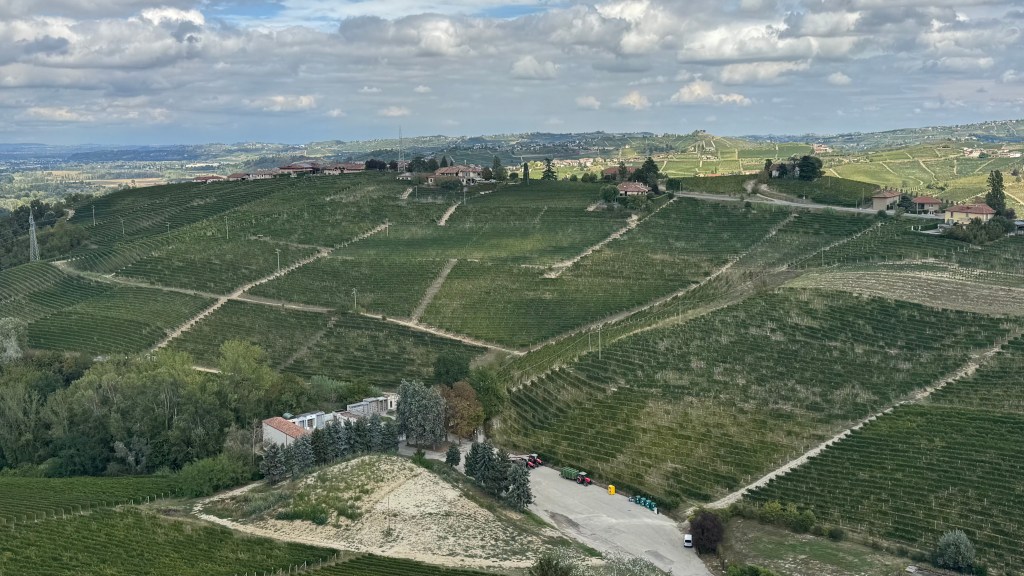
Today’s roll call read Serralunga, Barolo, Barbaresco and back to Alba. Those names alone make a wine lover weak at the knees. And no, it is not only the wine. I had studied photos of these hilltop villages for ages. Narrow lanes, old stone homes and tiny cafés where life moves one slow step at a time.
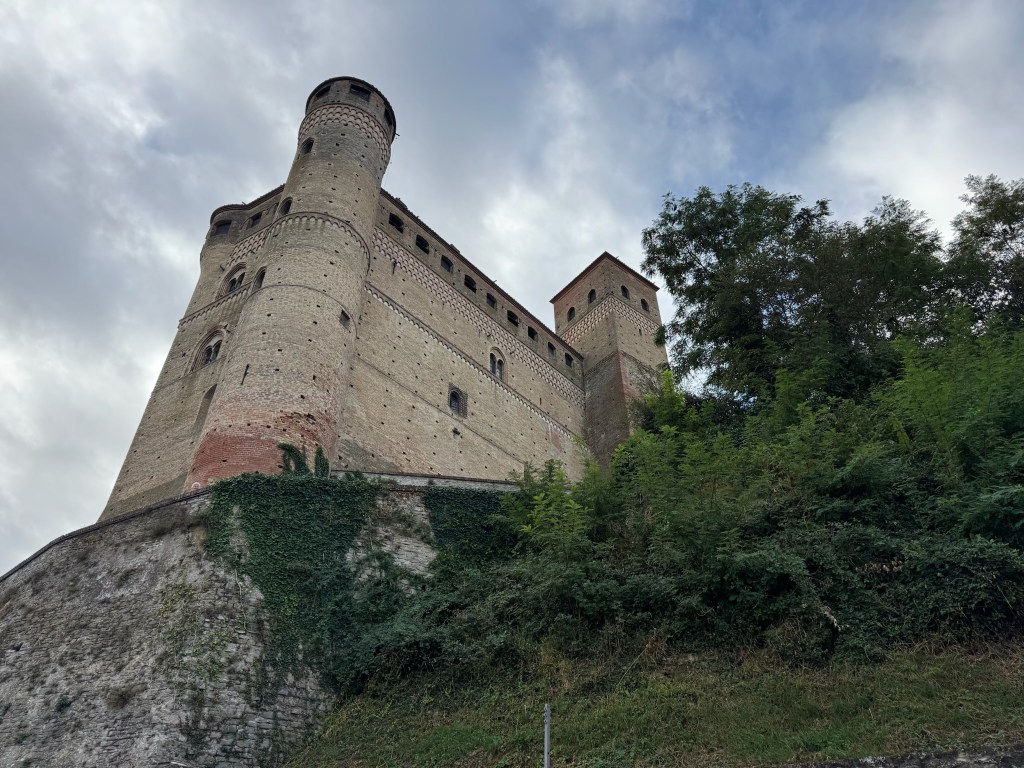
Serralunga d’Alba Castle
We started at Serralunga d’Alba and its fourteenth century castle. Its builders wanted a lookout over the family estates. Serralunga ranks among the most beautiful and historically intact villages in the Langhe.
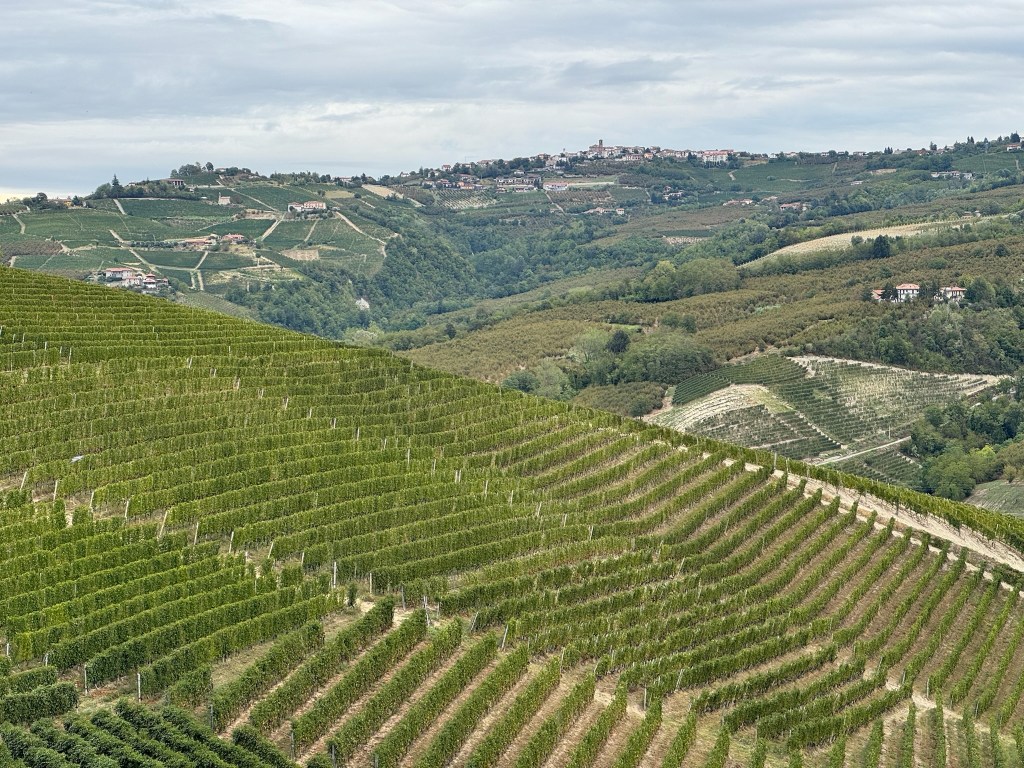
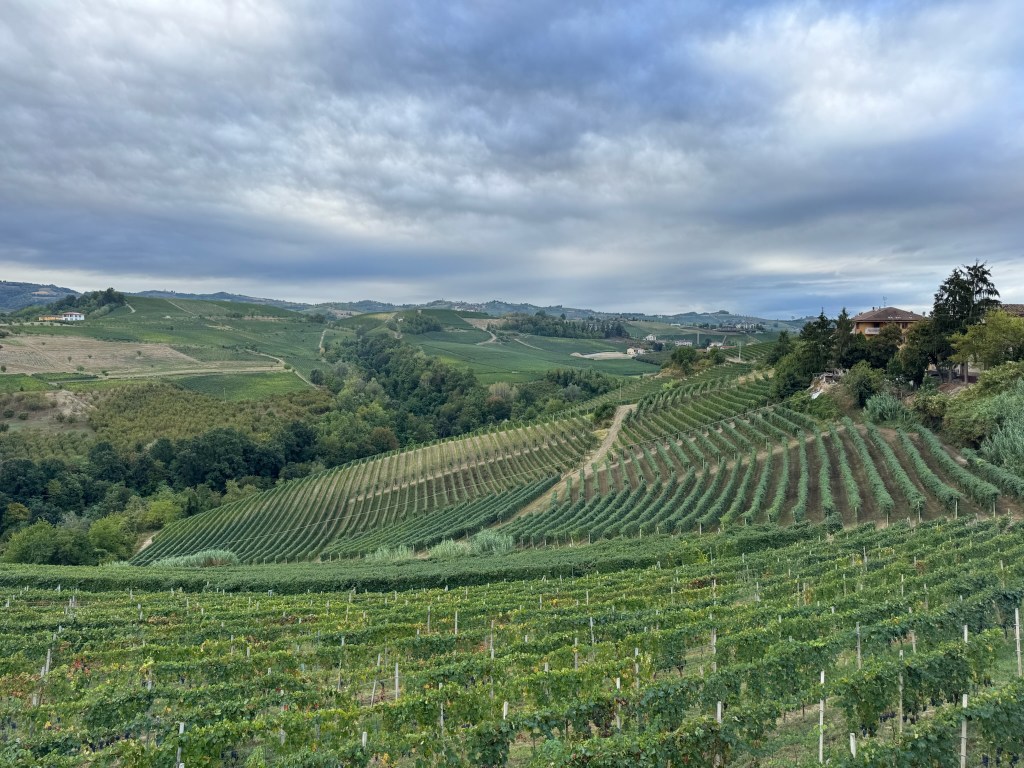
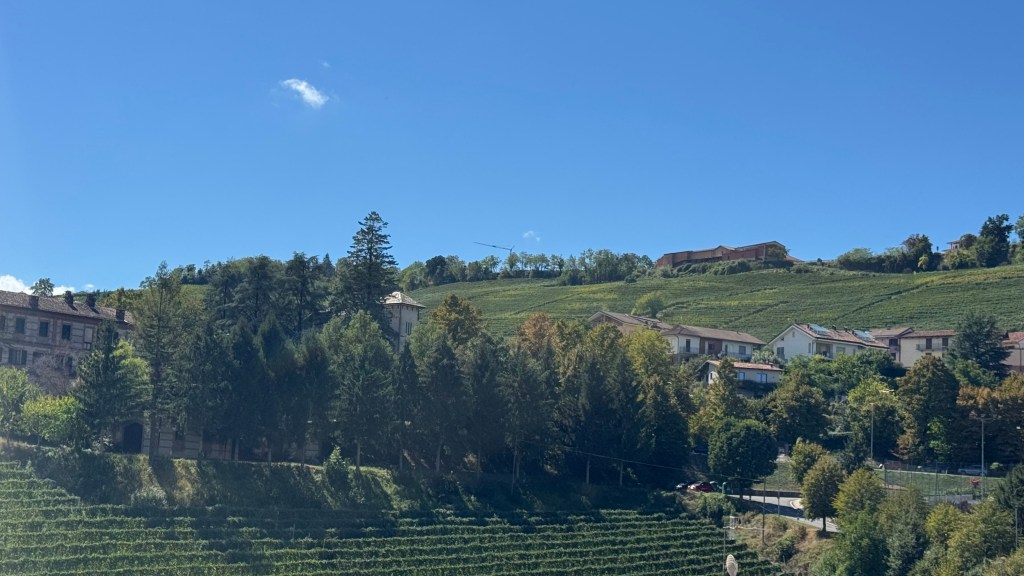
We walked up to the castle’s base but did not go inside. Barolo vineyards rolled away in every direction. It was a moment to savor, like the first sip of a great vintage.
Piedmont ranks among Italy’s top culinary destinations. So far we had tried tajarin, a fine egg pasta, and agnolotti, Piedmont’s answer to ravioli. Today we went to the source of two greater treasures: Barolo and Barbaresco.
A Barolo Wine Tour at Cascina Adelaide
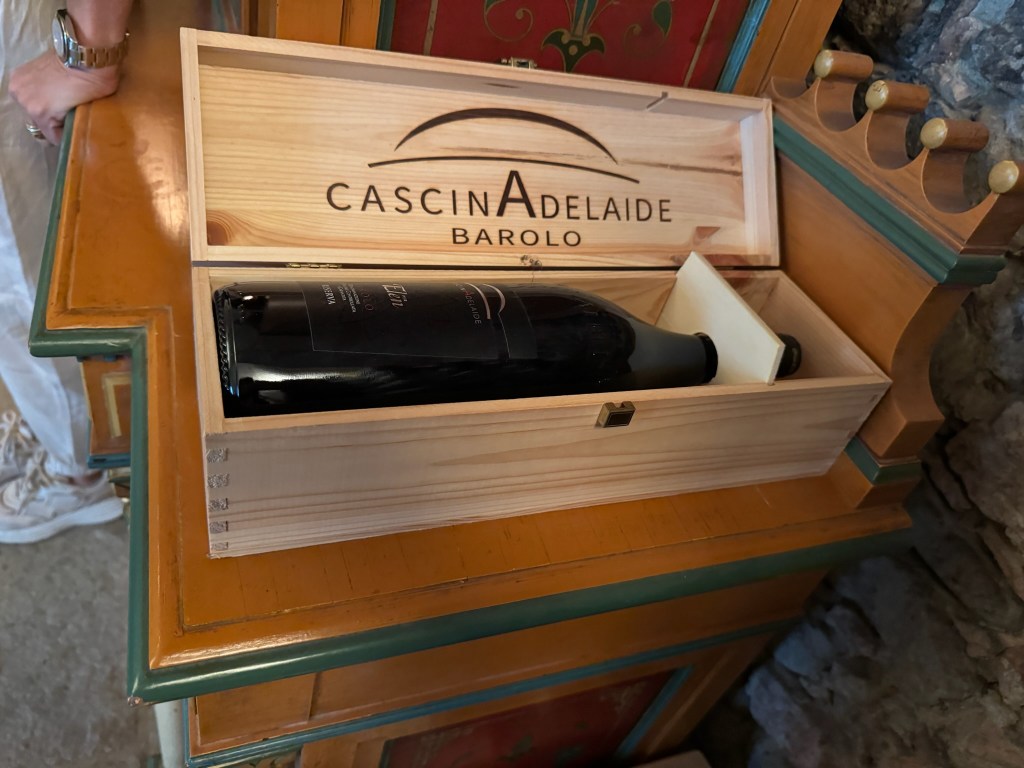
Next we visited Cascina Adelaide, a family winery on the outskirts of Barolo. Its roots reach back to 1817. Back then, local growers tended vines in two prized crus, Cannubi and Preda.
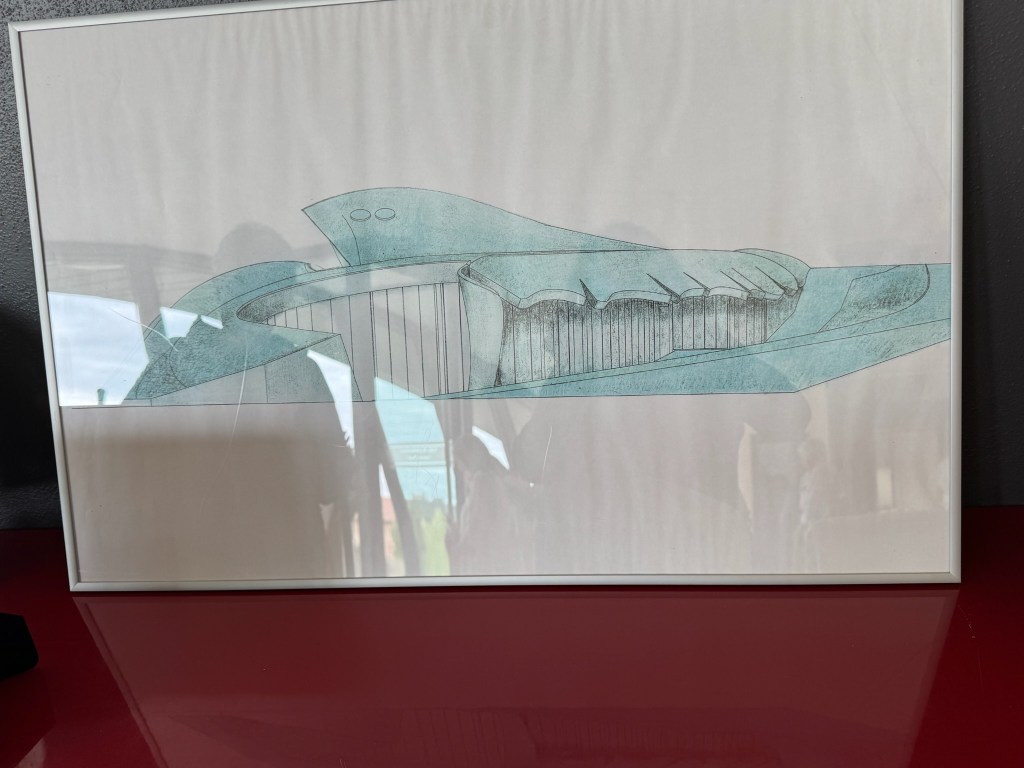
In 2000, at age 60, Amabile Drocco left a thriving mechanical business in Alba. He returned to his family’s farming roots and founded the modern Cascina Adelaide. His granddaughter Chiara Drocco runs it today. The estate now boasts an underground cellar, a new barrel system and more than double the vineyards.
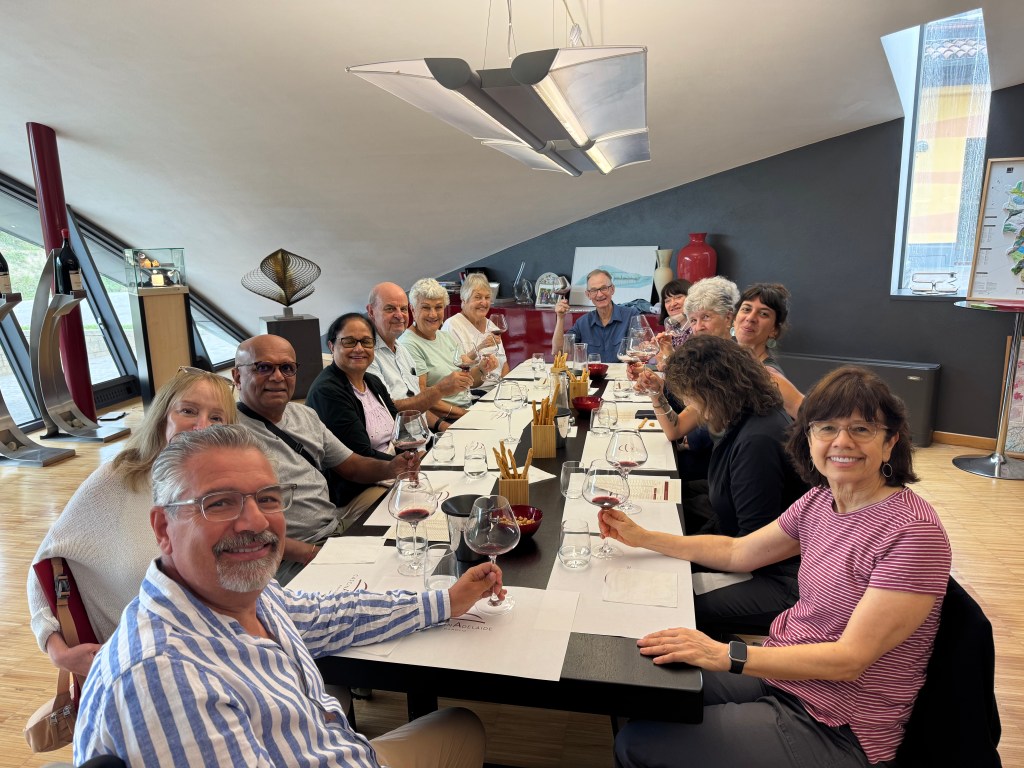
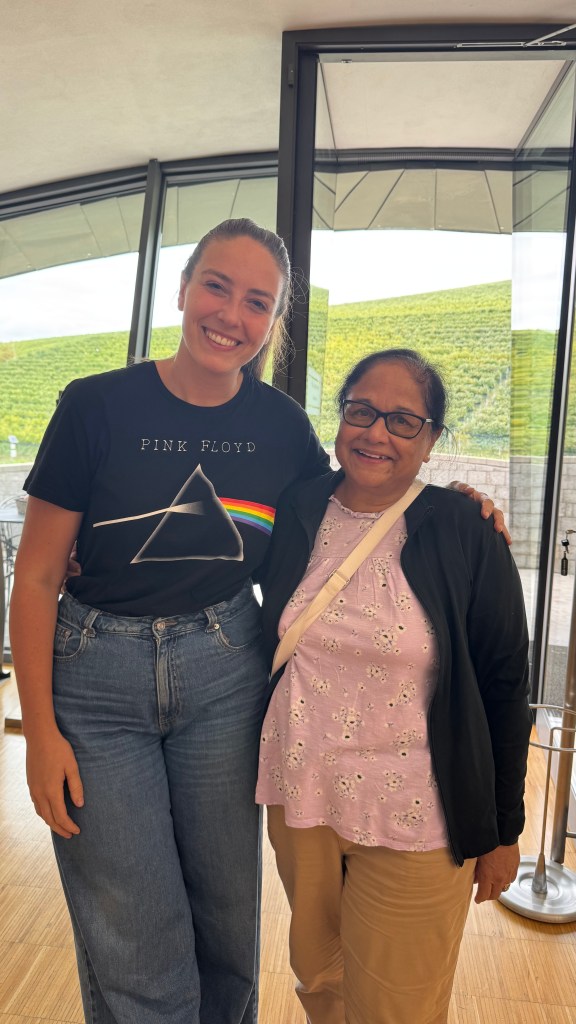
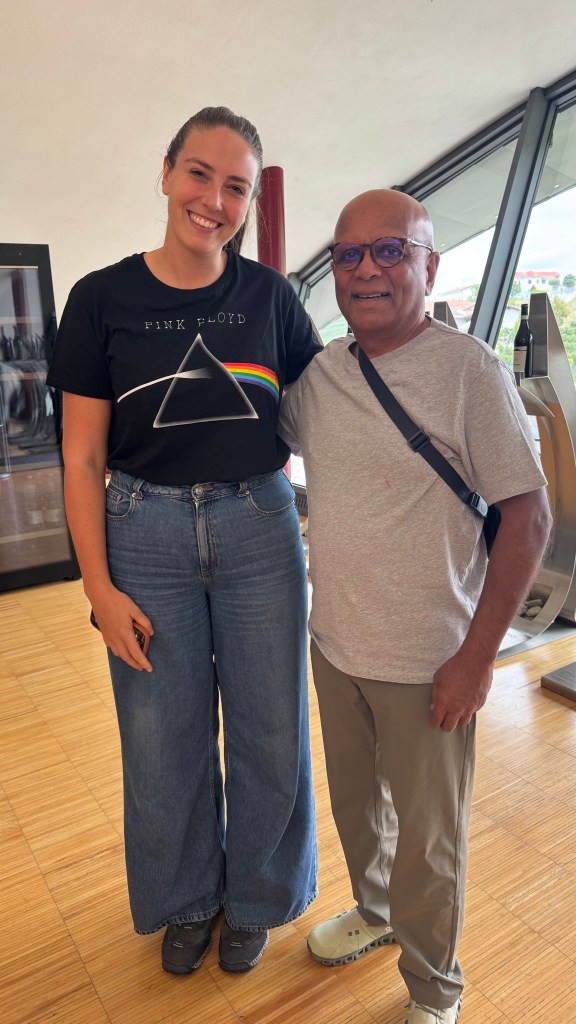
Our guide was none other than Giuliana, Chiara’s mother. She gave us the history, walked us through the winery and then, mercifully, poured.
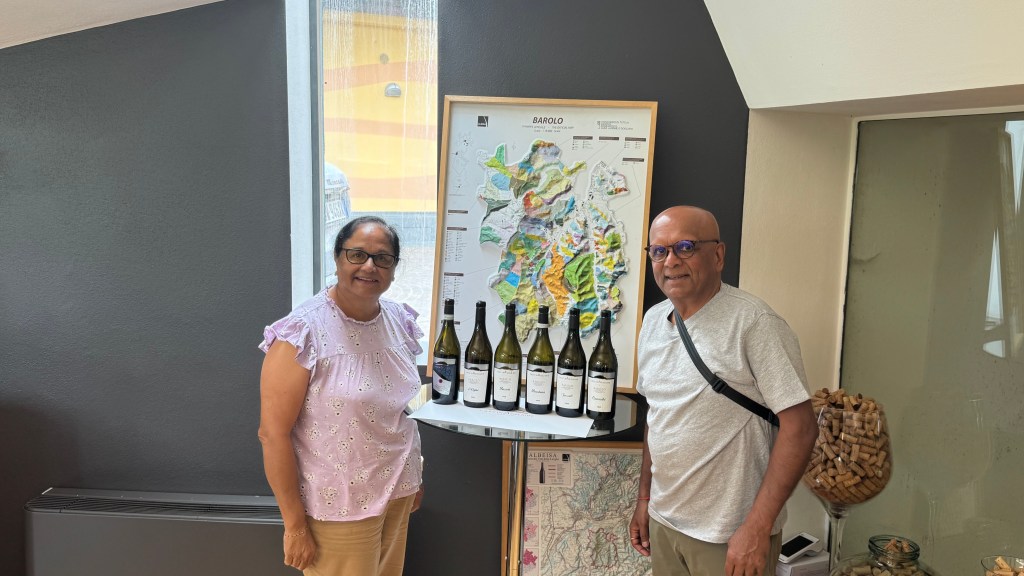
We tasted five wines. Four were Barolos from Nebbiolo: Cannubi, Baudana, Fossati and Bussia. The fifth, Amabilin, is a Barbera d’Alba. I loved the dry, smooth tannins of the Cannubi and the Amabilin.
Locals have a saying for all this. Barolo is the wine of kings, Barbaresco is the king of wines, and Barbera is the wine of the people. Diplomatic, and entirely accurate.
A useful tip from the cellar: look for the word Bric on a Barolo label. Bric means hilltop in Piedmontese. It names the exact hill where the grapes grew.
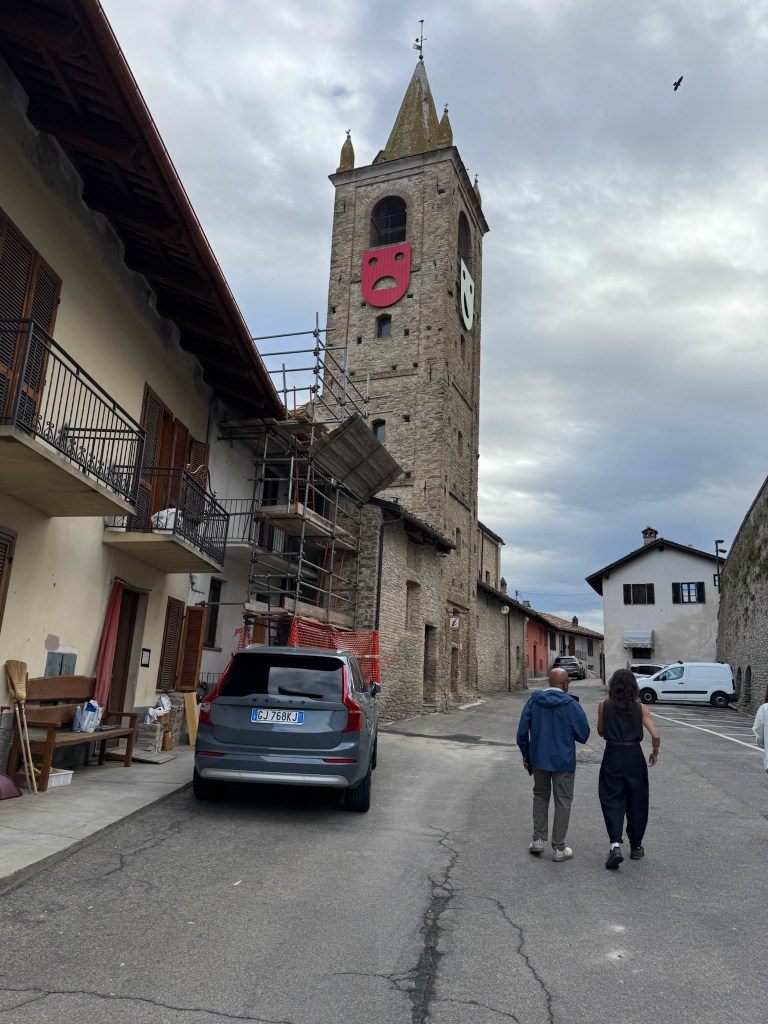
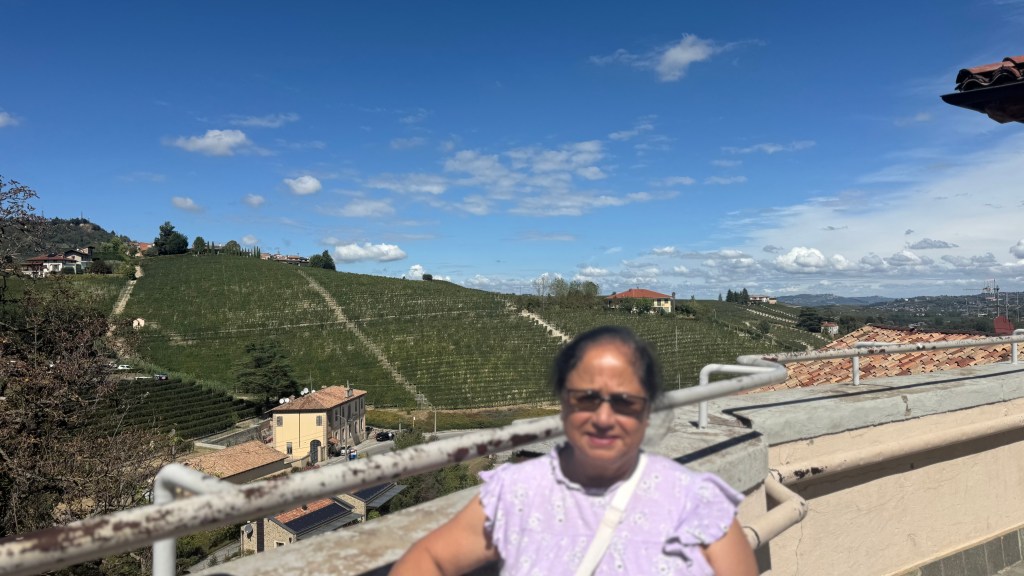
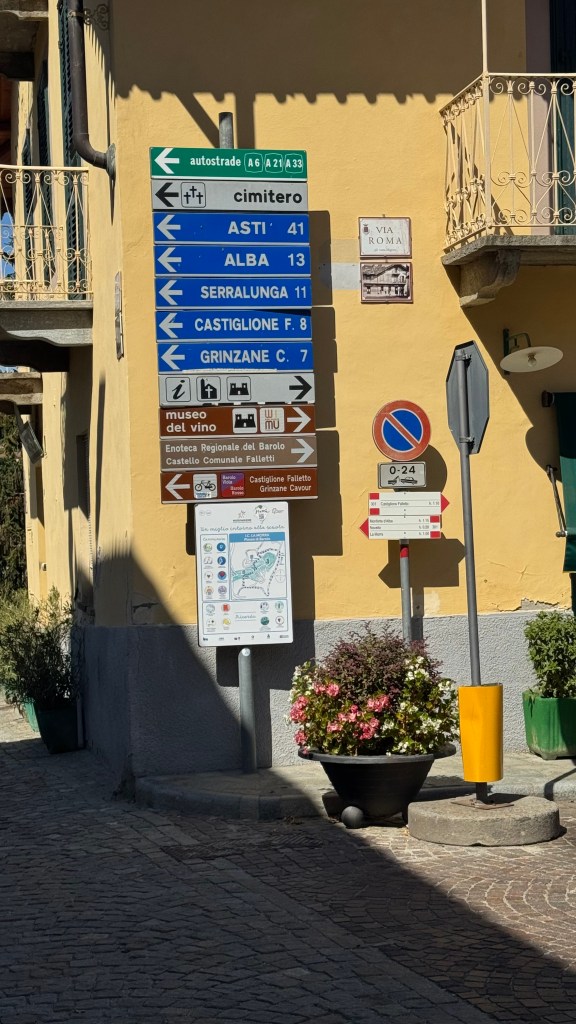
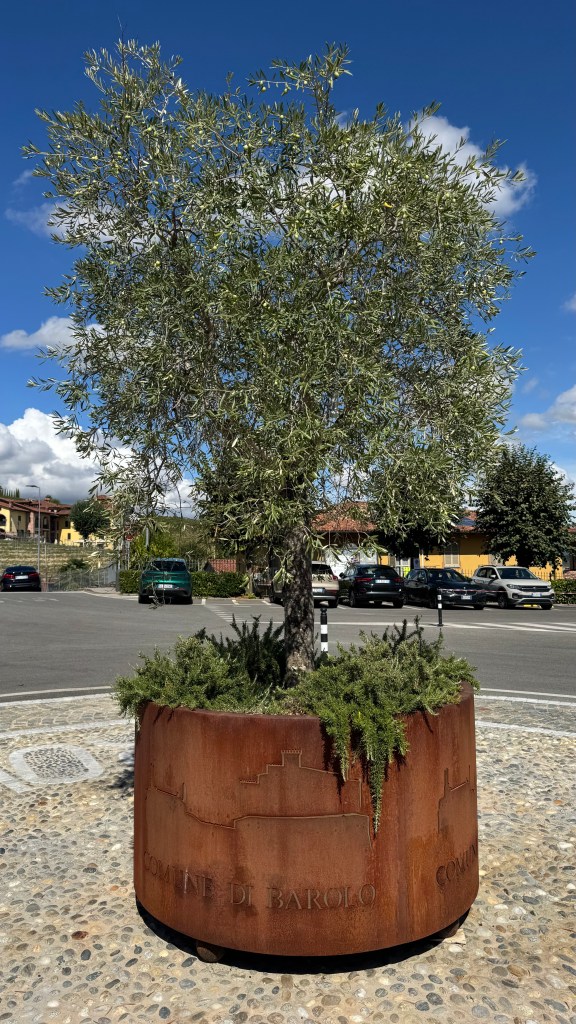
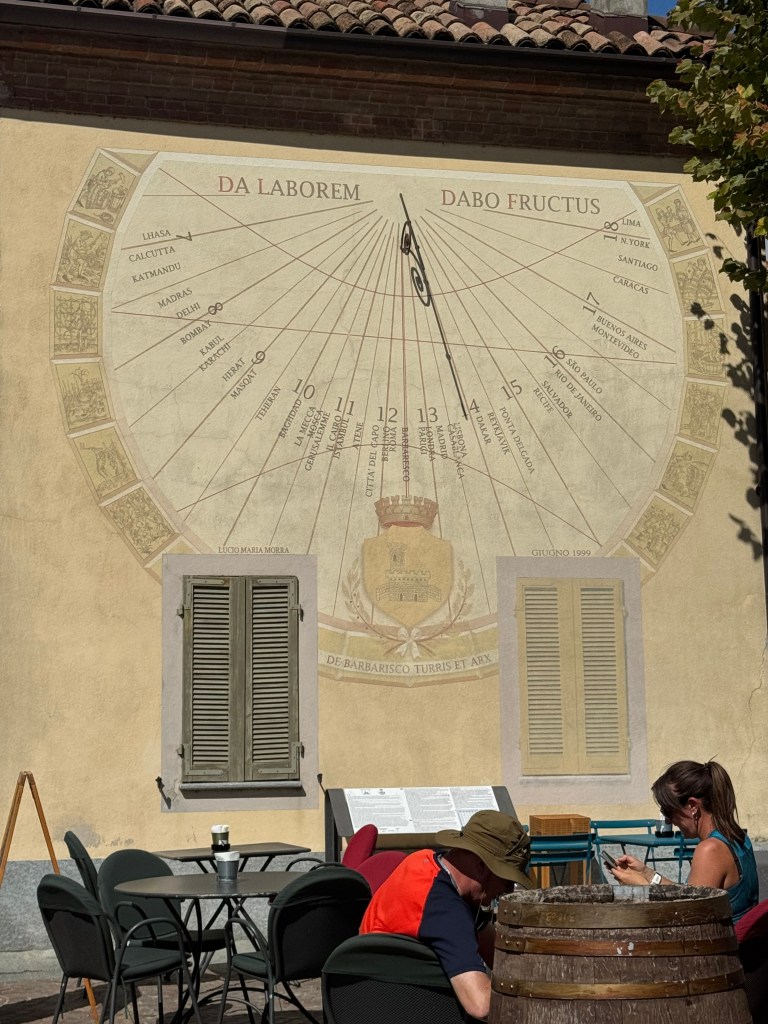
Afterwards we wandered Barolo village, all cobblestone alleys and historic stone walls. World famous Nebbiolo vineyards surround it on every side.



Barbaresco: The Tower and the Gates of Gaja
In the afternoon we reached tiny Barbaresco. Yes, another wine town. It sits above the Tanaro River. From its highest points you can see the Langhe, the Roero, Monferrato and the Alps.
We strolled up Via Torino, its quiet main street, toward the eleventh century tower. Locals call it the Barbaresco Tower, or sometimes the Visconti Tower.
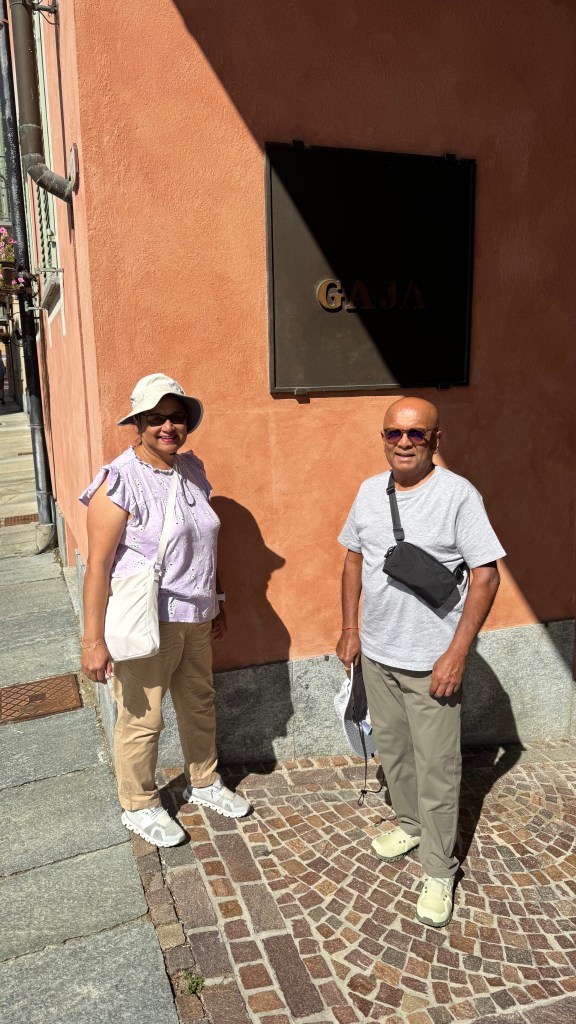
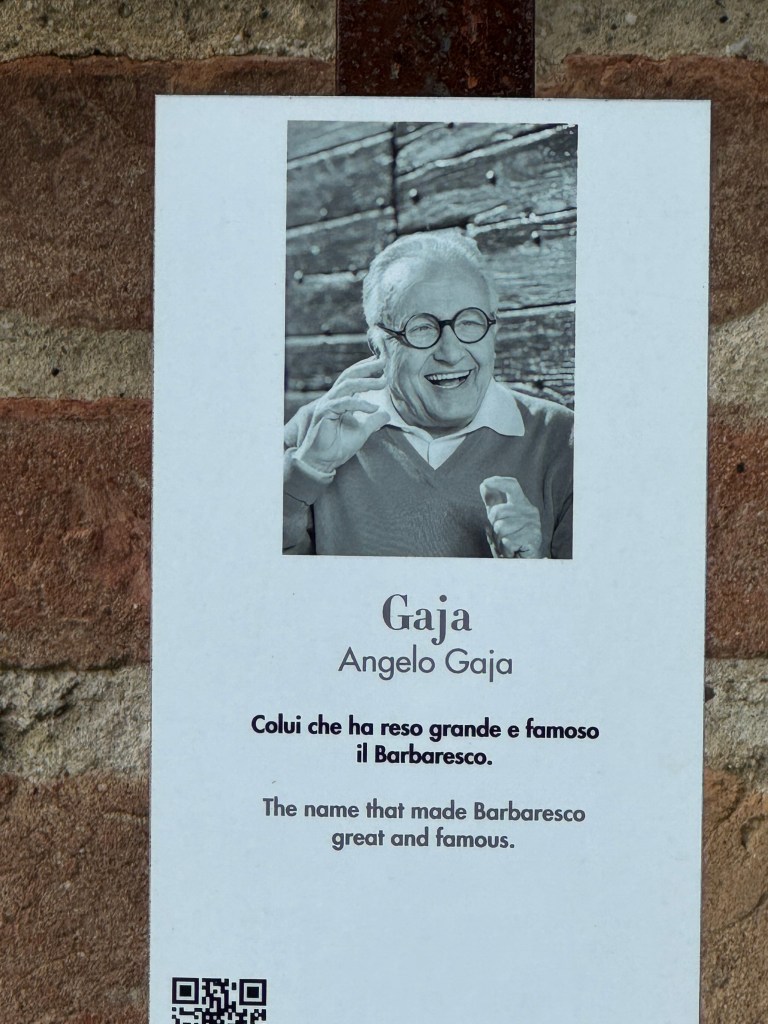
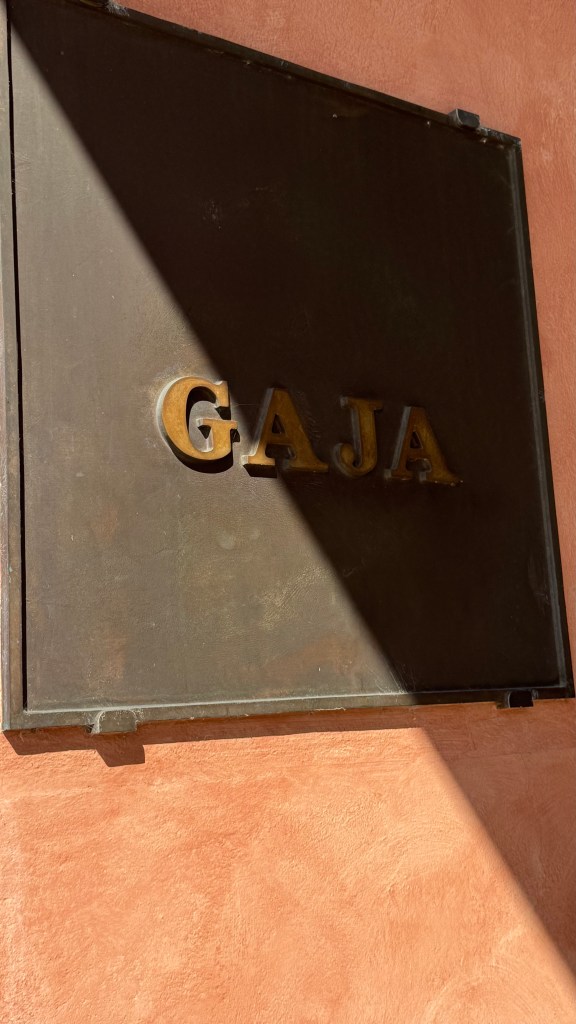
Along the way, I stopped for a photo outside Gaja, the undisputed king of Barbaresco. Angelo Gaja earned that crown the hard way. His persistence dragged Piedmont into the modern world, and his techniques revolutionized Italian winemaking. His daughter Gaia now leads the winemaking. Their Barolos and Barbarescos are simply sublime.
Regrettably, Gaja was not receiving visitors that day. My heart broke a little. Standing at their front gate was enough, or so I keep telling myself.
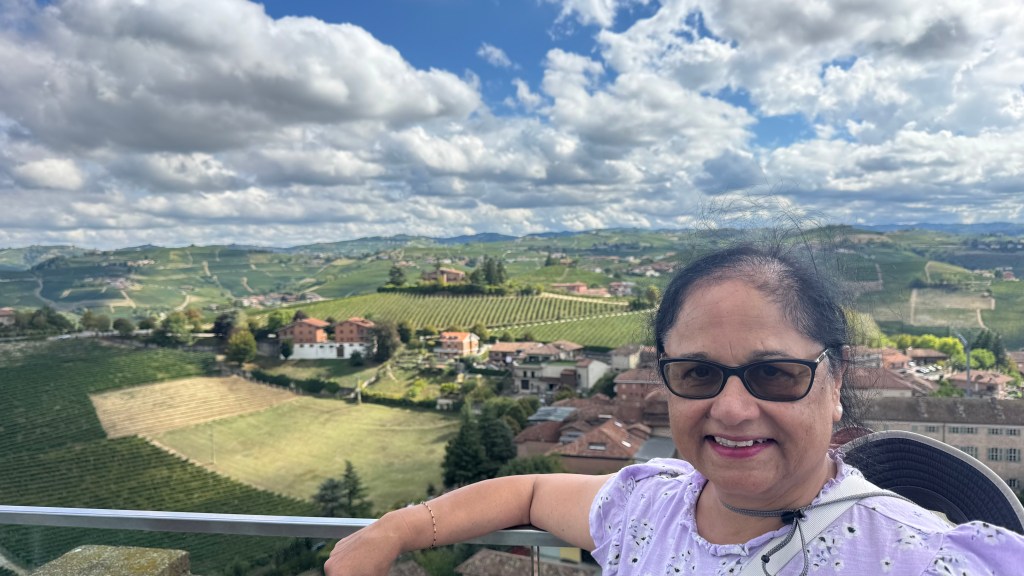
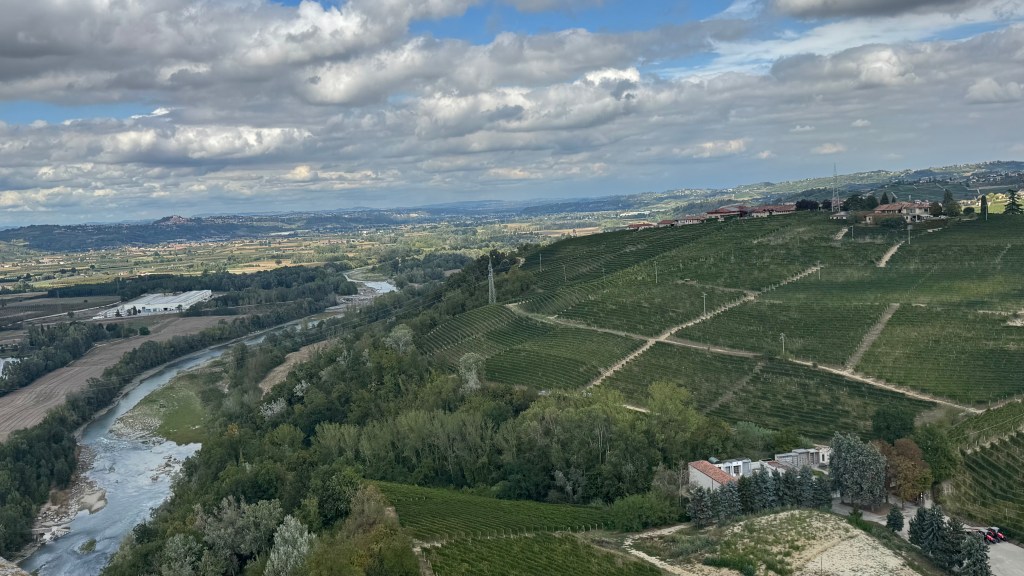
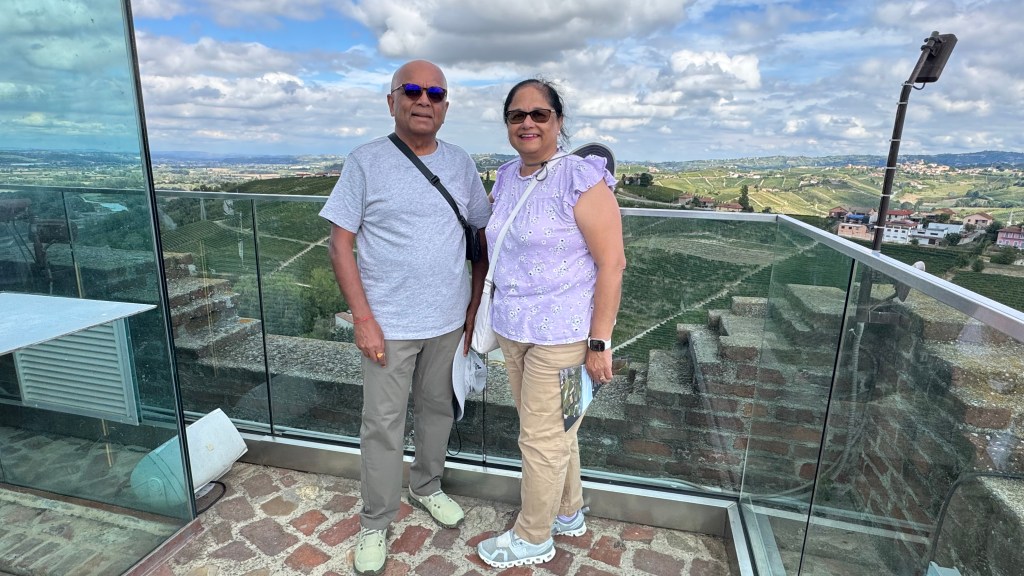
We then climbed the tower. Well, we took two elevators to the top. The view swept over the village, the vineyards and the river below. Spectacular barely covers it.
On the way back to the coach, I gave Gaja one long, wistful look. I drink their wines at home, but tasting at the source is different. One day I will return, with a reservation, in spring or autumn. Consider this paragraph a formal notice of intent.
It was a day to treasure: the villages and valleys of the Langhe, etched in memory.

Dinner Beneath Frescoes in Cherasco
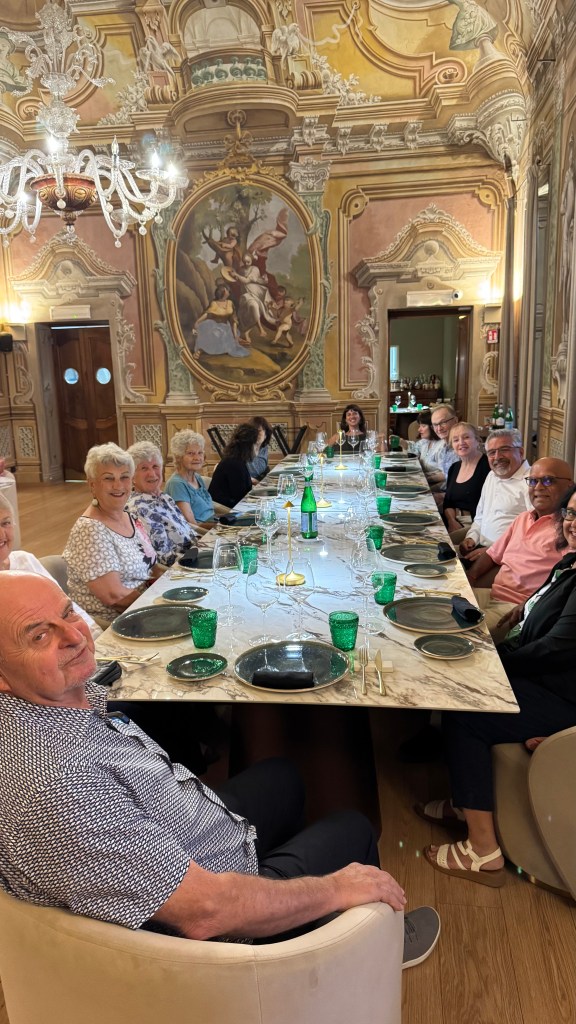
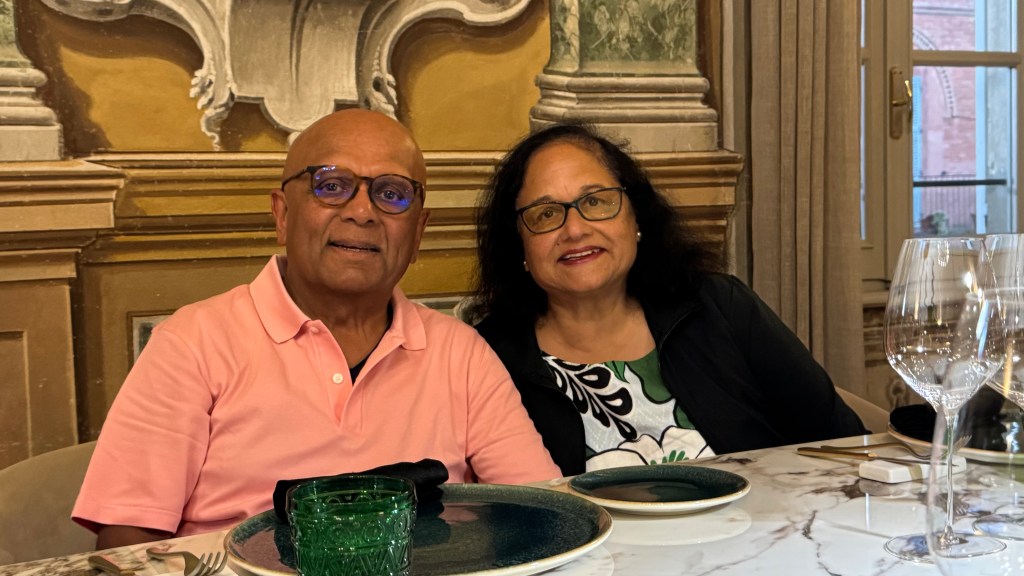
For dinner we drove about thirty minutes to the historic center of Cherasco. Trentatre Ristorante occupies an eighteenth century palace with original baroque ceiling frescoes. Murano glass chandeliers hang overhead, and the room holds just eight tables.

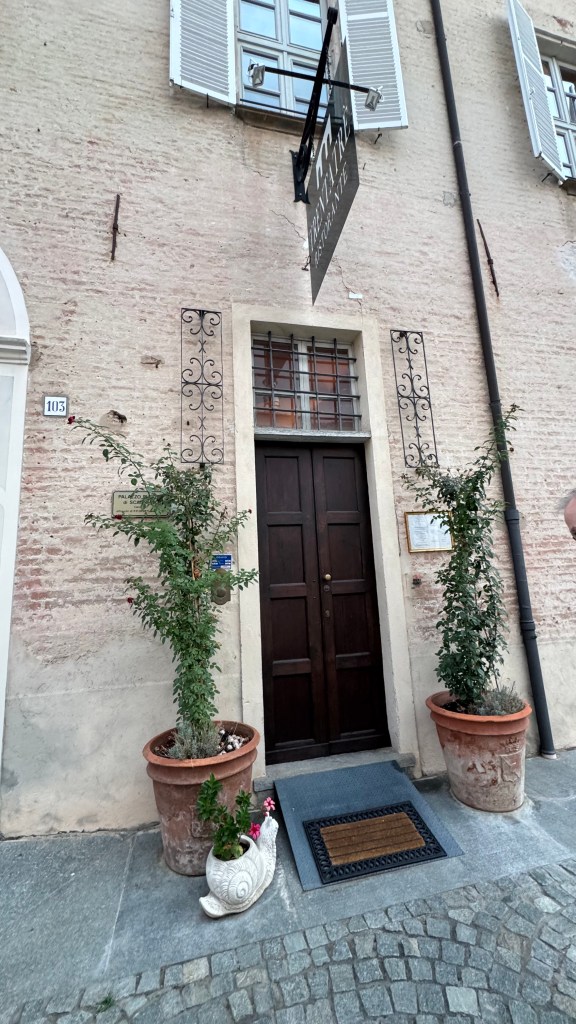


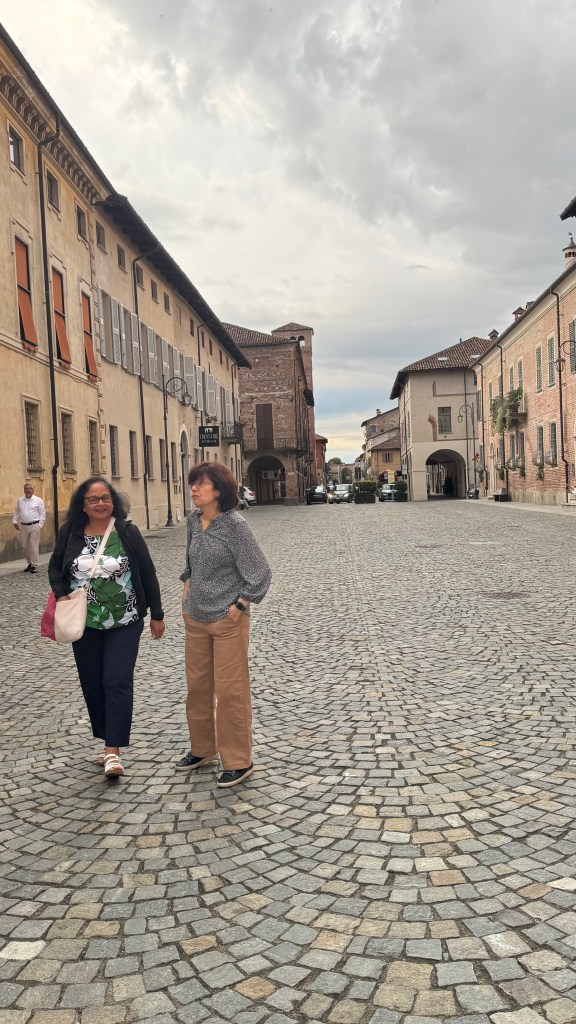
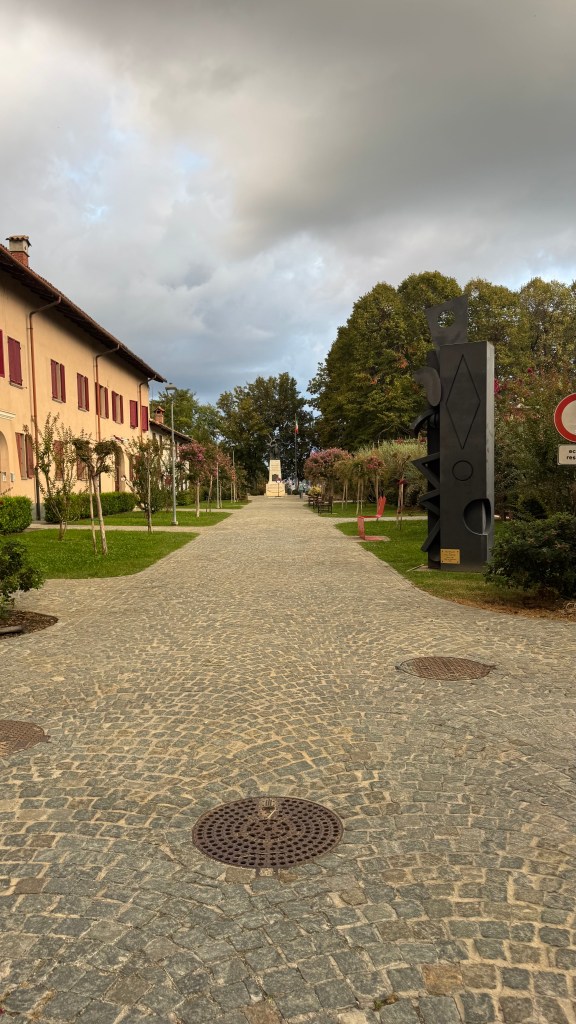
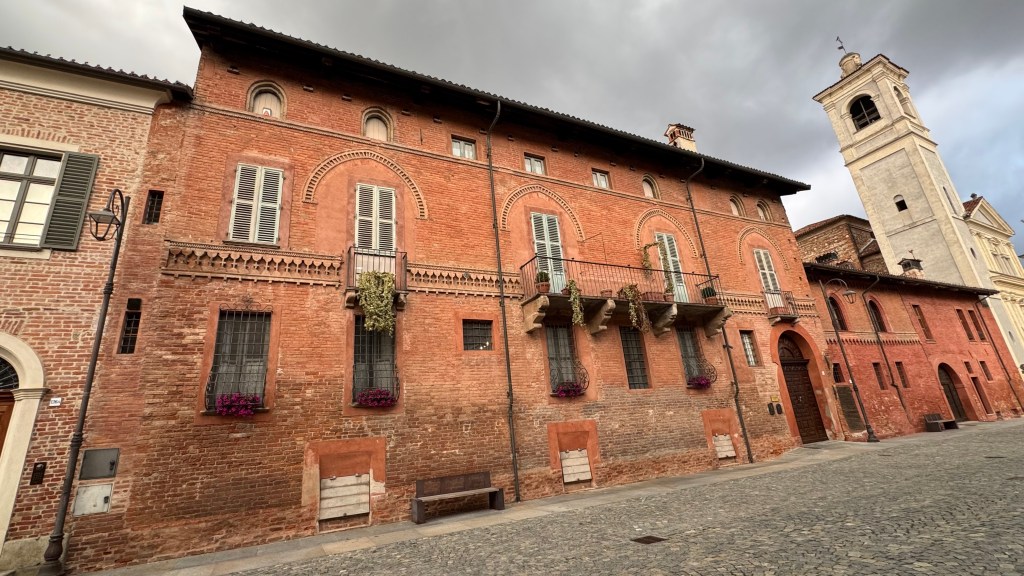
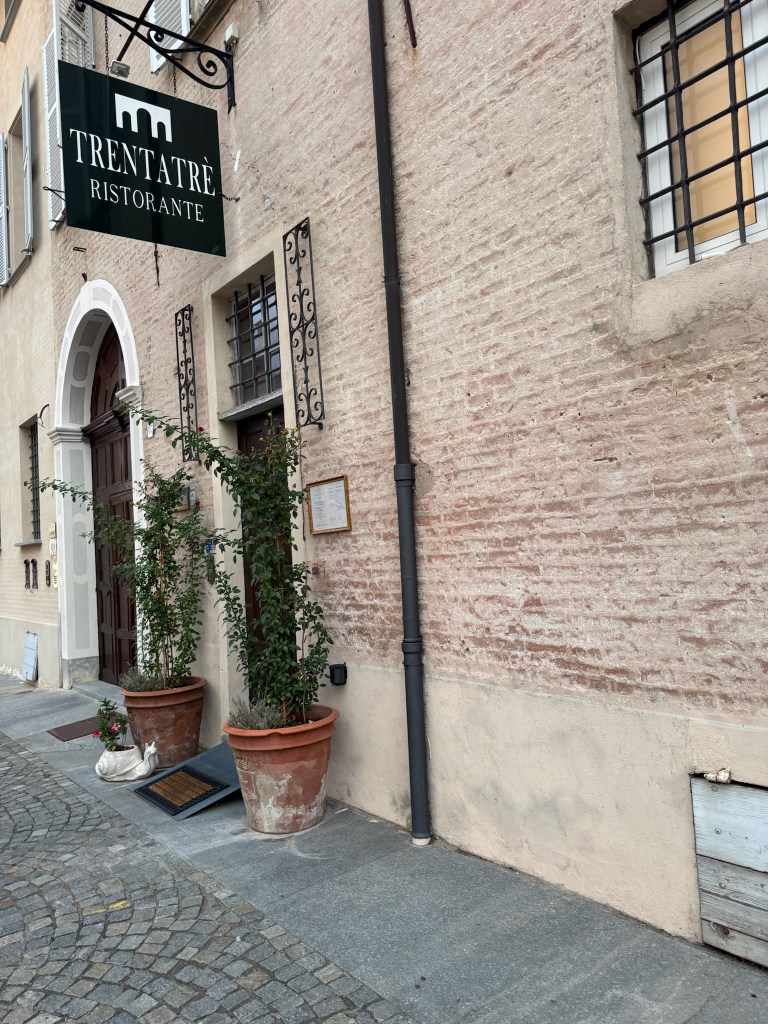
Our group of thirteen had the place to ourselves for almost two hours. Other diners only appeared in the final half hour.
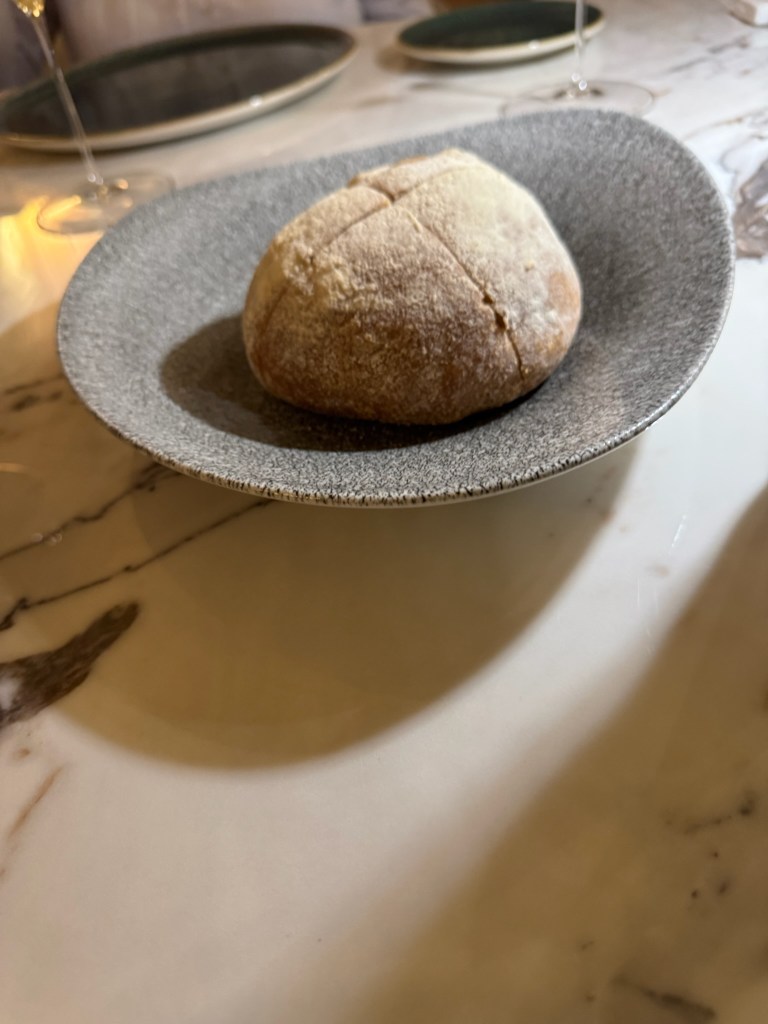
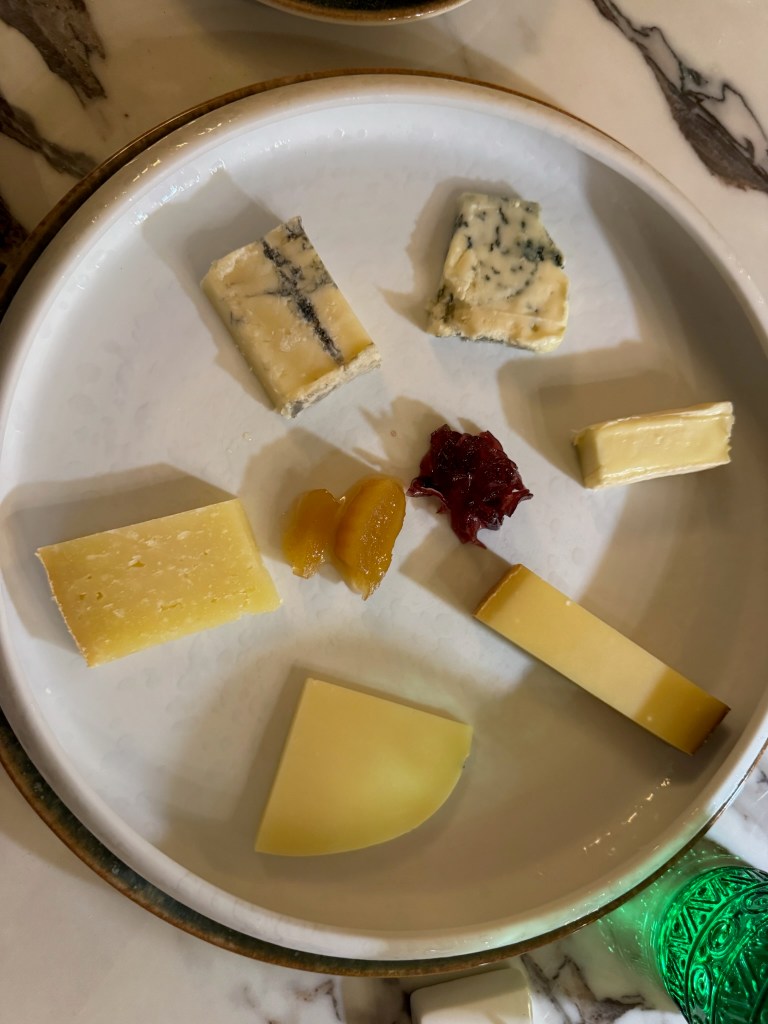
The kitchen serves creative, contemporary Piedmontese cuisine built on local, seasonal ingredients. In season, Alba white truffle stars in the signature dishes. It was a wonderful experience from first bite to last.




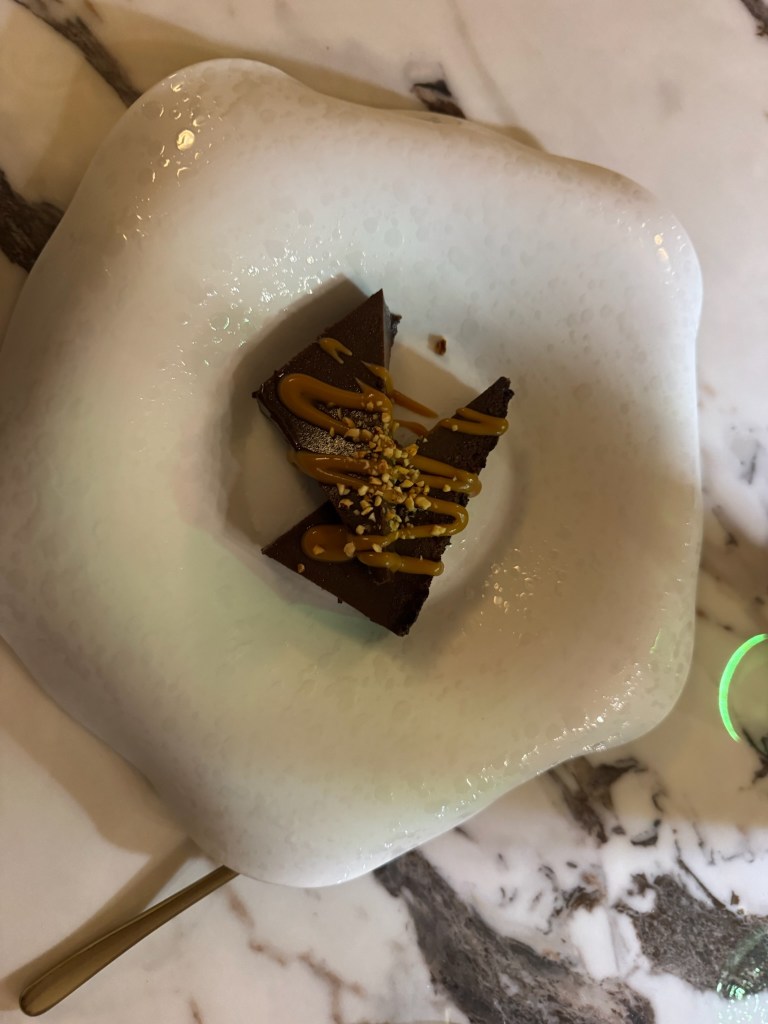
By the time we finished, rain was pouring down outside. The drive back was not exactly silent. A chorus of gentle snores filled the coach. The bed welcomed me like a long lost friend.
Tomorrow promised truffles.
Leave a Reply