
Wednesday, September 9
Today was a day of contrasts: royal excess in the morning, monastic thrift by lunch.
After breakfast we drove about ten kilometers to Stupinigi Palace, just outside Turin. On the way we passed Mirafiori, Fiat’s vast factory complex. Fiat shaped the economy of this city for generations. In its heyday, Turin was Fiat, and Fiat was Turin.
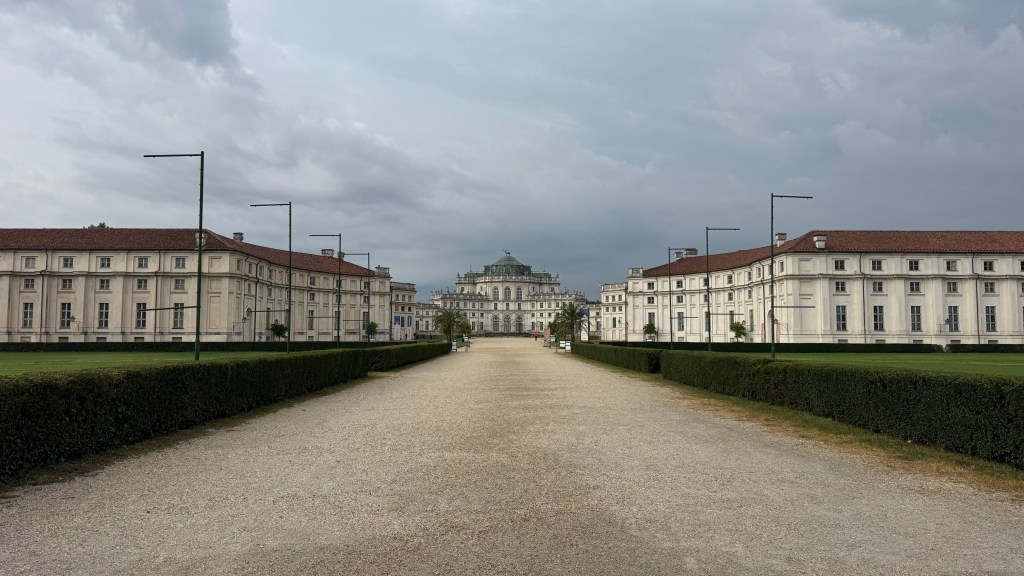
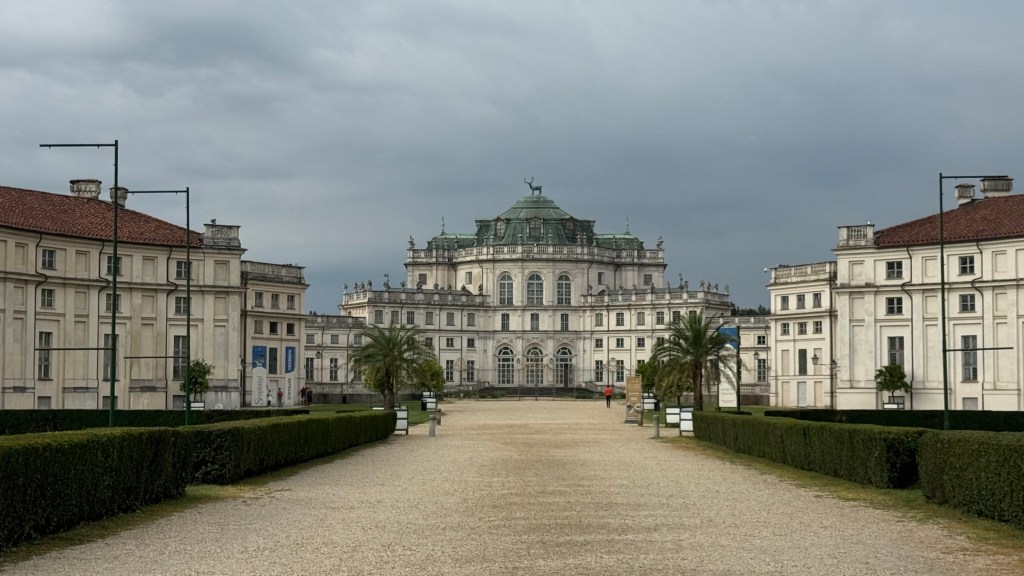
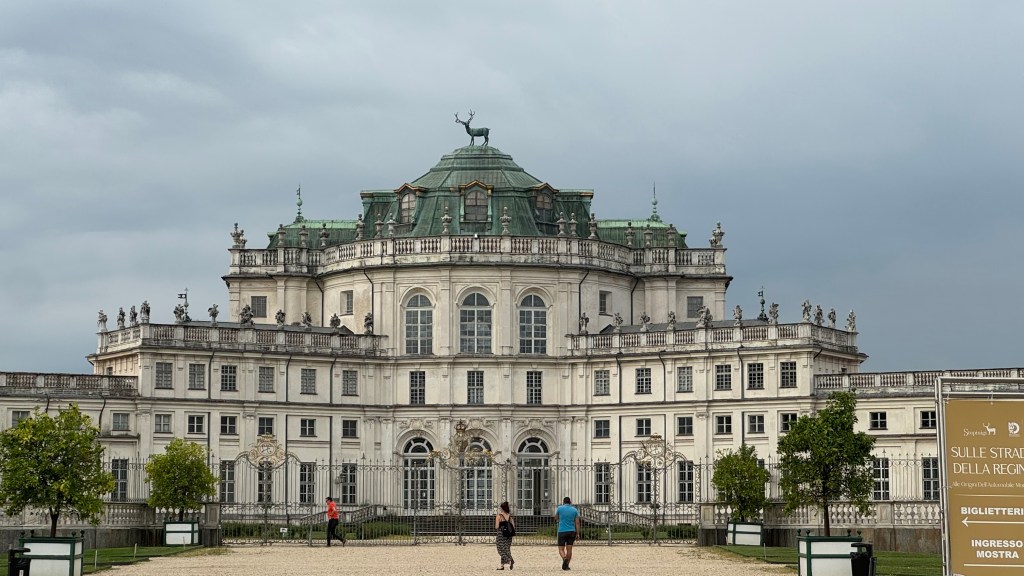
Stupinigi Palace: A Very Modest Hunting Lodge
The Savoys called Stupinigi Palace a hunting lodge. Most people would call it a palace, and they would be right. Architect Filippo Juvarra designed it in the 1720s for royal hunting parties.
A specialist guide walked us through its many halls and frescoed galleries. The royals used it for only a few weeks each year. When you have that kind of money, a palace for the hunting season seems perfectly reasonable.
Staffarda Abbey: Cistercian Self Sufficiency
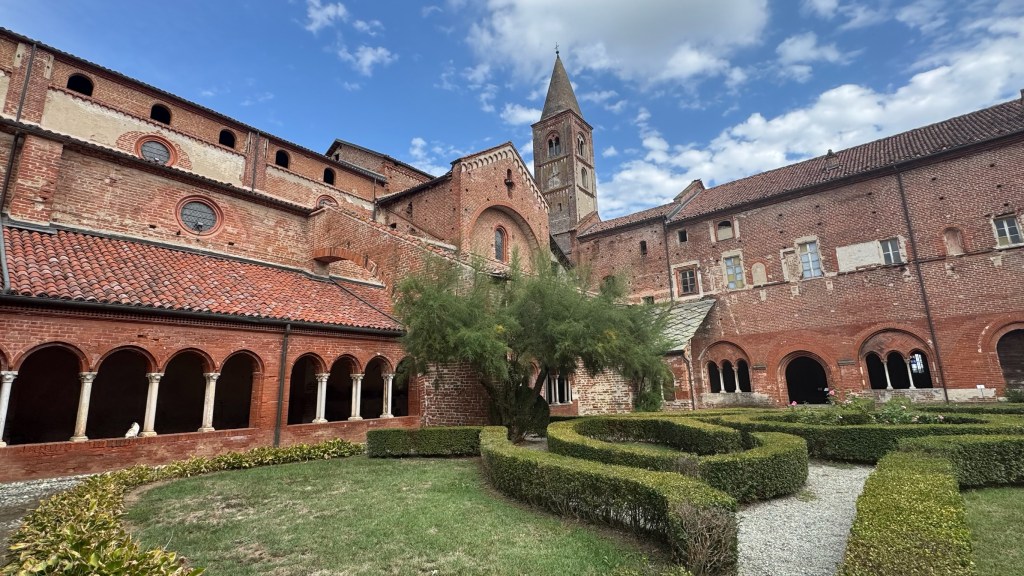
Next we drove to the Abbey of Santa Maria di Staffarda, near Saluzzo. Saluzzo, a town in the province of Cuneo, once ruled its own principality. Cistercian monks founded the abbey in 1135.
The complex includes a church, cloisters, a covered market and farm buildings. Monks slept in different rooms according to their rank. Pilgrims shared one open hall. Even holy men, it seems, had a seating plan.
The abbey ran as a largely self sufficient community. It fed itself, sheltered travelers and traded at its own market.
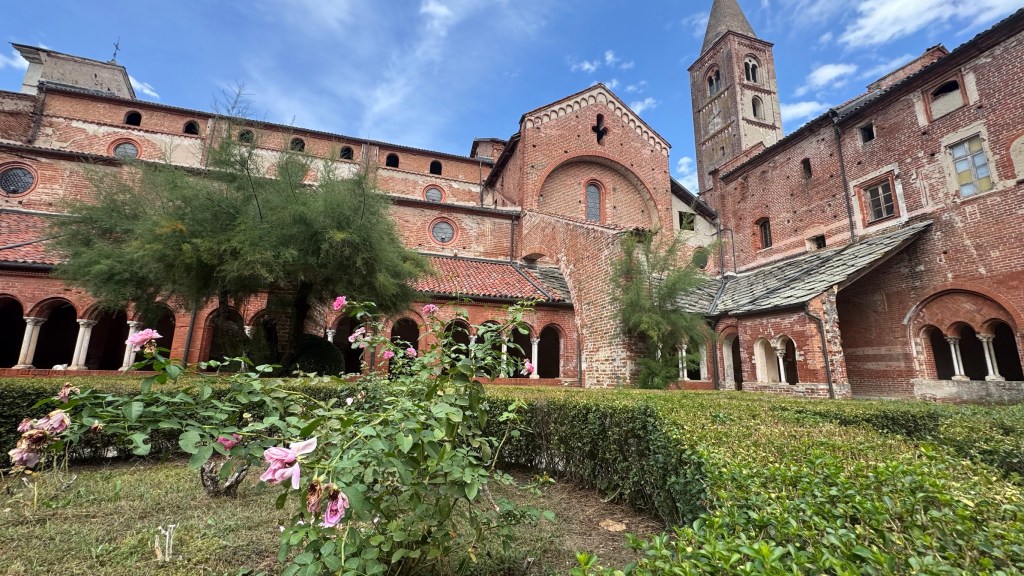
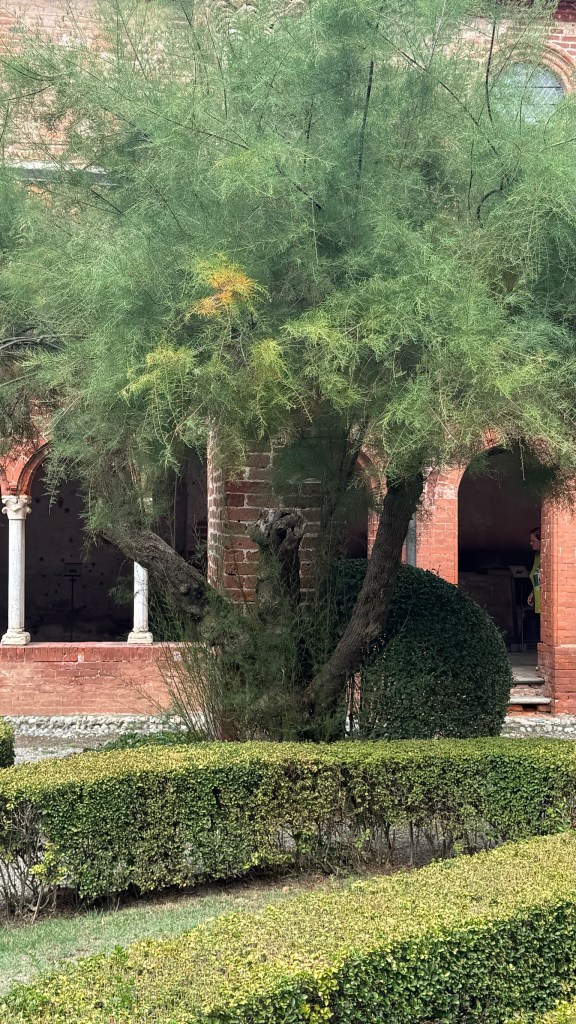
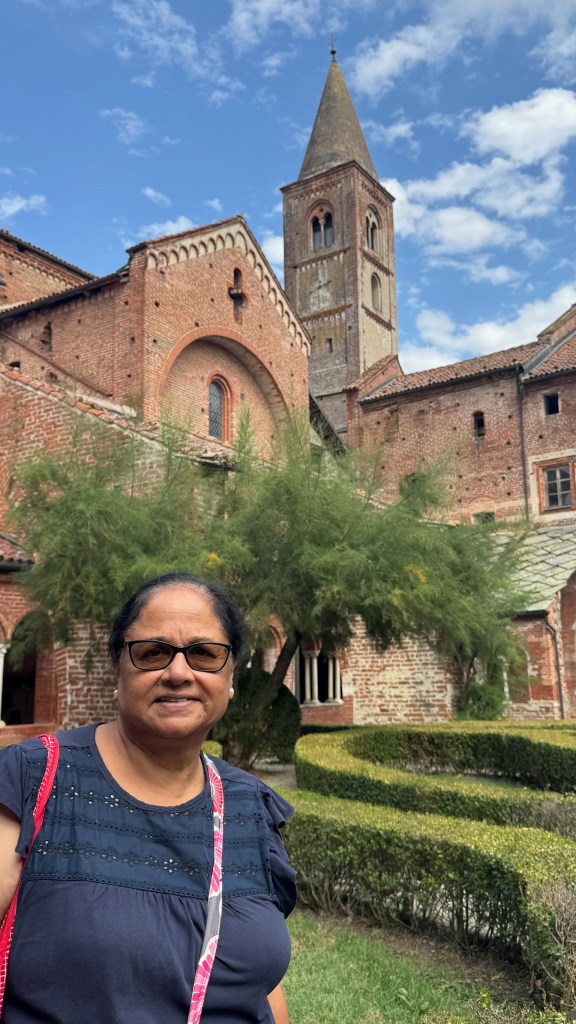
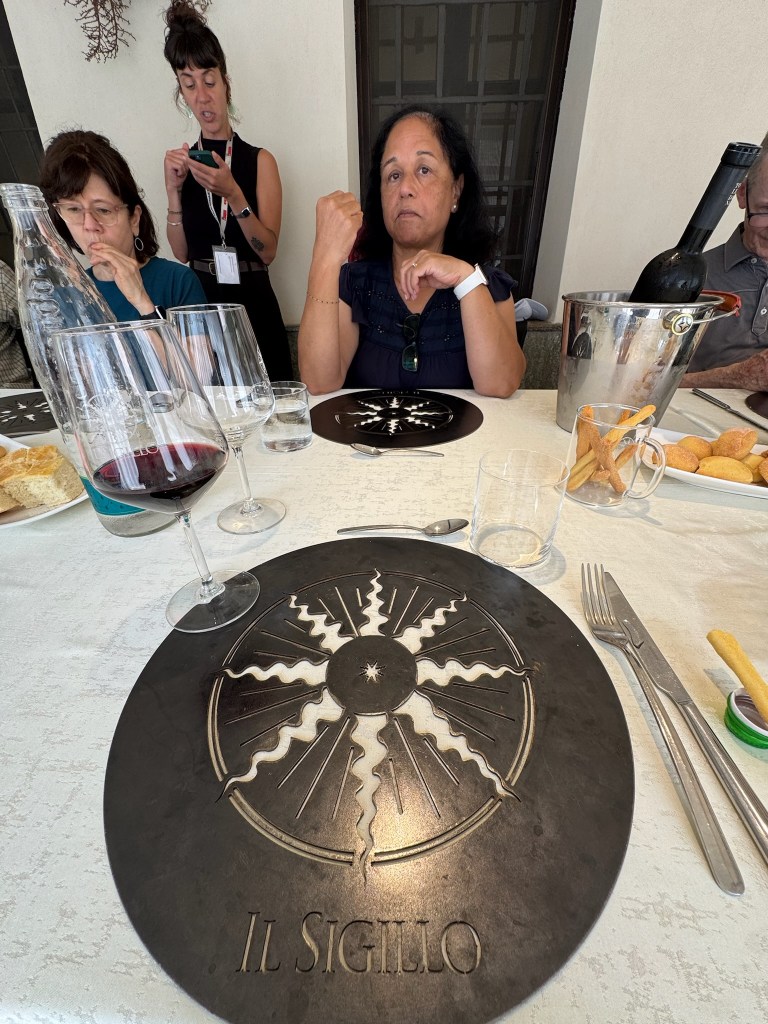
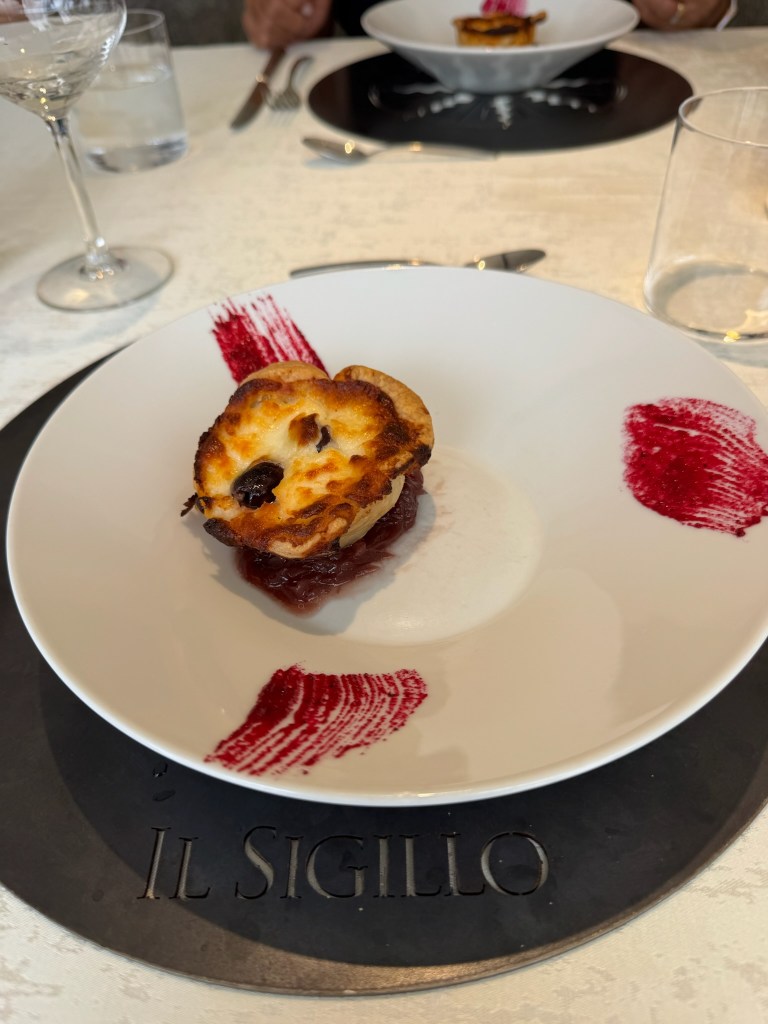
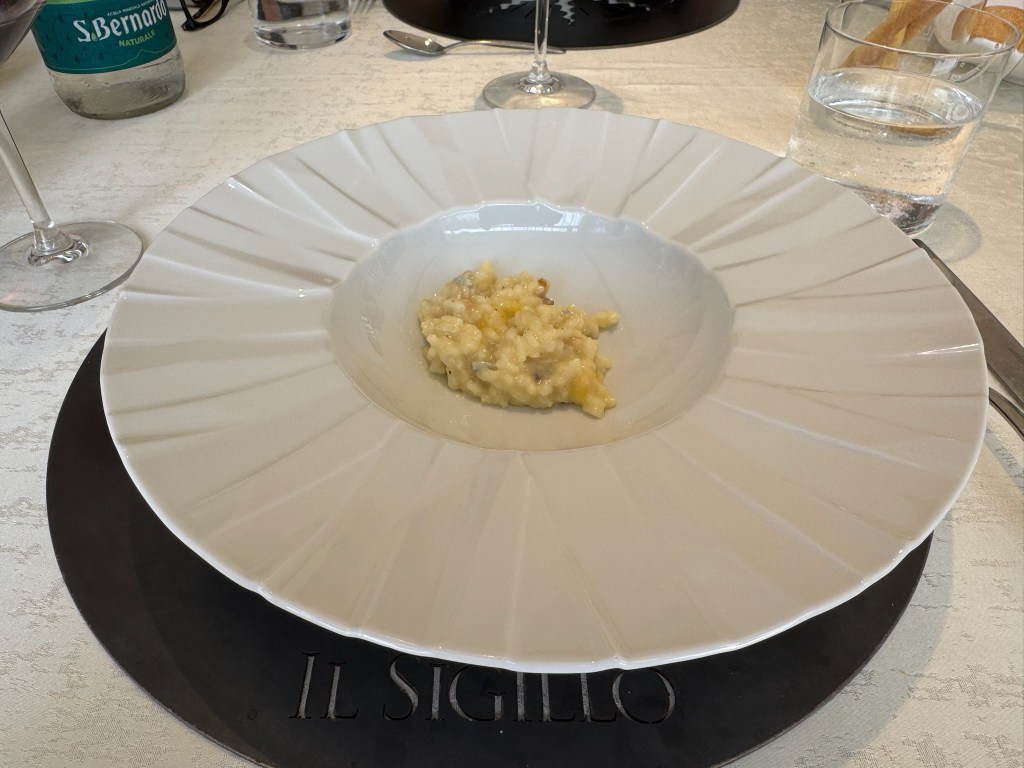
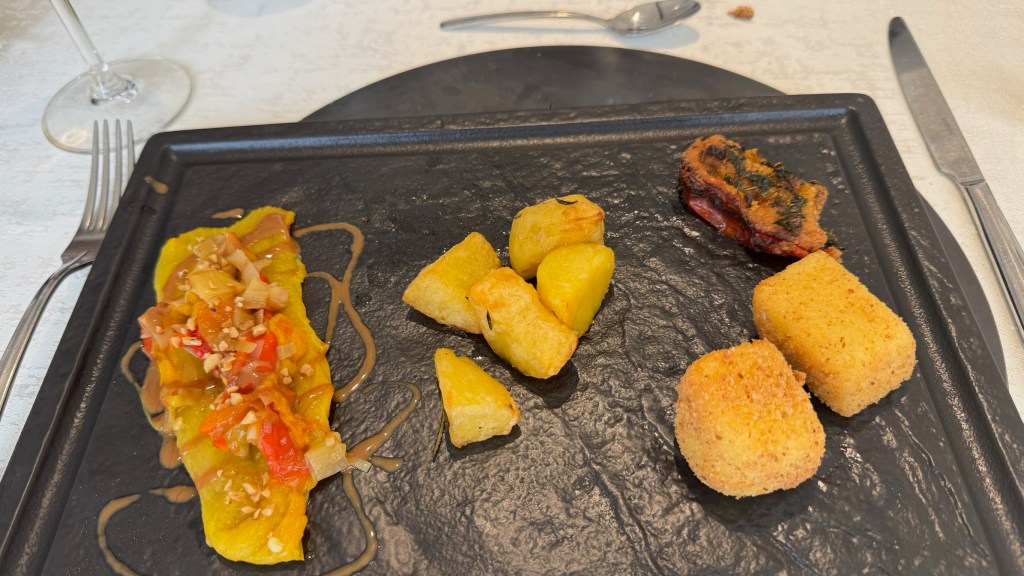
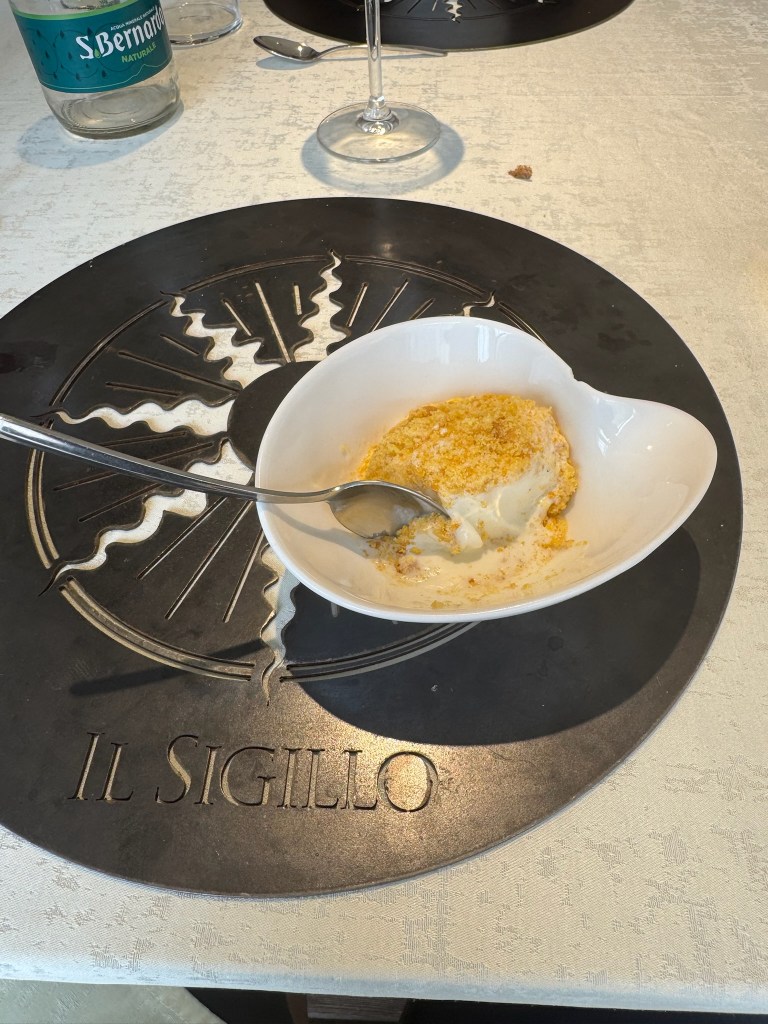
Lunch kept the tradition alive. Il Sigillo, the abbey’s restaurant, cooks with produce grown right on the property. The meal was amazing. I began to understand the appeal of monastic life.
First Glimpse of the Langhe from La Morra
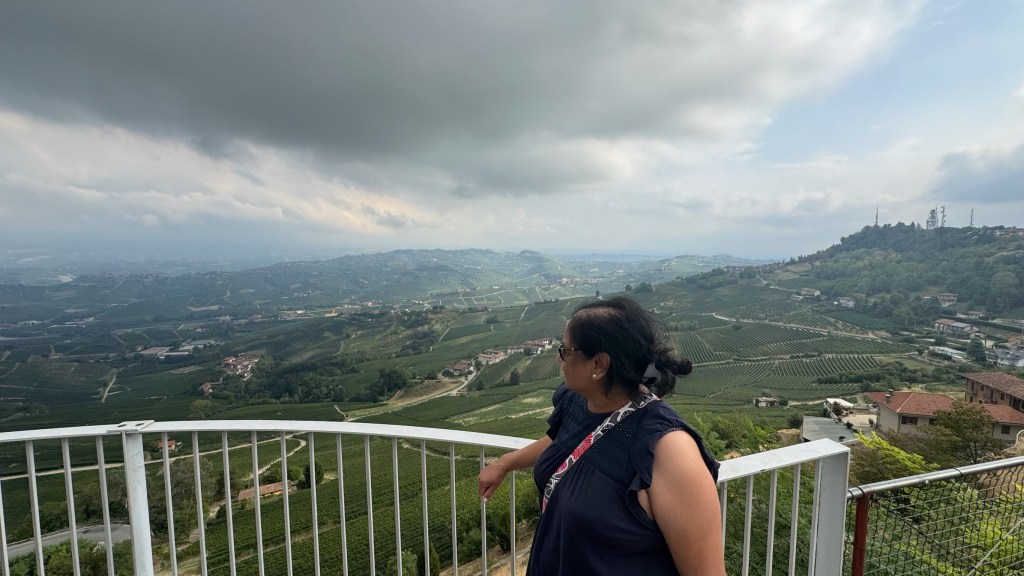
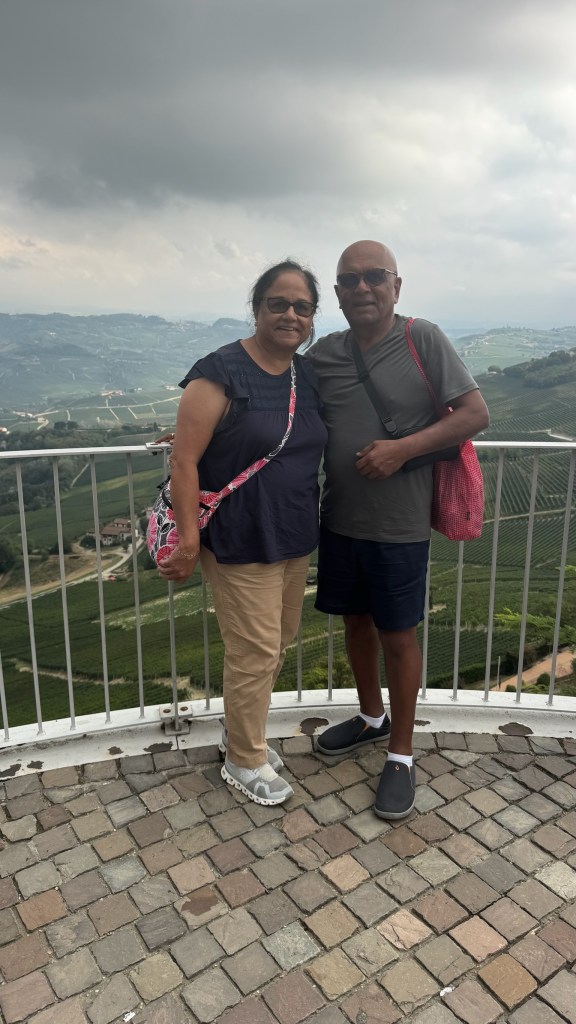
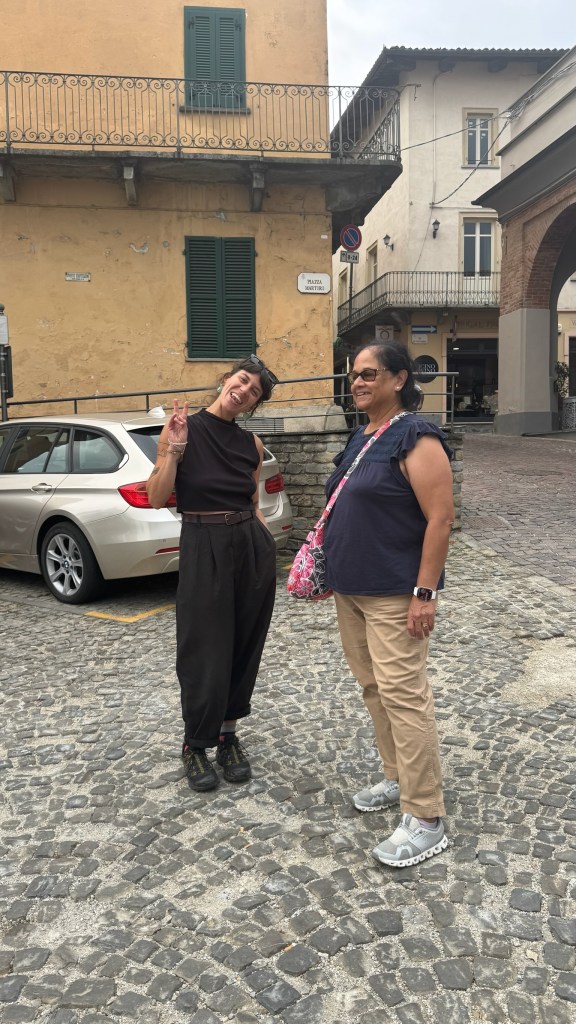
After lunch we headed to La Morra, a short drive from Alba. I immediately noticed the rolling hills, striped with vineyards and hazelnut groves. Villages perch on the hilltops like spectators at a very slow sporting event. La Morra is one of them, and we strolled its center to get our bearings.
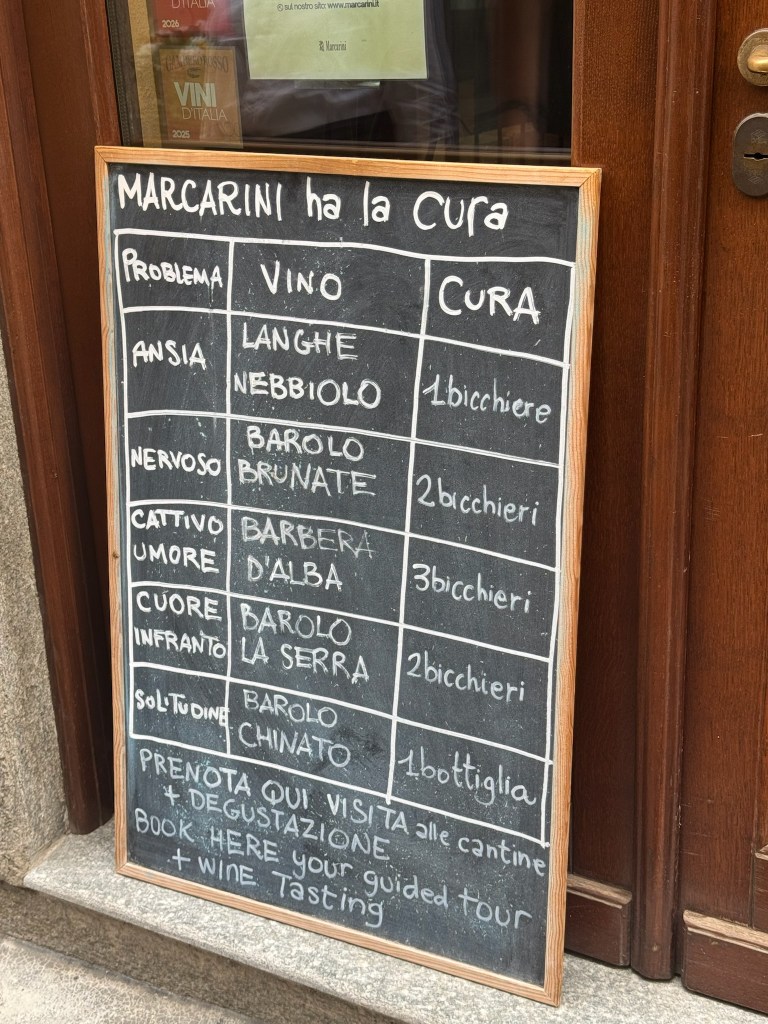
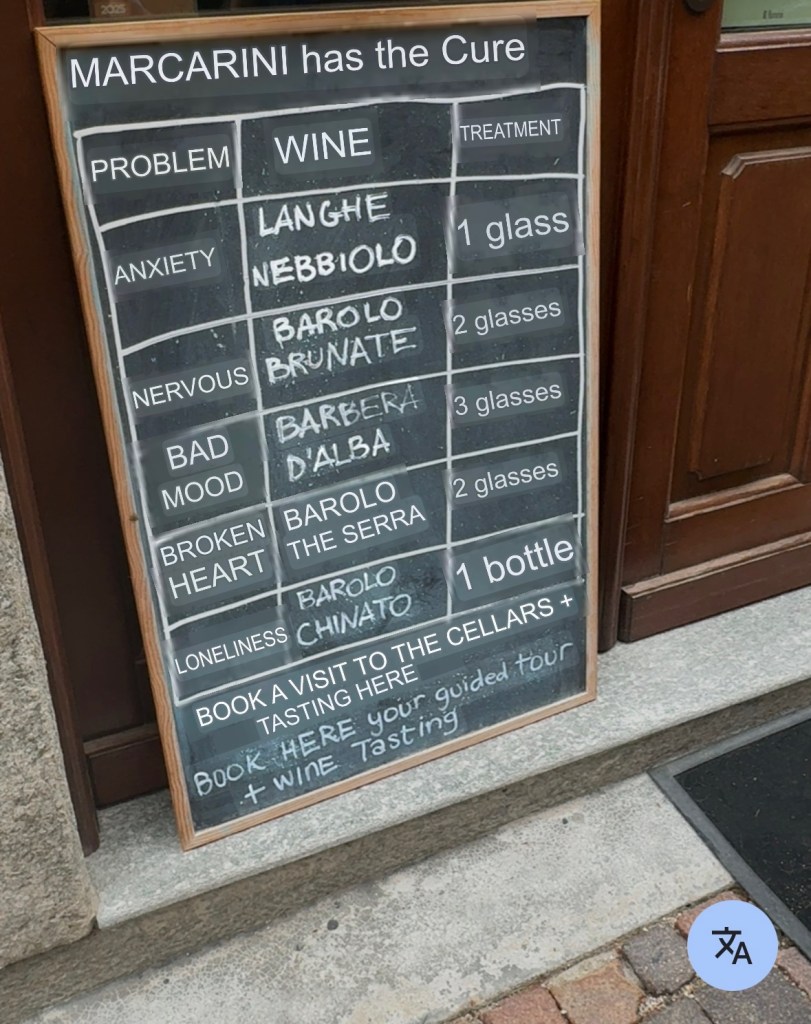
The Langhe enjoys worldwide fame for its wine, its white truffles and its gorgeous landscapes. Barolo and Barbaresco, the king and queen of Italian wine, both come from the Nebbiolo grape. Locals also pour Barbera, Dolcetto and Arneis with considerable generosity.
Kitchens here turn out handmade egg pastas like agnolotti, plus rich local cheeses. Hazelnuts sneak into almost every dessert.
UNESCO inscribed the vineyard landscapes of the Langhe, Roero and Monferrato as a World Heritage Site in 2014. Picturesque villages like Barolo, La Morra and Neive offer tastings, vineyard trails and castles. Alba sits at the heart of it all. Each autumn it hosts the famous International White Truffle Fair. Ferrero, the Nutella empire, keeps its headquarters here too.
Checking into Hotel Giacomo Morra in Alba
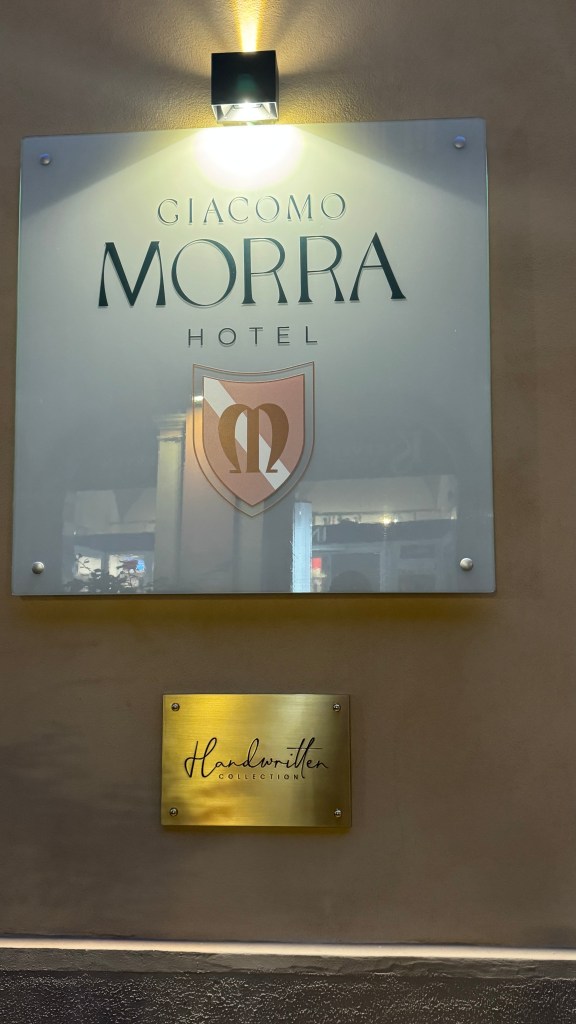
In the late afternoon we reached Hotel Giacomo Morra, our home for the next three nights. The lobby buzzed with guests, because the bar sits right beside reception. Clever design, or clever business. Possibly both.
The space feels airy, modern and sleek. Better still, it sits on a narrow main street in the historic center.
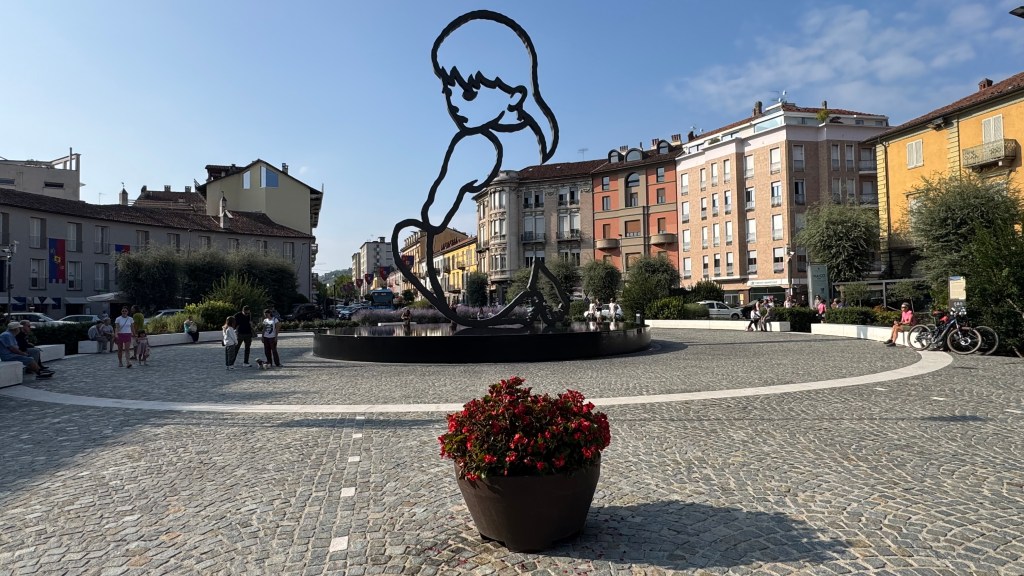
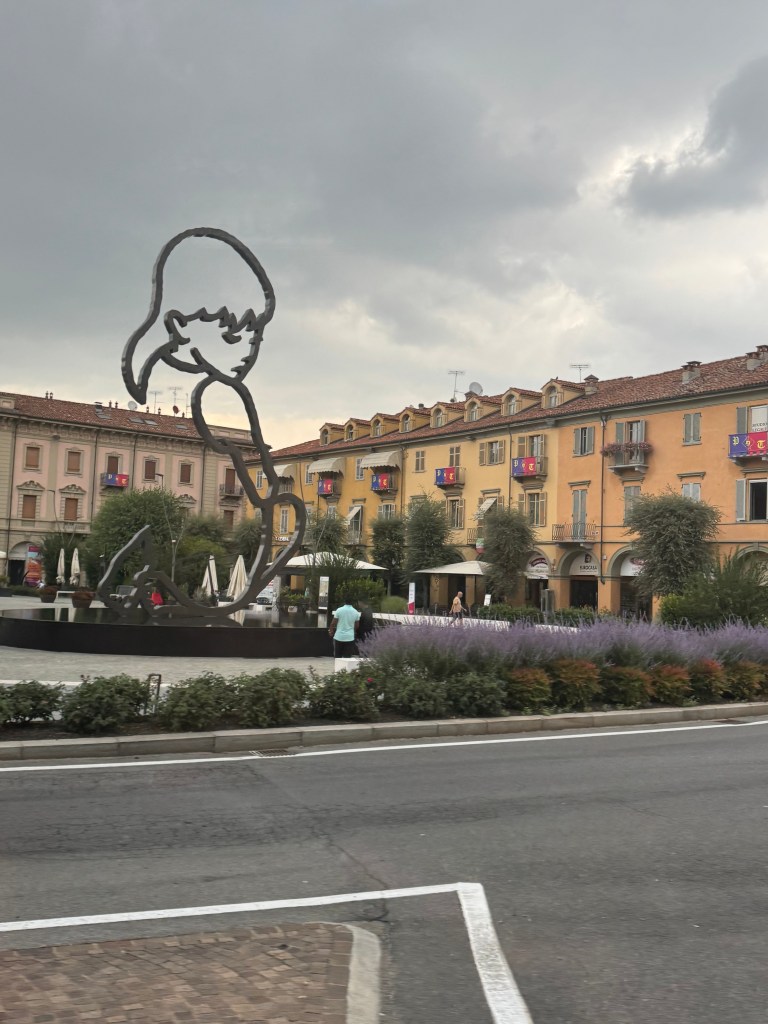
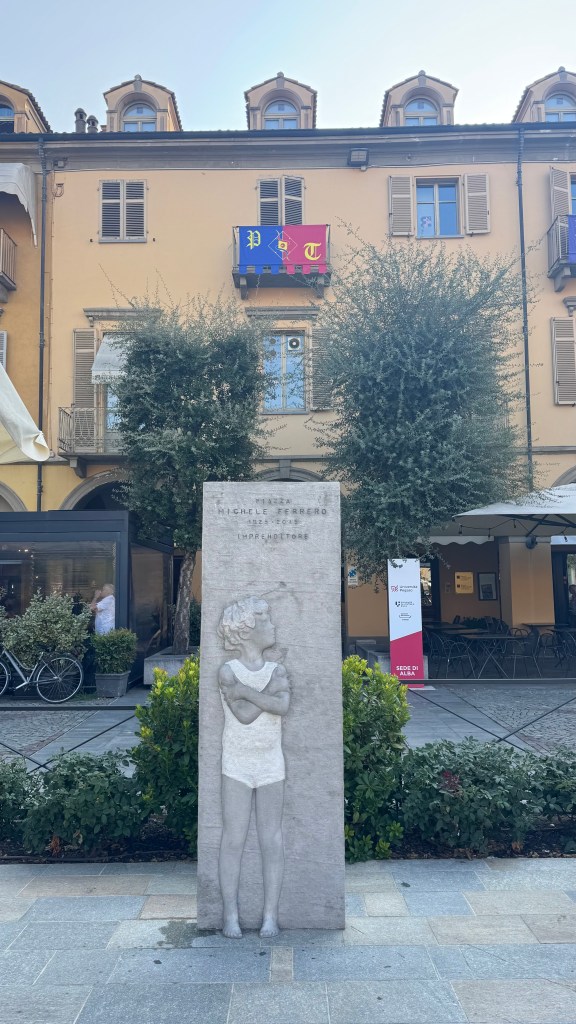
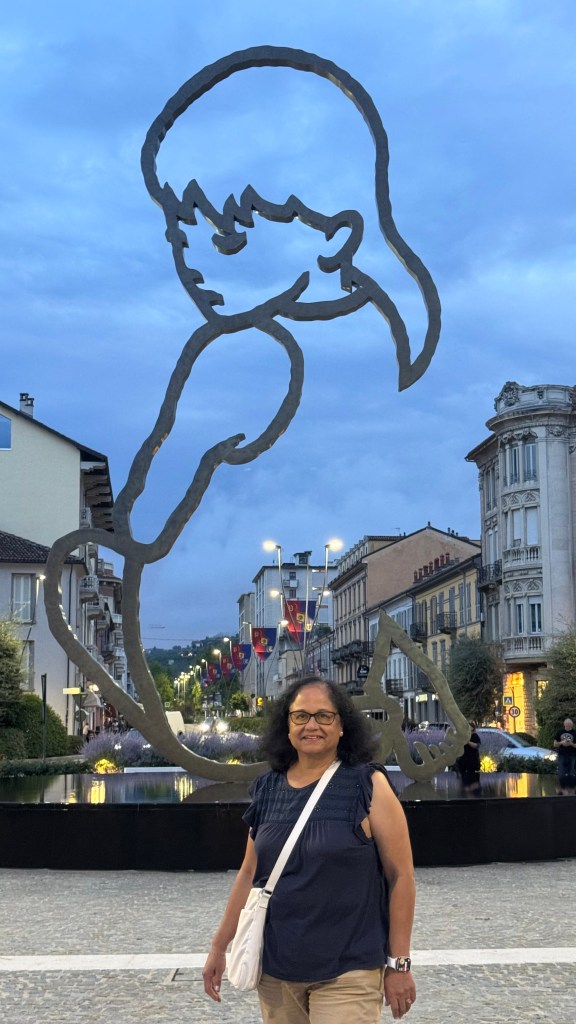
We dropped our bags, freshened up and went exploring. Five minutes on foot brought us to the main square. Alba’s old town hums in the evening. Boutiques, cafés and handsome façades line the lanes.
One cross street near the main piazza ran a market down its middle. Stalls of clothes, shoes, bags and accessories filled the center, with shops on both sides. Shopping in Alba happens in stereo.
Dinner at Mani Pizza e Cucina
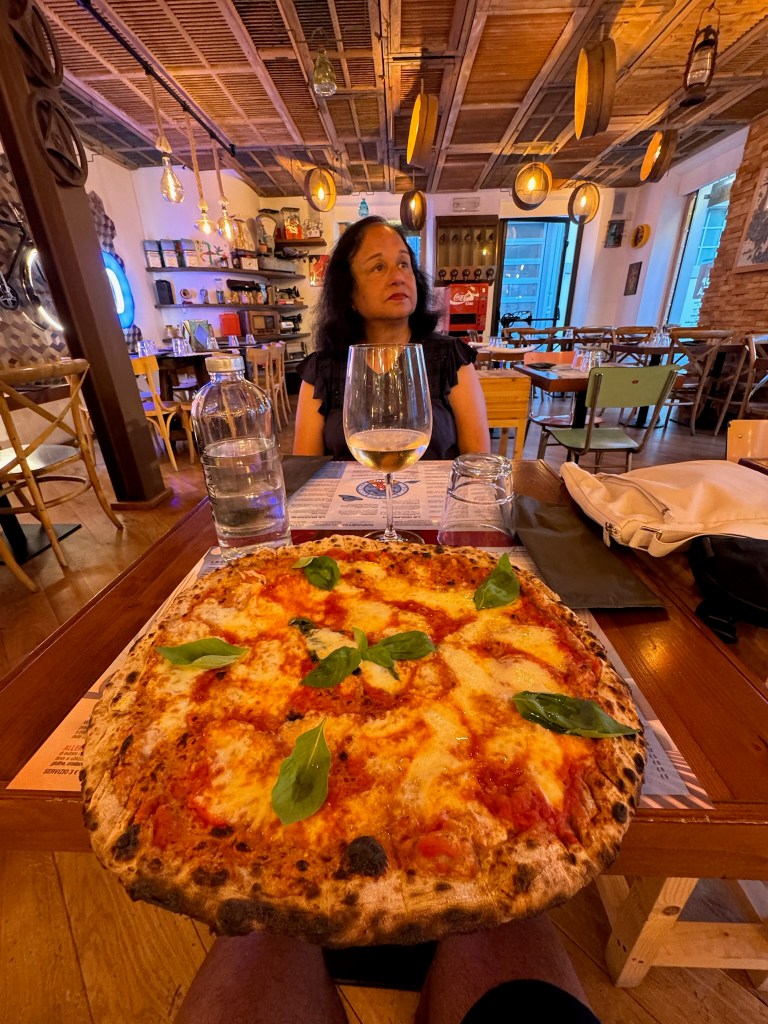
Italy with Pleasure had recommended Mani Pizza e Cucina, tucked into one of Alba’s small piazzas. We arrived at 6:20pm. Mani opens at 7:00pm. Clearly, we had not yet converted to Italian dinner time.
The staff kindly pointed us to a cute little bar nearby for an aperitivo. At seven sharp, Andrea, the owner, welcomed us warmly.
Andrea offers three doughs: classic, multigrain or black. The black dough, pane nero, uses Tumminia flour. This ancient Sicilian wheat gives a dense, rustic texture.
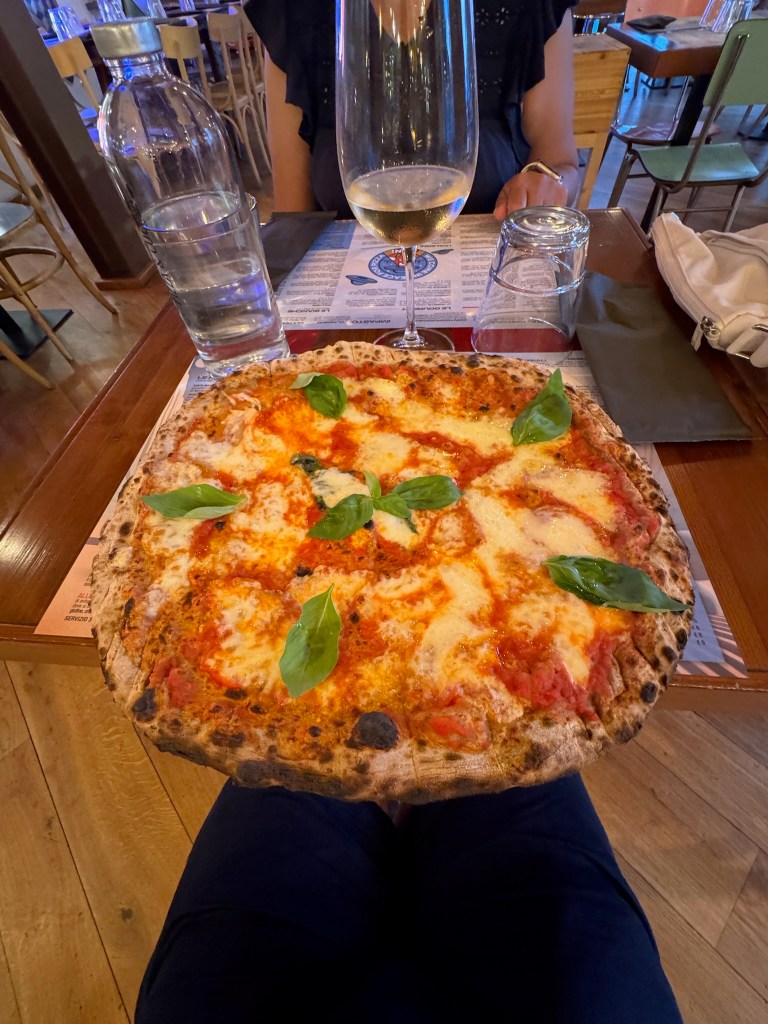
The pizza was outstanding, one of the best of my life. Only Pepe in Grani, in Caiazzo near Naples, edges it out. A silver medal against Franco Pepe counts as gold anywhere else.
We wandered back along a side street still bustling with life. Crowded cafés and bars rang with talking, laughing, eating and sipping. This is how an evening ought to be.
Back at the hotel, I reviewed tomorrow’s itinerary one last time. I felt like a child on Christmas Eve. Tomorrow meant Barolo.
Leave a Reply